
ABOUT a decade ago, student athletes were under the mercy of colleges and universities which had first recruited them. These schools practically owned the athletes, dictated their careers and guided their future.
READ: Coach Joe, miracle worker with a nose for winning, is truly one of a kind
There's little say for the athletes once they signed to compete for a school even if, after a year or so, they find that their careers had stalled and wished they would get a chance to move to another school whose athletic program they find more appealing, more progressive and more innovative than what they have at the moment.
The residency rule, revisited
But transferring to another school or another collegiate league was not as easy as it may appear, even if the athletes may invoke that being forced to stay in one school violated their freedom of choice.
What stymied them was a rule enforced by the UAAP in the wake of the Jerie Pingoy contoversy that any athlete who transfers from one school to another must undergo a residency of two years. For many athletes, this is an eternity, a career-busting rule. Imagine, for instance, that after one year of playing for one school the athlete decided to transfer. One then would sit out two years of residency. That leaves the athlete perhaps just one year or, at most, two years of college eligibilty.
What happens while enduring two years of residency sometimes can make or break an athlete. There's no competition, no action and that person may simply fade away or break down from frustration.

Three former UAAP student-athletes in University of the Philippines swimmer Mikee Bartolome, Ateneo basketball recruit Hubert Cani and of course Pingoy himself were among the earliest casualties of the two-year residency requirement, even after a legal challenge from the former.
Thankfully, this rule which is so one-sided in the schools' favor was changed, not totally, but apparently to the satisfaction of the athletes. A law passed in 2015, Republic Act 10676 authored by Sen. Pia Cayetano, reduced the residency requirement for transferees to just one year.
Major transfers in recent years
But lately, the collegiate sports scene has seen quiet a number of activity in this regard.
A number of high-profile transfers rocked the UAAP and NCAA in recent years — arguably the most notable one in recent memory being CJ Cansino's transfer saga from UST to UP - that it re-ignited the debate on the residency rule, specifically on what the length of the residency should be.
At the onset of the pandemic in 2020, a whirlwind of complaints from Cansino's UST teammates in the team's Bicol training bubble led to a bitter fallout which saw the young guard at the time take his talents to UP after steering UST to the Season 82 finals.
The eventual UP skipper served his residency in 2020-21 — the supposed period for Season 83 to take place but was ultimately scrapped amid the pandemic. One year later, the result of this high-profile transfer was Cansino and the Maroons lifting the UAAP crown for the first time in 36 years.
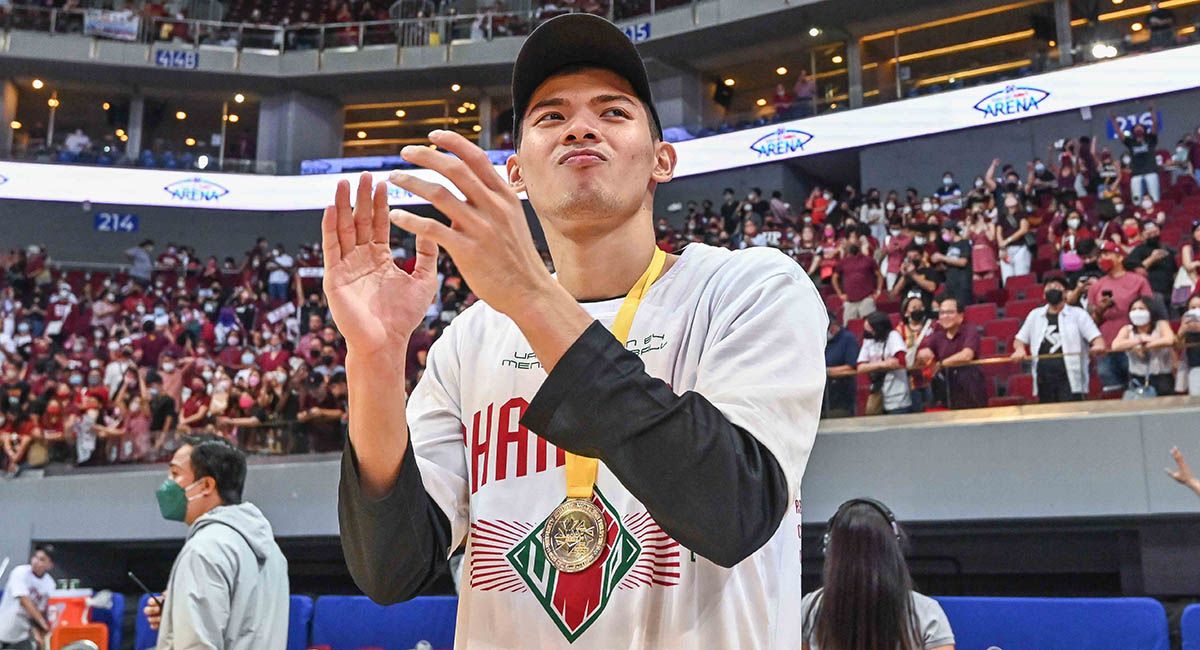
His fellow ex-Tiger Rhenz Abando also joined the mini-exodus in the aftermath of the UST bubble saga. But unlike Cansino, Abando took his talents to the NCAA with Letran in Season 97 — a groundbreaking year which saw the Gilas Pilipinas ace win rookie-MVP honors as the school ruled both men's and women's tilts for the first time since 1983.
Abando, however, had more years of eligibility under his belt since the NCAA does not count the residency year in a student-athlete's total playing years. He did forego his final playing year in 2022 to turn pro in Korea.
Two identical instances of an NCAA to UAAP transfer went down in a span of four years when San Beda standouts Evan Nelle (2020) and Jacob Cortez (2024) both jumped ship to La Salle. The one residency year requirement didn't deter Nelle from giving new life to the Green Archers as an eventual Mythical Team member and UAAP champion.
With his residency year still to come, Cortez' fate with the Taft side after playing part in the Red Lions' recent NCAA title romp remains unknown at least for now.
‘Benefits’ of the doubt
Whether student-athletes max out five years of eligibility or play less seasons due to the residency requirement, they are still legally bound by the prescribed benefits in RA 10676.
Under Section 5 of the Act, schools “may grant a deserving student-athlete” — a term as open-ended as can be — with these six basic needs.
- (a) Tuition and miscellaneous school fees including books and other learning materials;
- (b) Full board and lodging;
- (c) School and athletic uniforms including supplies, equipment and paraphernalia;
- (d) A reasonable regular monthly living allowance, the amount of which shall he set and standardized by the athletic association to which the school is affiliated with;
- (e) Medical examinations and consultations, emergency medical services, life and medical insurance and other reasonable and similar benefits that would further enhance the academic and athletic performance of the student-athlete; and
- (f) Other reasonable and similar benefits that would further enhance the student-athlete’s academic and athletic performance.
With some schools, those considered bigger and richer than others, allegedly handing out multi-million offers and other luxurious provisions to secure the services of their desired student-athletes, the above-listed final bullet may have been utterly stretched and exploited to extents only God knows how far.
And when it comes to intra- and inter-league transfers, redshirting one season seems to almost mean nothing in comparison to the long-term competitive gains — albeit never promised — they expect to get in return.
Simply put, student-athletes aren’t just mere acquisitions anymore. They’ve become investments in both monetary and competitive senses.
And although merely tweaking the number of residency years won't bring an instant equilibrium to the college sports scene, such existing policies and their aptness to the currrent sporting landscape are surely worth revisiting. This, in order to assess how schools and student-athletes can be given a competitive yet fair stage to thrive moving forward.
Moreover, the considerable leniency embedded in the modified residency rule has allowed student-athlete transferees to still make the most of their college careers. But the truth of the matter is that it has concurrently yet inadvertently given some schools the upper hand to tip the competitive scale to their favor — all under the guise of ‘strengthened recruitment.’
Get more of the latest sports news & updates on SPIN.ph
NOTICE ON UNAUTHORIZED AND UNLAWFUL USE, PUBLICATION, AND/OR DISSEMINATION OF SPIN.PH CONTENT: Please be notified that any unauthorized and unlawful use, publication, and/or dissemination of Spin.ph’s content and/or materials is a direct violation of its legal and exclusive rights to the same, and shall be subject to appropriate legal action/s.
