
THERE’S a new name for the COVID-19 world. Coined by The Board of Innovation, a global business think tank, this perfectly sums up the new normal we will all be facing as the world reels from an unprecedented crisis.
It’s called the Low-Touch Economy.
“The post-COVID-19 era will have an economy shaped by new habits & regulations based on reduced close-contact interaction, [as well as] tighter travel and hygiene restrictions,” wrote the consultancy firm in a white paper released last March.
It added: “The current disruption will change how we eat, work, shop, exercise, manage our health, socialize, and spend our free time, at an unprecedented rate of change."
But what about an industry that, for decades, has relied on touch and close contact — the feel of a steel barbell in your grip, the scrape of a towel against a sweat-drenched forehead, a face-to-face pep talk with a relentless coach?
How will this Low-Touch Economy transform the fitness industry?
Future prospects
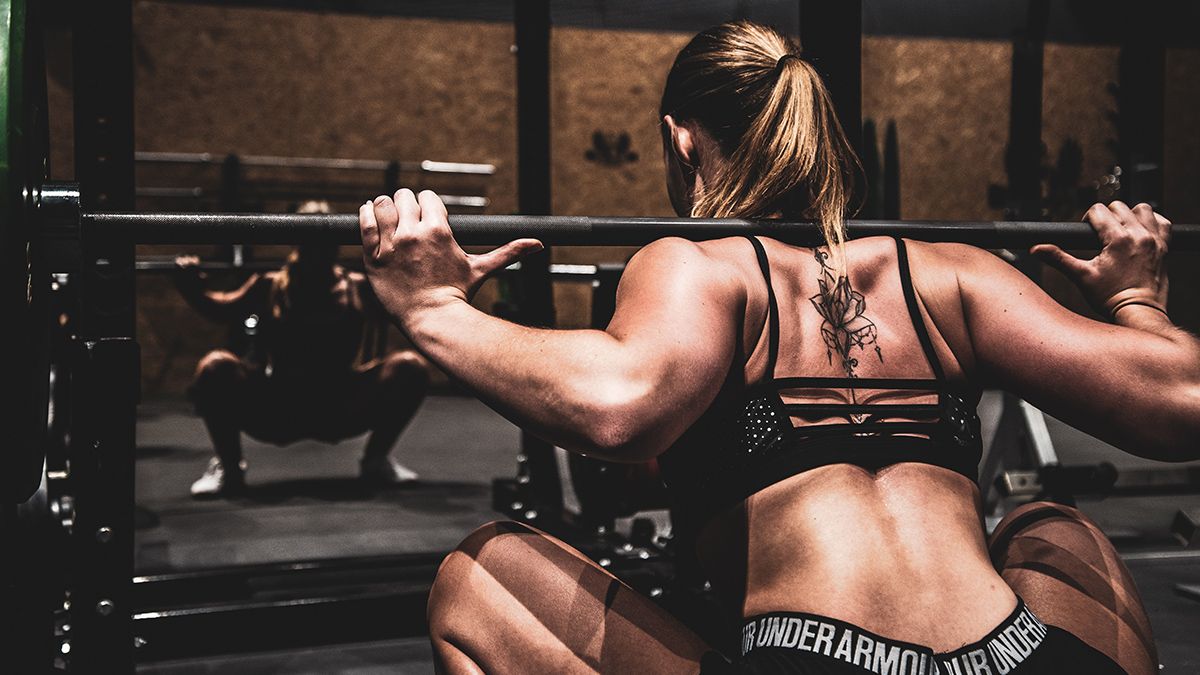
It’s a question that was discussed in an open forum called “The Future of Sports and Fitness: How to Adapt in a Pandemic.” Organized by Alab Pilipinas strength and conditioning coach and longtime industry veteran Chappy Callanta, it gathered around a dozen fitness and sports professionals in the country, including gym owners, athlete trainers, and even sports scientists and sports journalists — all speaking freely over a dense, two-hour Zoom session.
The outlook was alternately bleak and hopeful.
Perhaps the most pessimistic — or perhaps, realistic — outlook was offered by Marlon Lugue, managing director of Kinetix Lab.
Even if, by some miracle, the lockdown is lifted soon, transportation is restored, and businesses will be allowed to fully reopen, Lugue said things will not magically fall back into place for the fitness industry.
“I believe that the downtime between the lifting of the ECQ to the assumption of normal operations will still be long,” he said. “Right now, everyone lost something at some point, so exercise, fitness, sports, or whatnot will not be the priority of most people.”
The power lifter and sports scientist continued: “I don’t want to sound negative or anything, [but] a lot of fitness professionals will lose their jobs and a lot of businesses will close.”
That’s the grim reality facing an industry that’s already battered by near-zero operations, severely restricted cash flow, and employees who are in dire straits.
For his own part, Lugue and his partners are in the mindset that Kinetix Lab, above all, must survive the pandemic intact. Sacrifices have been made, he admitted. “For our coaches, to be quite honest with everyone, we stopped their compensation because that's a sacrifice that we have to do in order na walang ma-retrench.” (Lower-tier employees are still being paid, he said, and Kinetix Lab management also organizes relief good drives for their workers.)
Even with these measures, Lugue knows they may “lose an employee here and there.” But for him and his partners, “non-negotiable na yung company yung bumagsak.”
Logging online
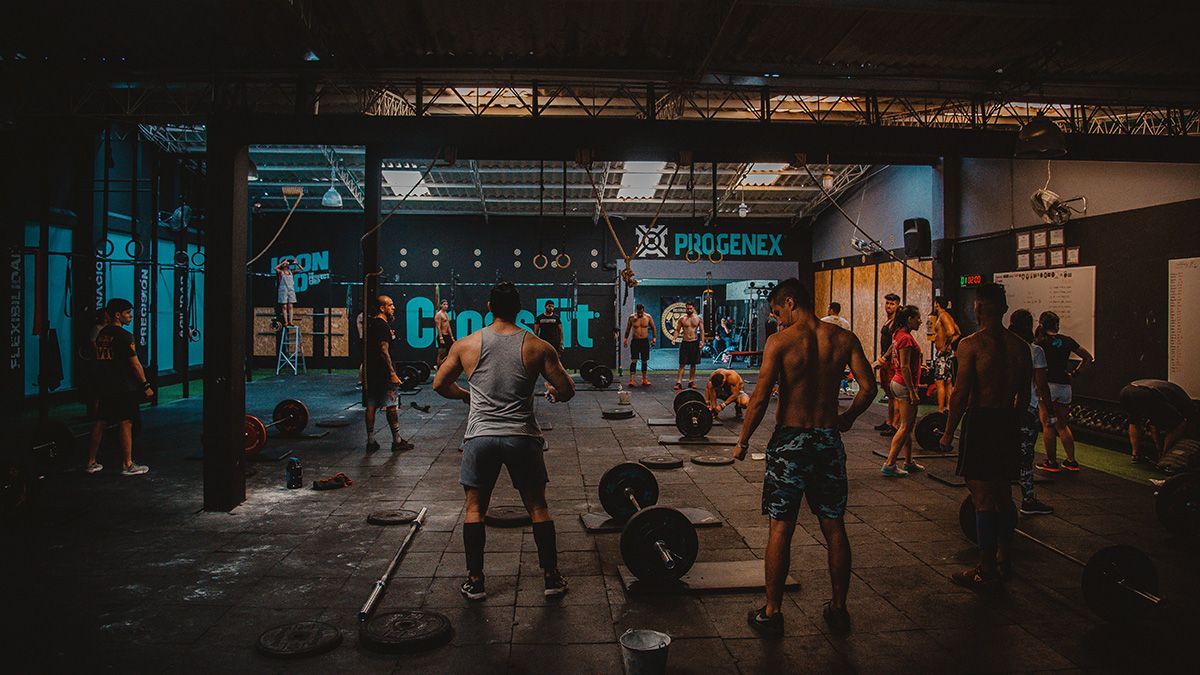
For many gyms and trainers, the pandemic forced them to go all-in on digital.
It turned out to be an uncomfortable process for Luis De Mesa, strength and conditioning coach to the Philippine men’s volleyball and taekwondo teams (among many others), as well as a self-admitted introvert. But with numerous clients in all levels of sports, he knew he needed to act quickly, migrate online, and market himself a little more.
De Mesa set up a Facebook group for all his trainees so he can still pass on programs for them and they can volley him questions on staying fit. He later moved some programs to his Instagram Stories for anyone to access — “Seven free programs that you can try,” as he described them, “with different levels, with different goals, different needs.”
The Philippine arm of the UFC Gym chain did the same. According to marketing manager Gab Pangalangan, the gym recently released a 12-video series called the UFC Fit Home Workouts. Each workout is 45 minutes long. “You can do them at home with little to no equipment and anyone can access this library for free,” explained Pangalangan.
He also revealed that UFC Gym also has live classes on Instagram or Facebook, and are exploring the possibility of personal online training as well.
The online option presented a few difficulties for Kayleen Ortiz, co-founder of pole dancing studio Polecats Manila. “Right now,” she said with a laugh, “we are Polecats Manila — without the pole!”
Obviously, not a lot of the studio’s students have a dance pole at home. The studio’s usual classes would not work in an online setup. “So instead, we developed a new curriculum or a new way of teaching that focuses on strength and flexibility and the elements that you would need for you to be able to perform well,” Ortiz explained.
The hope, Ortiz said, is that when things finally get back to normal, Polecats Manila’s online classes would have kept its students in shape enough that it’s not totally back to zero when they return to the gym.
Money stream

Another thing Ortiz and the rest of the studio’s management are keeping in mind is that they’re zeroing on students they have right now, rather than potential new students and new customers.
“It's a shift in focus,” she explained. “Instead of trying to get more people, it's encouraging the ones that are already plugged into our system to continue to take class with us.”
That was a theme echoed by many panelists during the discussion: the need to modulate your marketing in this difficult time, to become more sensitive towards the atmosphere of trauma and suffering that’s settled all over the world. And if that means selling less, so be it.
“There's a lot of sensitivity at this time involved in pushing or endorsing brands or products,” said Nikki Torres, a vinyasa and yin yoga teacher who also created the NTSweat program. “The priority is really being able to check up on the people who are part of the community, staying engaged, and listening to what your clients or followers or your audience needs from you at this time.”
At the same, though, you still have to think like a business and protect your income. This is especially important for freelancers, which the majority of fitness coaches in the Philippines are. Marketing must become more purposive. “What's important is for all of your efforts to convert into a sale,” Torres explained. “This [pandemic] is an opportunity to establish connections with people so that you can convert them into clients.”
Cash flow is a primary concern. During the start of the Zoom forum, Chappy Callanta reported the results of a survey he conducted to over 187 fitness professionals. About 40 percent of them said that they are not currently getting salaries or benefits.
It is not for lack of trying in the part of the gym owners, said the panel. Like virtually all fitness coaches, Kale Alvarez, founder and CEO of Kineticore Philippines and a scientist at the Gatorade Sports Science Institute, transitioned to online coaching classes for his clients. But, he said, “We are charging them a fraction of the usual fee that we charge.”
To support his coaches, the fees go straight to the trainers themselves. “I know it's not much,” he lamented, “but, like I said, we are not currently and actively getting new clients or patients.” Alvarez is also working on balancing the existing client roster so that at least everyone gets a chance to earn.
It’s much the same for Luis De Mesa. In fact, he’s even roped in a few of his athlete trainees. “I told them to create a video of them doing indoor volleyball skills, and we will sell the program, and then we will spread out the profit.” With programs like this, De Mesa hopes to “ensure that everyone sa mga assistants ko will survive this ECQ.”
What happens now?
With stormy weather threatening to capsize the entire industry, some coaches see small but meaningful patches of blue sky up ahead.
For all his grim projections, Marlon Lugue of Kinetix Lab sees a glimmer of hope in the proliferation of home workouts and home gym setups. And it’s not about offering online classes, either.
“It's another stream of revenue if you'll be able to provide whatever they'll need,” he said. A brand-new fitness nut may have, because of lockdown, suddenly find that they want to keep exercising at home. But they will have limited knowledge of what equipment to buy, where to get it, and how to set it up in the space they have.
“So will you be able to connect these people with your suppliers and earn revenue as a middleman? Will you be able to provide efficient design for them?” Lugue proposed hypothetically. “I'm excited about it.”
In a post-lockdown world, the gym we know today will effectively cease to exist, at least until a vaccine is found.
Even if they reopen, Kayleen Ortiz foresees that Polecats Manila will have to limit the number of people who can be inside the gym, enforce strict social distancing, invest in infection procedures, turn away the visibly sick, and — as envisioned by the Board of Innovation’s paper on the “Low-Touch Economy” — reduce the amount of physical contact.
Coaches, she said, will have to level up their verbal communication skills, as they will probably be no longer allowed to teach students via direct touch. Online classes will certainly become a major new norm.
It’s certainly going to be different.
But UFC Gym’s Gab Pangalangan knows that, for all the hard times it will face in the coming months, the gym will never go away.
“Why eat out if you could have food delivered?” he asked rhetorically. “Why watch a movie when you can livestream it? Why shop in a mall when you can shop online?” The same questions, he said, could be asked of a gym: Why go to one when you can already work out at home?
Pangalangan said: “Being in the gym is not just about working out. It's actually a very social experience. You want to be in the gym because you want to be around like-minded people who are working out to achieve their goals. You want to say hi to the coaches. You want to say hi to the friends that you have in the gym.”
This is something no home workout will provide.
And when we finally wake up from the collective nightmare that is COVID-19, society may finally gain a newfound, deeper appreciation for fitness.
According to a Chinese study, nearly four out of five Wuhan deaths caused by the novel coronavirus were associated with one or more comorbidities, said lead Jianfeng Xie in a research letter sent to the JAMA Network. The leading condition? Hypertension.
In New York, a study conducted on April 6 by the state’s Department of Health found that, for the 5,489 COVID-19 deaths recorded by the state, 55.4 percent of them were suffering from hypertension, followed by diabetes, hyperlipidemia, and coronary heart disease.
These are all conditions that, perhaps, may have been avoided by a more active and healthy lifestyle.
“The role or the impact of the fitness industry is anchored on how well we can relate physical fitness to wellness and health,” said Hercules Callanta, a longtime industry veteran and one of the PBA’s first strength and conditioning coaches. “If we are able to relate physical fitness to wellness, health, and an improved immune system, we will become significantly impactful in improving the health of the community.”
In a Low-Touch Economy, in a post-COVID-19 world, the gym will be needed, even more than ever.
Get more of the latest sports news & updates on SPIN.ph
NOTICE ON UNAUTHORIZED AND UNLAWFUL USE, PUBLICATION, AND/OR DISSEMINATION OF SPIN.PH CONTENT: Please be notified that any unauthorized and unlawful use, publication, and/or dissemination of Spin.ph’s content and/or materials is a direct violation of its legal and exclusive rights to the same, and shall be subject to appropriate legal action/s.
