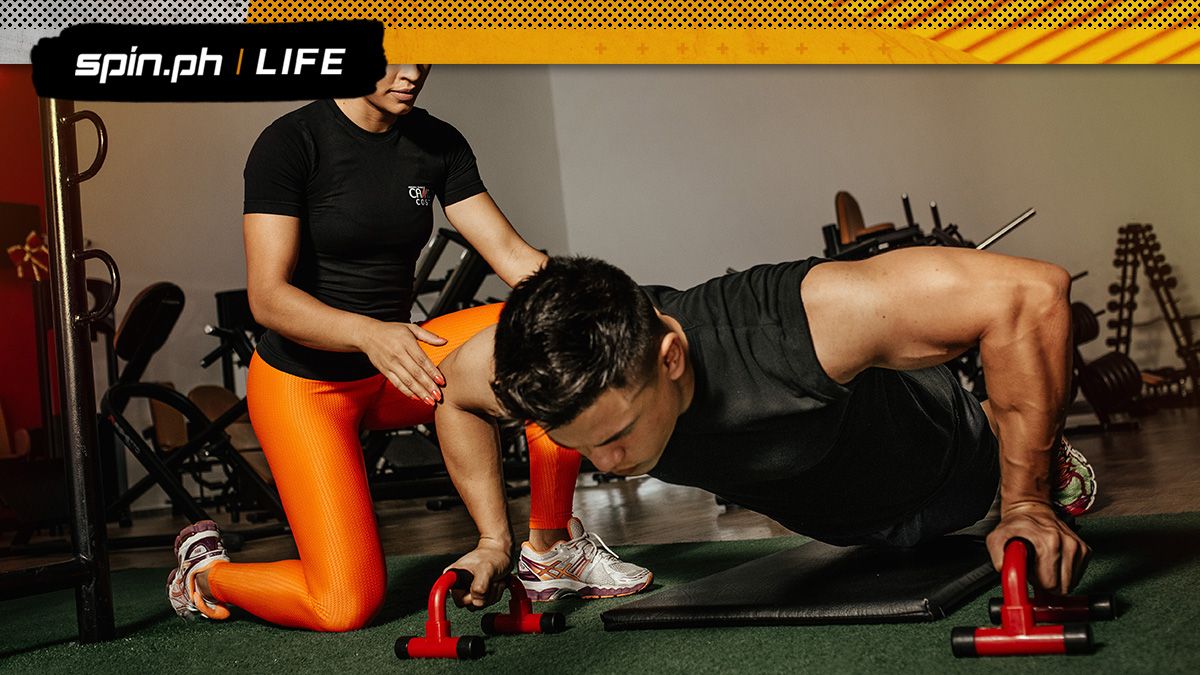
The past decade has seen the local strength and conditioning industry grow significantly. Not by leaps and bounds, but growing, nonetheless.
When I was still in college two decades ago, there were only a few strength and conditioning coaches you could look up to and pattern your career after. The most notable one would be Herc Callanta, who was the trainer of the Shell PBA team — one of few PBA teams that even had a trainer on their staff.
When I started working at the Moro Lorenzo Sports Center, training athletes in the Ateneo, I never really had a mentor who could teach me the ins and outs of the profession. Almost everything I learned at the beginning, I figured out on my own, or had to read it in a textbook.
Today, the sports science programs of UP and UST already have internship programs that gives them access to the training of professional and collegiate sports teams.
These are the changes I’ve seen happen here in the country that made, and continue to make, athletes even fitter for their sport.
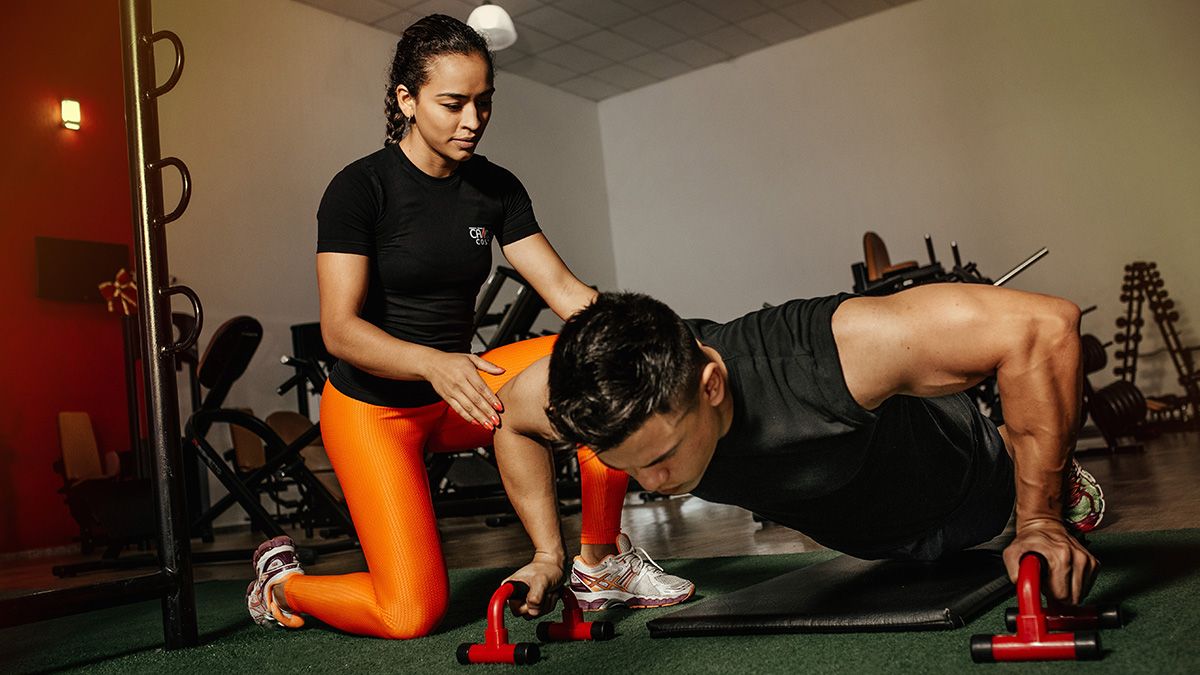
Dedicated Strength and Conditioning Coaches
Up to a few years ago, only pro and college teams had strength and conditioning (S&C) coaches. Now, even the high school varsity teams have their own S&C coach on their staff.
And this development is not exclusive to the basketball teams. Other sports such as volleyball and football have started employing full time trainers on their staff in addition to the other assistant coaches.
Sport-related Exercise Variations and Progressions
Before, training in the weight room was separated into circuit training for beginners, bodybuilding to get bigger, powerlifting for max strength, and Olympic lifting for power.
Now, functional athletic training is its own classification. Sport-general and sport-specific exercises have evolved from the classics. These exercises focus on injury reduction and on improvement of court/field performance.
Contrast Training
Supersets were the new thing in athletic training more than years ago. Supersets, or giant sets, saved time by enabling an athlete to train different body parts without rest at the same time.
Today, contrast training of the same body part is all the rage. This is done by pairing a strength exercise with a power exercise. An example would be doing a barbell back squat for 5 reps, then doing dumbbell squat jumps for another 5 reps right after.
This type of training supposedly excites the nervous and muscular system to a greater degree, leading to more explosive force development. But keep in mind that this is best left to athletes with a few years of strength training experience under their belt.
Velocity-Based Training
This is probably the newest on the list. It has only been practiced in the country maybe the last year or two.
Traditionally strength training programs were based off of a percentage of your 1RM (1 repetition maximum, or the most amount of weight you can do one time). Besides being time-consuming and potentially dangerous to test, your 1RM is not a set variable. It changes based on how you’re feeling on a particular day and as you get stronger.
A better, more personalized approach to selecting your optimal training loads is to base them off of your velocity, or your bar speed. How fast your gym equipment is moving correlates very well with your 1RM. Also, by knowing the ideal velocity of an exercise based on your goals, you can select the right weight for you.
While this is great in theory, how would you measure this? Experienced S&C coaches could gauge this by watching an athlete perform reps, but it was still quite subjective. Now, there are affordable devices you can get that will measure bar speed, calculate power output, and give you useful feedback. Recently, a device called Train with Push became locally available at a relatively affordable price. You simply strap the device on your forearm, download the free app on your smart phone, punch in the exercise and load, and you are good to go.
The Trap Bar
Before the rise in popularity of the trap (or hex) bar, the two main options for training athletes in the double leg stance were the barbell back squat and the barbell deadlift. Both have their limitations, especially for the taller athletes, since the position of the barbell shifts the center of gravity either forward or backward.
With the trap bar, the athlete can maintain his or her natural athletic stance and even do heavy max strength lifts or explosive power jumps without discomfort. It also puts less stress on the lower back so athletes can confidently increase the load with less risk of injury.
Shorter Warm Ups
Traditional warm ups used to include slow jogging and static stretching. Both of those take up a lot of time, which should be better used to develop athleticism, reduce injuries, and physically and mentally prepare the athlete for the demands of their sport.
Today’s warm up for sport consist mainly of muscle activation, active stretching, sport-general movements, and rapid response drills to challenge both the muscular and nervous system. These warm ups normally take 5-15 minutes max, compared to the 20-30 minutes of yore.
Recovery and Nutrition
A well rounded athlete should give equal weight to training, nutrition, sleep, and an active mindset. So it's heartening to see recovery and nutrition strategies being given as much importance nowadays as training and practice sessions.
Over the last decade, fitness trackers also became popular. In my opinion, their most useful feature isn't the step counter, but the sleep monitoring function. If you're an athlete, make sure to get a full 8 to 9 hours every night — injury rates increase exponentially when an athlete has only 6 hours of sleep.
What you eat is also a vital part of training. Sports nutritionists are also starting to be employed by top level teams and athletes. Always keep in mind that you cannot outwork a bad diet.
And one trend that didn't work:
BS Equipment and Modalities
BS, of course, means bull shit. There are so many training gadgets and fads that promise quick and easy results. Nothing beats consistency and progression in training. Don’t be fooled by (most of the) products, even if they are endorsed by top level athletes and gyms. Remember that fitness is still a business and getting you to part with your hard-earned money is top priority for them. Do your research first or consult an expert before buying a product or trying out a radical weight loss program.
Julio Veloso is a graduate of the University of the Philippines (Bachelor of Sports Science) and the University of Sydney (Masters in Exercise and Sports Science). He has trained athletes from high school, college, and up to the professional level, including several UAAP and PBA teams.
Get more of the latest sports news & updates on SPIN.ph
NOTICE ON UNAUTHORIZED AND UNLAWFUL USE, PUBLICATION, AND/OR DISSEMINATION OF SPIN.PH CONTENT: Please be notified that any unauthorized and unlawful use, publication, and/or dissemination of Spin.ph’s content and/or materials is a direct violation of its legal and exclusive rights to the same, and shall be subject to appropriate legal action/s.
