
AUCKLAND, New Zealand – The Filipinas’ tremendous showing in the 2023 Fifa Women’s World Cup will definitely go down as one of the most memorable moments in the history of Philippine sports.
“To bring football to life in the Philippines is a moment in history, and one that you can’t turn back from following football, following women’s sport, unheard off and unprecedented,” said head coach Alen Stajcic on Sunday. “The players have left an indelible mark and left a legacy for future generations to come.”
See Alen Stajcic declines to discuss future with Filipinas as contract expires
The players certainly want to come back for another tour of duty in the World Cup, and that includes Filipinas top striker Sarina Bolden, who is determined to apply what she learned from the experience of playing against top-class football countries for the first time, most notably world No. 12 Norway.
“I’m ready for the next World Cup,” said Bolden, the first goal scorer of the Philippines in the World Cup when they beat New Zealand last Tuesday. “I’m hoping that we are able to qualify. We just need to continue what we are doing, don’t change up things too much and continue to learn and grow, trusting the process. Four years is a long time from now. But the process starts now and how we can get better, how can we grow from this and learn from this. I have no doubt in my mind that we will be able to be a better team for it.
Filipinas defender Angela Beard, who played for three international matches for Australia before moving to the Philippines in time for the World Cup, said she is with the team for the long haul.
“You can expect me to be here for the rest of my life, honestly,” said Beard. “I’ve done the change. I’ve done the work. It took me a while to get here and now that I’m here, it’s not a one-stop shop. I’m here for the long run.”
Sustainability
With the team proving that they can play football competitively against the best in the world, the Filipinas could only hope that the interest generated from all over the globe by Filipinos, especially from those who are new to the game, will be sustained – an essential element of the puzzle if the country would want to make it back to the World Cup stage again.
Even with the landmark achievement here, Stajcic admitted there is still a lot of work to do in order for the Philippines to make continued progress in world football. Sustaining interest will mean new recruits, a task that will require a lot of investment to women’s football.
“The reality is I came from Australia and I think 2007 was the first win in Australia have had at the World Cup after four or five World Cups. New Zealand had six World Cups. I think South Korea has only had one win at the World Cup and we’ve come to our first World Cup and won a game coming from a hundred lengths back behind all these other footballing countries with so much pedigree and so much history and so much investment in women’s football.”
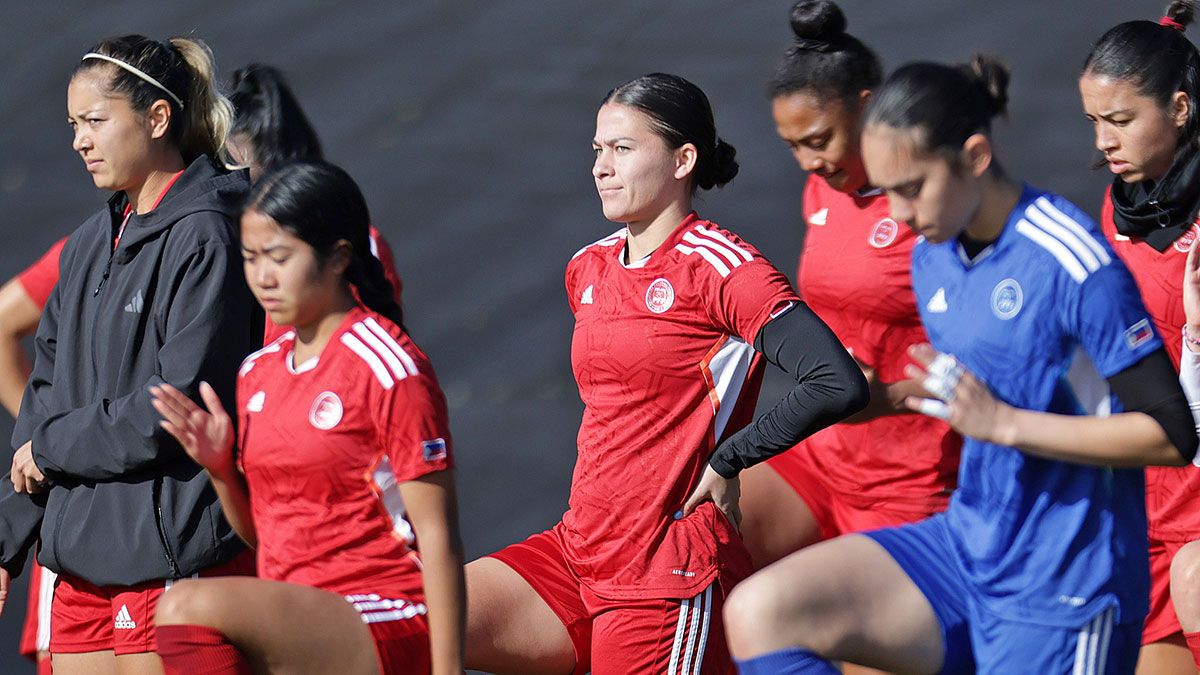
“This is just a tip of the iceberg for the Philippines for them to continue this legacy. They need investment in grassroots programs across the Philippines. We could go through a whole spectrum of things that need to happen to grow on this point,” said Stajcic.
Grassroots programs will definitely be a start in order to produce more talents. With the interest that generated in the World Cup, Stajcic is hopeful that young players, even those who have already taken up a different sport, will give football a second look.
Stajcic said neighboring countries in the Southeast Asian region like Vietnam and Thailand, which already has Women’s World Cup appearances in their belt, are living proof that Philippines can be also good at football on a consistent basis.
“There are millions of things. You need to invest in the national youth team. You need to invest in grassroots program, domestic league, academies, and centers of excellence all across the Philippines for boys and girls to play. It’s a country of a 110 million people who loves basketball. But we need to convert some of those young kids into football.
“I’m sure Southeast Asian countries like Vietnam and Thailand have displayed a long period of time now that they can become technically very good players and have good national teams over a long period of time and it’s not just a flash in the pan. All of those things are necessary,” said Stajcic.
There is a lot of optimism from the team that women’s football and the sport in general will remain in the consciousness of the Filipinos, whose main interest in team sports centered around volleyball for women and basketball for men. The Azkals men’s football team also revived the interest of football in the country starting with the ‘Miracle in Hanoi’ in 2010, but disappointing results over the past couple of years have turned casual fans away.
“I hope football grows immensely,” said Bolden. “Right now, it is basketball and volleyball… I’m hoping that there will be parents putting their kids into football just to give it a try.
Filipinas goalkeeper Olivia McDaniel is already seeing the effect of their progress during the World Cup preparations as private companies are starting to invest in them on top of the support being provided by their team manager Jefferson Cheng.
“We’ve grown so much as a team,” said McDaniel. “We used to not be able to have matching gear, we used to not have any balls to play with or anything to travel with, gear, whatever. And now, we have this adidas sponsorship. We have so much going for us. We couldn’t be more grateful and grounded for everything that has been given to us.
“I think we just want to continue to grow our federation and our program. We are not as lucky and blessed as maybe Norway or USA or have the funding for that. But we want to grow and continue it. Maybe eventually, we can get there,” said McDaniel.
McDaniel will do her role in spurring growth of women’s football locally through her upcoming stint in the PFF Women’s League as the Filipinas goalkeeper will play a couple of games for Stallion Laguna FC. The PFF Women’s League is still working their way into the awareness of the Filipino fans, and it’s growth is also vital to the big picture of women’s football.
“I think it will be huge, playing some games with Stallion Laguna,” said McDaniel. “That’s the point why we are here and why we are doing this. We want to grow the game as much as we can and let people know that they can do this, they can play. It starts with our homegrown leagues. And I really just want to make sure we grow it and everybody can be able to play.
At the end of the day, though, the ball is now on the Philippine Football Federation, according to Stajcic, to keep the momentum going and continue to stay at the highest level for the next World Cup.
“All of those things are necessary,” said Stajcic, referring to the things that must be done in order to continue the progress of women’s football. “We can talk for hours and days, in fact, that need to be done and it’s really up to the leadership of the PFF. I know they’ve got elections in November. It’s a big mantle. But I think we have given them a good head start and something that they can build on now.”
“These players have flown the flag at this level and competed against some of the best players in the world and done the country proud. There is a support base for football. You don’t get 75,000 people to three games and packed stadium in a foreign country [if you don’t get] serious support for the game,” said Stajcic.
Get more of the latest sports news & updates on SPIN.ph
NOTICE ON UNAUTHORIZED AND UNLAWFUL USE, PUBLICATION, AND/OR DISSEMINATION OF SPIN.PH CONTENT: Please be notified that any unauthorized and unlawful use, publication, and/or dissemination of Spin.ph’s content and/or materials is a direct violation of its legal and exclusive rights to the same, and shall be subject to appropriate legal action/s.
