
JANUARY 1, 2022 was supposed to see a tectonic shift in the PBA as the decades-old play-for-pay league ushered real, authentic free agency.
Up until that point, free agents in the pro league were anything but free. Contracts were terribly one-sided in favor of ballclubs, so much so that signing rights on players stayed with their mother teams even after the end of their contracts, unless renounced.
Sure, free agents can receive offer sheets from other ballclubs. But all their mother clubs need to do is match the offer to keep them. A rebellious few sat out conferences, even a season, in order to twist the arms of teams and force trades, only to realize the futility of it all as teams still held the players' signing rights. In perpetuity.
That changed at the turn of the year when unrestricted free agency took effect. Starting with the rookie draft class of 2014, players at the end of their seventh PBA season were given the right to sign with any team of their choice, without any restrictions or pre-conditions. Suddenly contract rules that tied down players to their mother teams ad infinitum were gone. Hallelujiah.
Wait. There's just one problem.
A disturbing pattern emerged right in the first few days of unrestricted free agency, when the first four players who explored options in the free-agent market ended up joining teams belonging to the two most powerful blocs in the league. Rodney Brondial went to San Miguel, Chris Banchero to Meralco, Nards Pinto to Ginebra and Matt Ganuelas Rosser to TNT.
Alarm bells suddenly rang. A laudable rule that meant to free players from years of veritable bondage with their mother teams ironically came under scrutiny from quarters who feared it could end up as an opening that teams with unlimited resources could exploit to get the players they want.
"It legalized poaching," rues Tommy Manotoc.
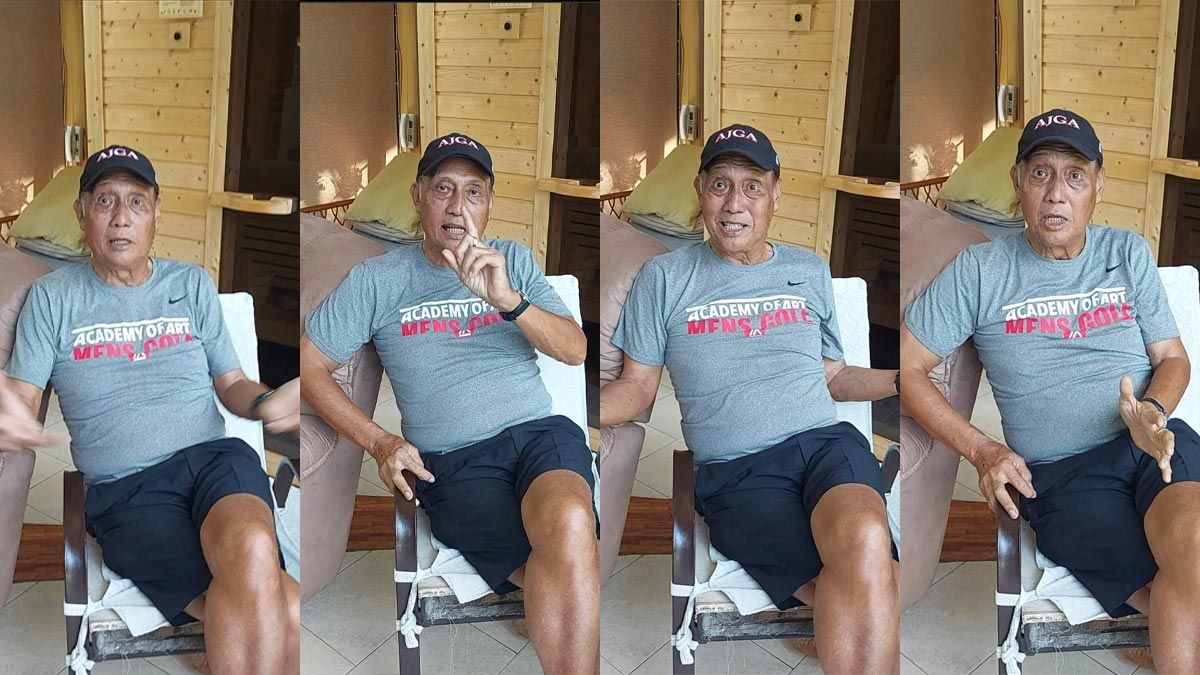
Manotoc, of course, knows whereof he speaks. As deputy commissioner in the eighties, the multi-titled coach and golfer helped lead the league's transition from the Crispa-Toyota glory years by aspiring for a more balanced league that eventually lured big companies like Alaska, Purefoods, and Shell.
Now, all he sees is a league that he in all candor says has turned into an 'inter-company league' pitting TNT, Meralco and NLEX of the MVP group on one side and San Miguel Beer, Magnolia and Barangay Ginebra on the other side - or maybe one or two more if you believe the chatter among league insiders.
It is no coincidence that teams from the MVP and SMC blocs have won every PBA championship in the league the past six years, or since Rain or Shine became the league's last independent team to lift a trophy in the 2016 Commissioner's Cup.
Since 2013, only two teams not allied to the MVP and SMC camps have won championships - two over a span of 20 conferences.
No more fake trades
Manotoc admits league parity has never been as compromised as it is now, and it doesn't help that a UFA rule designed to give players more contractual freedom can be weaponized to strengthen the existing duopoly in the PBA.
"At least now, wala ng dadaanang mga fake trades at scrutiny ng Commissioner's Office, gaya ng dati," says the former Crispa, U-Tex and San Miguel coach, his tone dripping with sarcasm. "Diretso ng nakakalipat ang mga players."
For unrestricted free agency to work as it was meant to, NLEX coach Yeng Guiao says the new rule must work hand in hand with the stringent enforcement of the league's salary cap rule to make sure that all packages offered to players are aboveboard - and guarantee a level playing field in the free-agent market.
But over the years, salary limits on teams and players are only loosely followed, the ceilings treated more as barometers on the enormity of the contract than as hard and fast rule.
Under such circumstances, UFA will only hurt the league more than help it, admits Guiao.
"We need to go back and reevaluate, reassess bakit natin ginawa ang unrestricted free agency in the first place," says Guiao, who, in between a successful coaching career in the PBA with Swift and Red Bull served for years as commissioner of the Philippine Basketball League (PBL).
"One, we’re trying to be fair to the players. Ang nangyari kasi, ang mga players hindi na sila makapag-desisyon sa team na gusto nilang paglaruan. Parang ang hirap sa kanila na pumili ng team na sa tingin nila doon sila magta-thrive, dun sila gagaling, dun sila mabibigyan ng opportunity. Yan ang main objective n'yan.
"Another objective is to maintain parity. Ayaw naman nating mangyari na nagkaroon ng unrestricted free agency na sa isa o dalawang teams na lang pumupunta ang mga nagiging free agents. So we have to balance that.
"Sa akin, the only way to balance that is to review or evaluate our salary cap system. Tataasan ba natin ang salary cap natin? Iistriktuhin ba natin or tatangggalin na natin? Kailangan magkatugma 'yan – unrestricted free agency at strict implementation or reassessment of the league’s rules on salary cap."

League officials, speaking off the record, said the Commissioner's Office has men tasked to scrutinize all contracts submitted by the teams to make sure these conform to salary cap rules, including one who add up the total value of the deals to make sure it isn't over the P50 million team salary cap per year.
All the UPCs are also scrutinized by league officials and later submitted to the Bureau of Internal Revenue (BIR), the insider added.
But league officials themselves admit that policing the member ballclubs for possible salary cap violations is hard, if not impossible, while incidents of players allegedly being given two contracts - one submitted to the league, the other with the real value of the deal kept in a vault by the parties involved - are common knowledge.
Unless someone squeals, like in the case of one high-profile team in the early 2000s which has since left the league, catching salary cap violations is next to impossible, one official says.
No wonder then that in the face of a half-hearted battle against salary-cap violations that the PBA can never win, a proposal to scrap the salary cap altogether is gaining traction in league circles. If there is no way to enforce a law, why not drop it altogether, the proponents of the move said.
There will be serious repercussions, especially among low-tier teams which do not have bottomless budgets to lure marquee players with eye-popping contracts. But proponents believe the PBA system provides these teams with other opportunities to build winning teams outside of free agency, beginning with the annual rookie draft. That is, if the draft route is used correctly.
The lifting of salary restrictions, proponents feel, can eventually weed out companies with not enough resources and commitment to compete in the league and turn the PBA into a battle among teams backed by big business.
Why not?
Manotoc isn't too optimistic, however.
The grand slam coach points out PBA teams up until this time are still reliant on a slice of the advertising budgets of the companies they represent. As such, these teams have little room to maneuver when it comes to players' contracts, except those backed by management with deep, deep pockets.
The scenario, he adds, is very much different to regional leagues from the NBA to the Japan B.League where ballclubs are private entities that are mostly self-sustaining. As such their capacity to go after players is dictated by success, which often reflects in the team's income from ticket sales, sponsorships, and share in the TV revenue.
"All these teams are funded by the companies' advertising budget, which is no longer enough," explains Manotoc. "That's why the teams that dominate are those with deep pockets. It's all about how deep your pocket is."
Another former commissioner, Noli Eala, also doesn't see the need to scrap the salary cap, saying it remains an 'essential policy' in maintaining a delicate balance in the competition in Asia's first professional basketball league.
Instead Eala advocates a strict enforcement of the PBA's rules, beginning with the team and individual salary cap, by a strong and independent Commissioner's Office.
"I believe the PBA salary cap is still worth keeping. It's actually an essential policy to achieve better competition and league parity," says Eala. "However, the current salary cap rules need reforms and stricter implementation. The perception is these rules are more observed in breach than in compliance."
"A system of transparency and accountability must be put in place. Also the team and individual salary caps need to be reviewed and if necessary adjusted to keep with the competition and global market," Eala continues, adding, "these reforms will test the true independence of the Office of the Commissioner."
Transparency. Accountability. Parity. Strict implementation of rules. Reforms. Independent commissioner. Problem is, all these things are in very short supply in the PBA these days.
Guess the PBA really is toast.
Get more of the latest sports news & updates on SPIN.ph
NOTICE ON UNAUTHORIZED AND UNLAWFUL USE, PUBLICATION, AND/OR DISSEMINATION OF SPIN.PH CONTENT: Please be notified that any unauthorized and unlawful use, publication, and/or dissemination of Spin.ph’s content and/or materials is a direct violation of its legal and exclusive rights to the same, and shall be subject to appropriate legal action/s.
