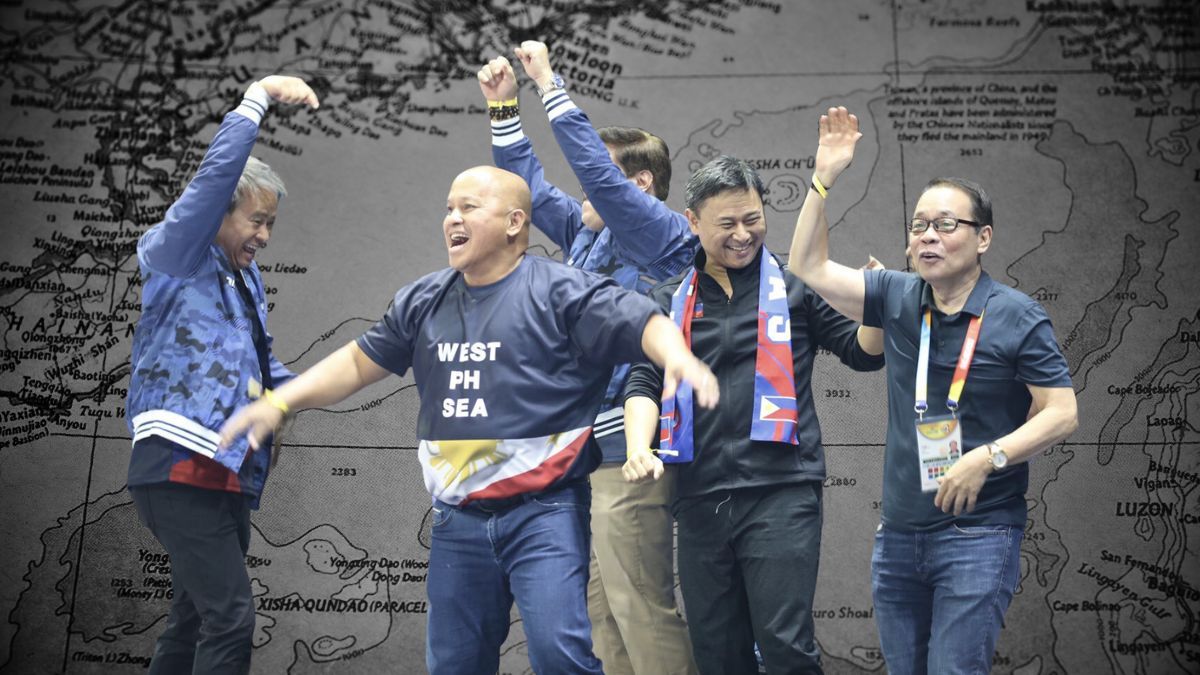

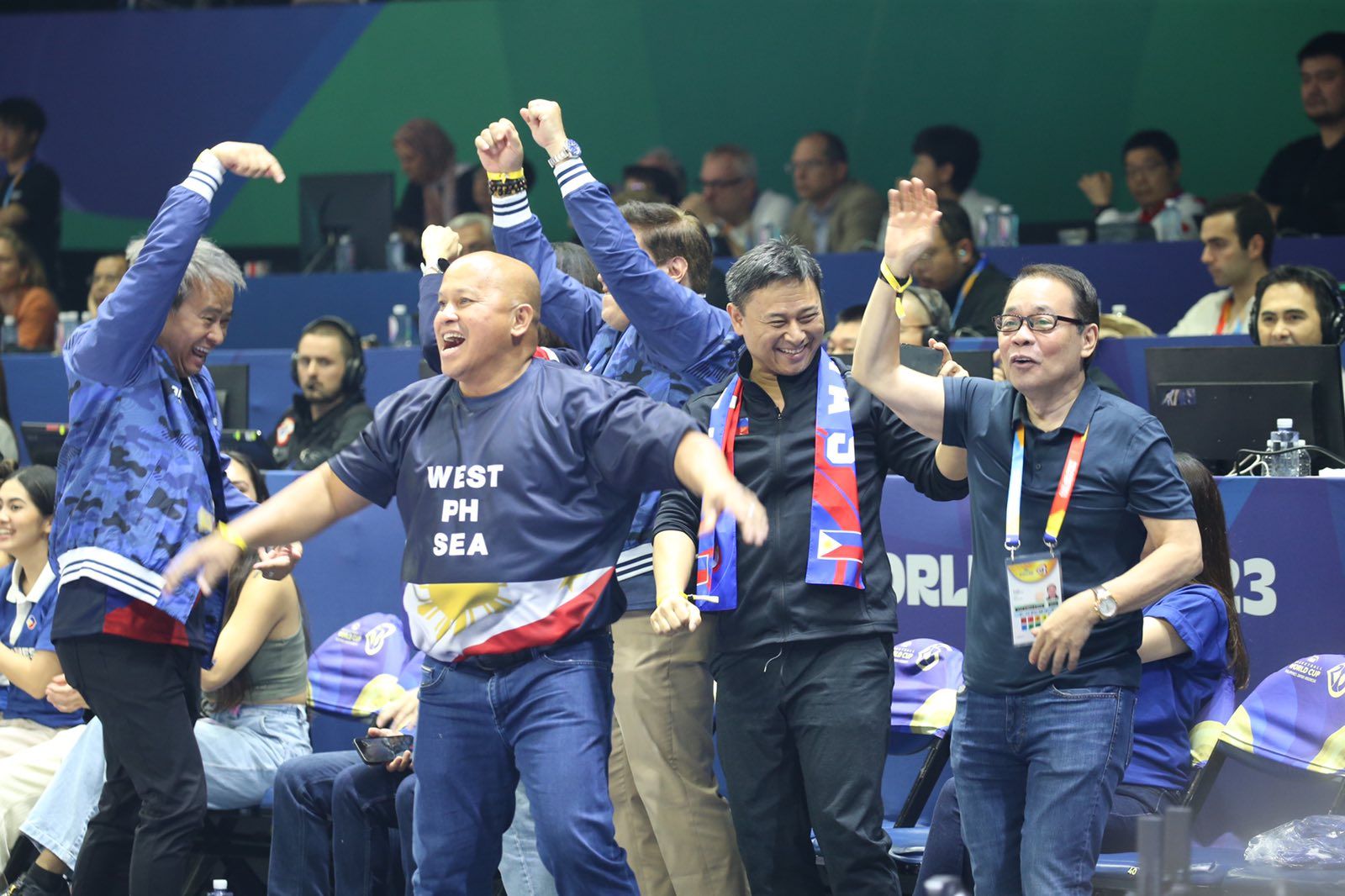
For decades, sporting events have become more than just a showcase of athletic prowess. They have emerged as a powerful platform for protest and social change. The highly charged match between the Philippines and China at FIBA 2023 was no exception as we saw several politicians in attendance flashing “West Philippine Sea” shirts as they cheered from courtside for the national team.
“Don’t politicize sports, thanks” one social media user wrote. But this statement is a very broad brush that ignores the very long history of sports and diplomacy and how politics is often the background on which many sporting events take place.
In the 1968 Olympics, Tommie Smith and John Carlos raised clenched fists wrapped in black gloves while the U.S. national anthem was being played, to protest racial discrimination and inequality in the United States. That singular act would be known as the Black Power Salute, a silent yet potent act of defiance that left an indelible mark on the civil rights movement and inspired generations to stand up for justice.
Black Power Salute: American sprinters Tommie Smith and John Carlos raised their fists in protest during the 1968 Olympics.
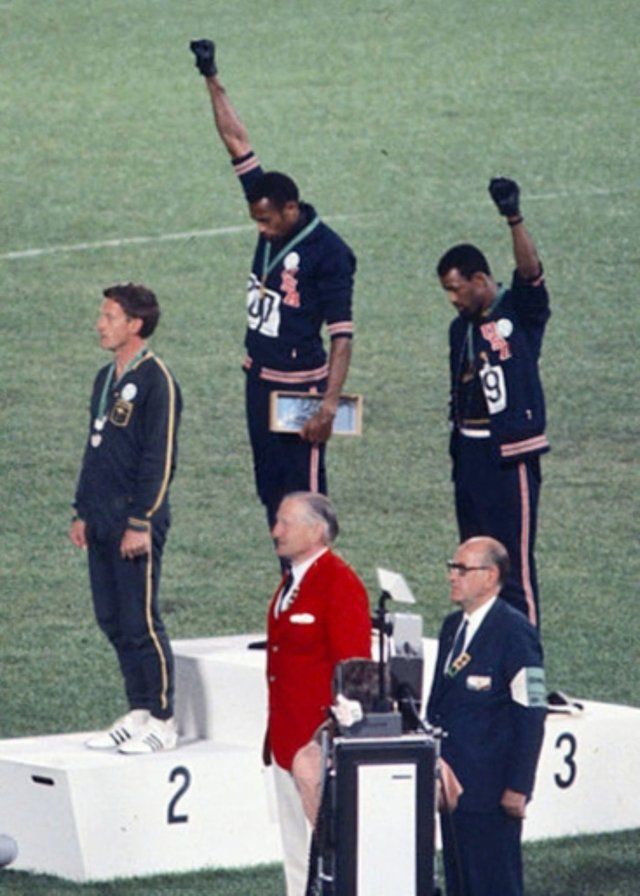
From the raised fists of Tommie Smith and John Carlos at the 1968 Olympics to quarterback Colin Kaepernick taking a knee at the NFL, athletes and activists alike have harnessed the spotlight of sports to amplify their voices and advocate for justice.
Protests at sporting events are not merely displays of dissent: they are a reflection of the evolving role of sports in society. Even the International Olympic Committee has recognized the right to protest by releasing guidelines for Olympians to “express their views'' on the field of play. Traditionally, the IOC has a longstanding policy against protests in sporting events but this little concession at the 2020 Tokyo Olympics remains significant.
The very fact that sports is a very powerful tool for enhancing national prestige and legitimacy is itself political. And it’s not as if the sports world itself is completely divorced from world politics. In a way, it has been a platform for diplomacy and pressure, with international sports organizations working together to punish or reward countries for their governments’ actions. In 1991, the sports community lifted the sanctions that were imposed on South Africa as a consequence of apartheid. Another perfect example is how the IOC created a diplomatic solution for Taiwan and China, which is still in force today: the simultaneous attendance at the Olympic Games and other major events in the world, of delegations from both the People's Republic of China and Chinese Taipei.
Historically, sporting events were seen as a refuge from the troubles of the world—a place where people could escape their everyday worries and unite in celebration of human achievement. However, this perception has been challenged and reshaped over the years as athletes have used their visibility to address pressing social issues. While some argue that politics should be kept separate from sports, it is increasingly clear that sports and politics are inextricably linked.
The actions of athletes like Colin Kaepernick and the WNBA players who wore shirts bearing the names of police violence victims have sparked critical conversations about racial injustice and police brutality. By using their platforms to draw attention to these issues, these athletes have catalyzed change, prompting important discussions about how our society can evolve to become more equitable and just.
Protests from spectators
But it's not just athletes who use the arena for protests. Even fans kick up a spectacle to let their voices be heard, just like what happened at the Philippines vs China match at FIBA 2023.
From FIFA World Cup matches to local derbies, spectators have used their presence to send a message. Banners unfurl, chants rise, and the stands become a canvas for political statements.
The 2018 World Cup in Russia saw fans displaying LGBTQ+ pride flags and messages of equality, despite the country's controversial stance on LGBTQ+ rights. This subversive use of sports as a backdrop for protest highlights its power to transcend borders and ideologies.
Critics of protests at sporting events often argue that they detract from the game itself or alienate fans. But it is precisely the disruption that makes such actions so effective. Protests at sporting events are not a disruption but rather a reminder that the arena is not isolated from the real world. By taking a knee or raising a fist or wearing a provocative shirt that says “West Philippine Sea,” they challenge us to confront the idea that we cannot simply ignore the issues plaguing our society. Long after these sporting events are over, such issues will still persist and affect our lives.
Senators Joel Villanueva, Bato Dela Rosa, Migs Zubiri, and Sonny Angara seen on the courtside during the Philippines vs China match in FIBA 2023.
Protests at sporting events are not always an affront to the spirit of competition but an affirmation of the values that even sport upholds: fairness and equality. These are just a reminder that our sports arenas are not isolated from the problems of the world but rather, a reflection of it.
When I watched that basketball match between China and the Philippines the other day, I could not help but think of how significant the game was for the Philippines, considering how China has repeatedly defeated our country in the West Philippine Sea. I thought to myself: At least dito, pwede tayong manalo. Seeing that text prominently shown on the shirts of senators I did not vote for, pride and patriotism still swelled inside me.
As we watch athletes take a knee, fans raise banners, and stadiums become platforms for change, we are witnessing a transformation in the world of sports. It's no longer just about the competition. It's also about the conversation. And the conversation and the anthem of protest will continue to play for a very long time.
For more stories about life beyond sports, visit Spin Life.
Get more of the latest sports news & updates on SPIN.ph
NOTICE ON UNAUTHORIZED AND UNLAWFUL USE, PUBLICATION, AND/OR DISSEMINATION OF SPIN.PH CONTENT: Please be notified that any unauthorized and unlawful use, publication, and/or dissemination of Spin.ph’s content and/or materials is a direct violation of its legal and exclusive rights to the same, and shall be subject to appropriate legal action/s.
