
WITH a few days left before the start of the Southeast Asian Games, the country is engulfed by a debate. Sadly, it’s not about how many medals we will win, or how in peak form our athletes are, or if we ever had enough firepower to overcome our rivals.
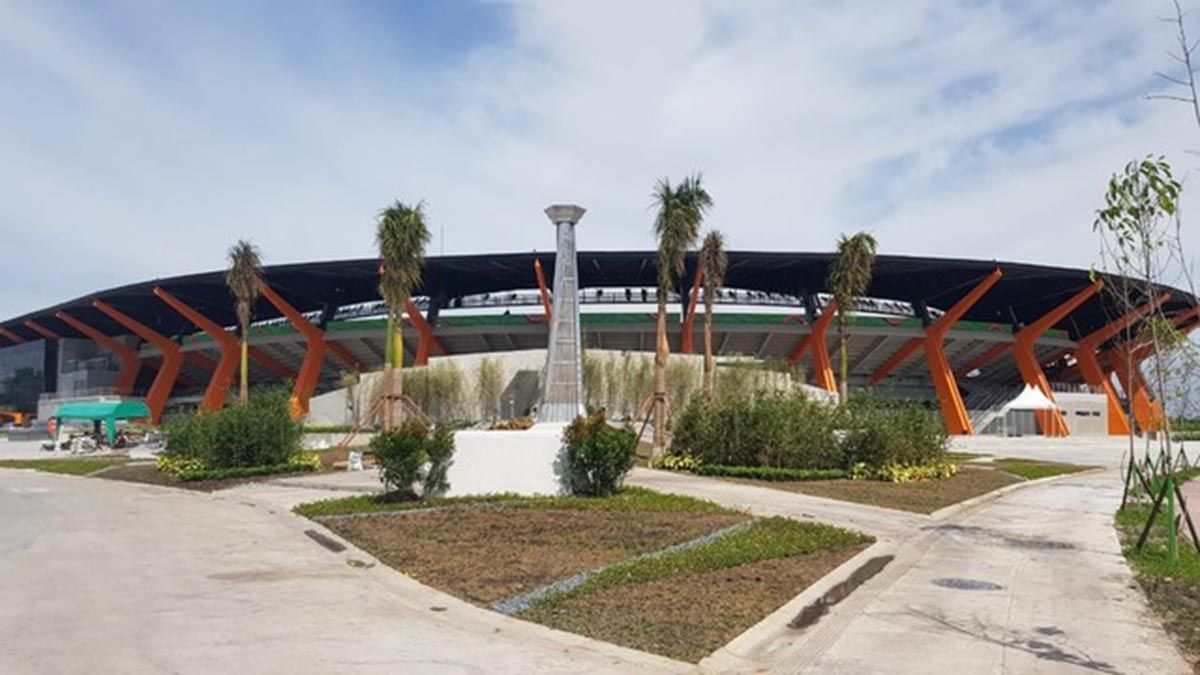
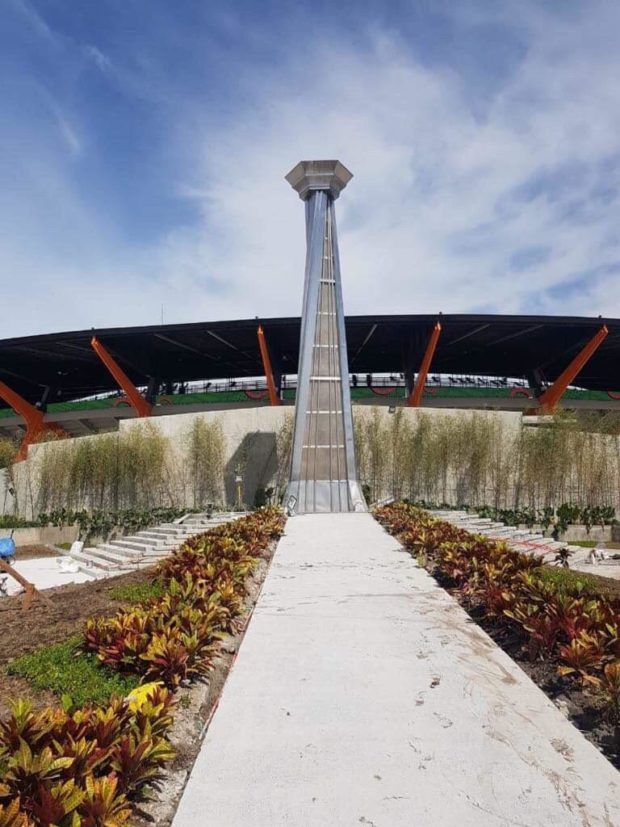
Instead, our officials are locked in a discussion about a cauldron. Yes, a cauldron. This is a cauldron from which a flame is set to burn nonstop from Nov. 30-Dec. 11, the period of the Games. And the debate that’s so noisy and hot it threatens to engulf even the flame itself is this: Is this cauldron shamelessly overpriced or completely necessary? Is it a symbol of hope eternal or is it a show of excess forevermore?
Senator Franklin Drilon had everyone in shock when he disclosed that the 50-meter structure inside New Clark City, then the site of a U.S. military base and now the site of the Games’ major events like athletics and swimming, had cost us 50 million pesos!
“We can build 50 classrooms from that amount,” the senator objected. “To me, P50 million is an extravagance that is so unnecessary.”
It’s hard to argue with that. The SEAG is, after all, a one-time competition, and the cauldron isn’t likely to be used again until the country hosts another huge event, such as the Asian Games. Which, if it ever happens, will be 10 to 15 years into the future.
So after the SEAG, the cauldron will just stand there, untouched in the next many years, soaring above the Clark landscape, gathering the dust and grime the winds will blow its way.

Meantime, government officials supporting the structure, including President Rodrigo Duterte, like to say that the cauldron is a piece of art that we must appreciate because, as the President puts it, the cauldron is the “product of the mind” of Francisco Mañosa, the architect commissioned by the Philippine Southeast Asian Games Committee (Phisgoc), a private foundation tasked to oversee, organize, and run the Games, an event chaired overall by none other than Speaker Alan Peter Cayetano.
“That’s like a painting,” Duterte says. “You cannot debate with the painter.”
As designer, Mañosa received P4.4 million. Other costs involving the structure are P13.4 million for the foundation, P32 million for the construction, and P6 million for “wrist tags,” which nobody from Phisgoc quite knows how to explain. In all, the government has spent P55 million for the cauldron, now famously known as the “kaldero.”
“It’s a work of art,” Cayetano himself says, describing the cauldron of his fantasy and justifying its expense, even calling the amount “appropriate,” because, as he would remind us, Singapore spent P63 million for its own cauldron.
Why Cayetano is so heavily invested in running the SEA Games even as he sits as Speaker of the House has befuddled the public, confused legislators, and irritated sports officials. Already he is the real power in Phisgoc, a controversial foundation that has taken over the entire operations of the SEA Games.
Cayetano’s moves strike us as strange. But, maybe, that’s because we forget so easily. Back when he was Duterte’s Foreign Affairs secretary, he actually convinced Congress to put the humongous SEAG budget of P7.5 billion — yes, not million, but billion — under his department. This means he was the power behind its disposal. When he took over as Speaker, the SEAG apparently never strayed far from his mind because it was then that he orchestrated the organizing of the Phisgoc — thus delivering to the foundation the billions allotted for the Games.
Meantime, I suggest that our officials stop describing the cauldron as art. It isn’t. It’s a functional tower designed to burn gas. And I don’t see any of our athletes genuflecting before this tower and saying it inspired their good performance.
I have covered many international sports, including the Asian Games and the Olympics, but I’ve never seen a host country deify an urn as its country’s symbol. Also, I have yet to see those original cauldrons being used again. Recycling generally does not apply to cauldrons. More likely, they’re left to becoming towering bird’s nests after the Games.
The SEA Games, as it is unfolding, will be the most expensive sports extravaganza the country has ever hosted. Every day, small bits of overpricing come to the fore, including socks costing P1,600 a pair.
Training athletes alone for the various events cost P1 billion, according to Philippine Sports Commission sources. Then there were more billions spent for new stadiums and for refurbishing old ones.
Congress, which Cayetano still leads as Speaker, approved a P6 billion budget for the Games, and House Ways and Means Committee chair Joey Salceda reveals that this was a lump-sum release without details of how the billions will be spent.
Phisgoc also received a whopping P1.5 billion for its expenses, and there are no checks and balances either for how the foundation will use the amount, Salceda says.
Sometimes one wonders if it’s worth hosting this event at all. The Games were supposed to be hosted by Brunei until former POC president Peping Cojuangco Jr. grandly offered to have the Philippines host it.
Well, one thing is becoming obvious. As host country, we’re already winning lots of gold, with some of it going straight into private pockets. The only way to make things right, at this catch-up stage, is for government to take Drilon’s advice: Conduct a professional accounting of the billions spent after the Games.
At the very most, we are paying for the Games and have a right to know where and how our officials are burning our taxes. At the very least, we don’t deserve to have anyone’s overpriced kaldero boiling us in our own fat.
Get more of the latest sports news & updates on SPIN.ph
NOTICE ON UNAUTHORIZED AND UNLAWFUL USE, PUBLICATION, AND/OR DISSEMINATION OF SPIN.PH CONTENT: Please be notified that any unauthorized and unlawful use, publication, and/or dissemination of Spin.ph’s content and/or materials is a direct violation of its legal and exclusive rights to the same, and shall be subject to appropriate legal action/s.
