
THIS IS a tale of two storms.
When Ondoy struck in 2009, Coach Yeng Guiao was on his way to a practice game in his home province in Pampanga.
He had only reached Sumulong Highway — a mere five minutes away from the family home in Rizal — when the churning waters made the roads impassable. But he couldn’t turn back. The flood was just too high. He spent hours trapped inside the car, watching the water inch slowly up. Stomach growling, Coach Yeng dug through the car for anything to eat. He had to settle for a stray box of mints.
Finally, in the drowned greens of Valley Golf, the force of the water broke down one of the golf course’s walls. The waters along Sumulong Highway began to slowly drain away.
“Saka lang siya nakauwi,” recalled his eldest daughter, Niner.
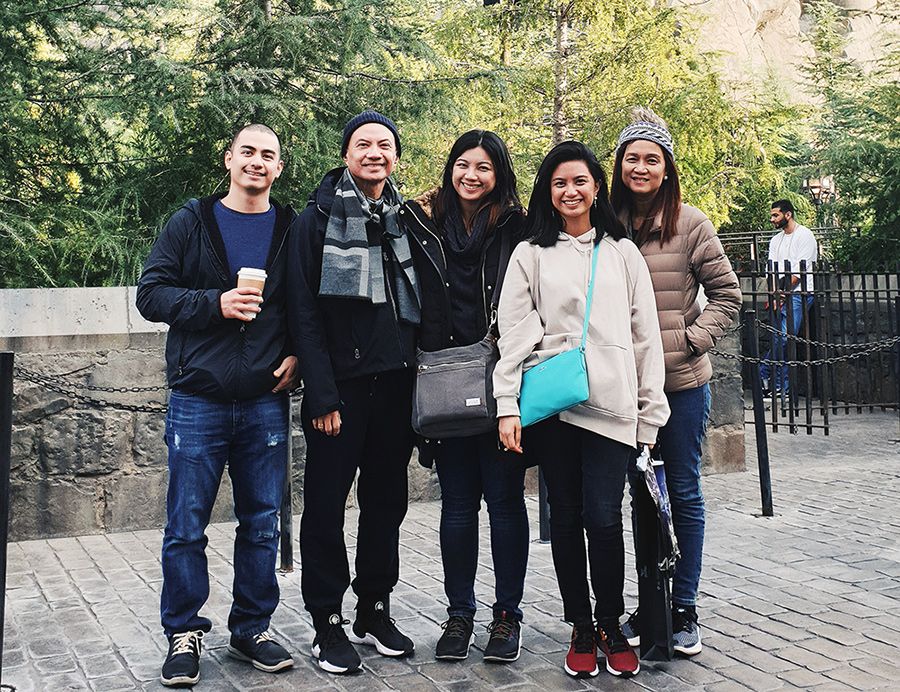
At the time, Niner was at a crossroads in law school. Feeling burned out by the pressure, she had decided to take a leave of absence. While she was figuring out what to do, she was interning at an international developmental think tank called the South Centre, where she was assigned to the climate change policy and research desk. While there, she remembered thinking, “Climate change is interesting, but it isn’t relevant to me.”
Ondoy changed all that.
Even while he was able to get home safe, her father received the bad news: Tony Chua, the manager of Barako Bull, the team Coach Yeng was mentoring then, had died during Ondoy. While retrieving something in his car just outside his home, the former PBA chairman drowned in the flood.
“I’m deeply shocked. I still can’t believe it,” said Yeng at the time to BusinessMirror.
In the aftermath of the storm, when the power came back and the floodwaters receded around their house and the Guiaos could finally safely step back out into the world, Niner began volunteering in donation drives to help out the many victims of the typhoon.
“Doon parang nag-sink in na, wait, this is climate change in real life,” she said in an interview with SPIN Life. “This is climate change in real life affecting people I care about, people I know.”
It was then that she made her decision. She would go back to law school. She would take up the cause of environmental law.
Learning from the game
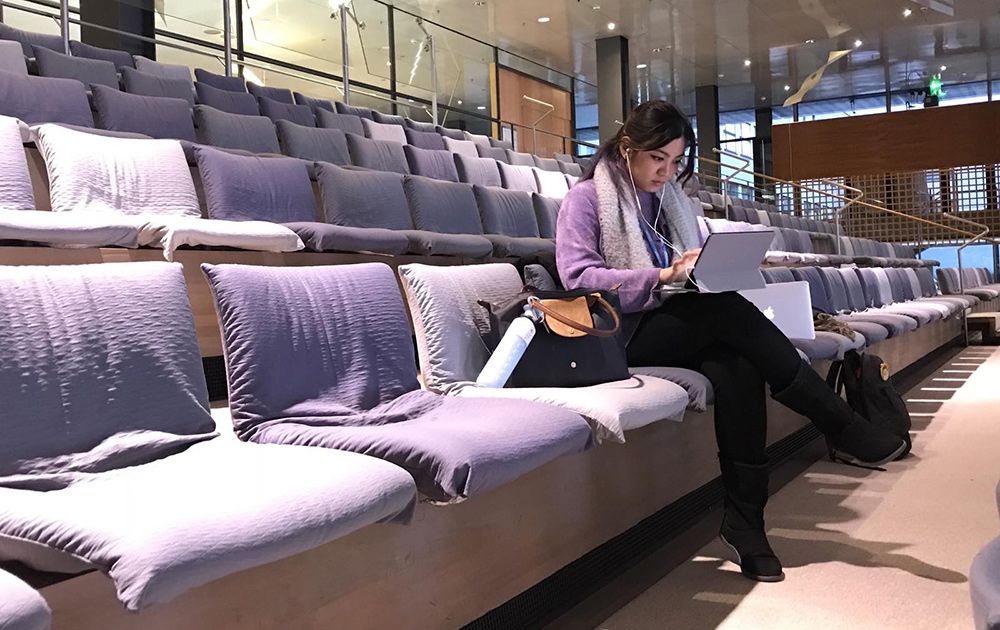
Like many children of PBA players and coaches, Niner grew up on the bleachers. All the way up to law school, she would do her homework during games, marking up her legal reviewers with a highlighter or tapping up papers on a laptop as Araneta exploded into roars around her.
“Basketball sent us all to school. It’s such a huge part of our lives,” she said.
As the eldest of Coach Yeng’s kids, there was that inescapable expectation — familiar to all children of hoops legends — that she would follow in her father’s footsteps. “Papaturo ako sa tatay ko, kasi di ako marunong,” she said.
One of the drills Coach Yeng would make Niner do to prepare her for grade school intrams was to make her lie on the bed and throw the basketball up to the ceiling and catch it. She laughs and shakes her head just remembering it.
“Di talaga ako sporty,” she explained. “Grade school pa lang, na-realize ko: Di talaga ako magiging basketball player. So I was free to do my own thing.”
As far as she knows, she’s the first lawyer in the Guiao clan of Pampanga. But advocacy is in her blood. Both her grandfather — who was jailed under martial law — and her father went into public service in the Central Luzon province.
But even her parents were surprised that she wanted to go the law route.
“Nung sinabi ko sa kanila na magla-law school ako, sinabi nila na parang, ‘Ha?’” Niner said. But it made sense with the Guiao family philosophy. “Growing up, yung sa amin, you have to help people. You grew up lucky, you have more than most, you have to be of service to other people.”
Right now, she wears multiple hats. Niner is the managing director of Parabukas, an international environmental consultancy which, in her words, “yung mission namin is to demystify legal policy issues around climate change and sustainable development.”
She’s also an associate at the Institute of International Legal Studies, and a professorial lecturer at the UP College of Law.
It’s a world removed from the echoing thump of basketballs and the roar of arena crowds. But having grown up in the game, Niner can clearly see the lessons both hoops, and her father, have taught her.
“Living in basketball, and even our family experiences during martial law, I learned that life really has its ups and downs,” Niner reflected. “There are times when you’re so high, you’re winning games, you’re winning championships. Then there are times when it’s so low, na what can I do, ba’t di nananalo ang team, why are things not going my way?”
She continued, “And that’s normal, and that’s part of life. What my parents always taught me is walang madali sa buhay.”
The hunger strike
We said that this would be a story of two storms. Here’s the second.
Four years after Ondoy, Yolanda struck.
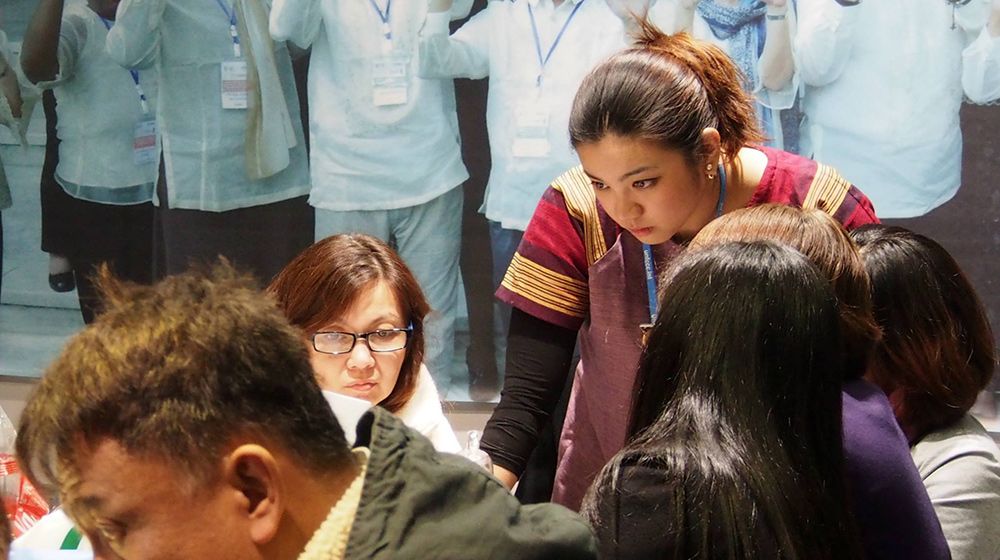
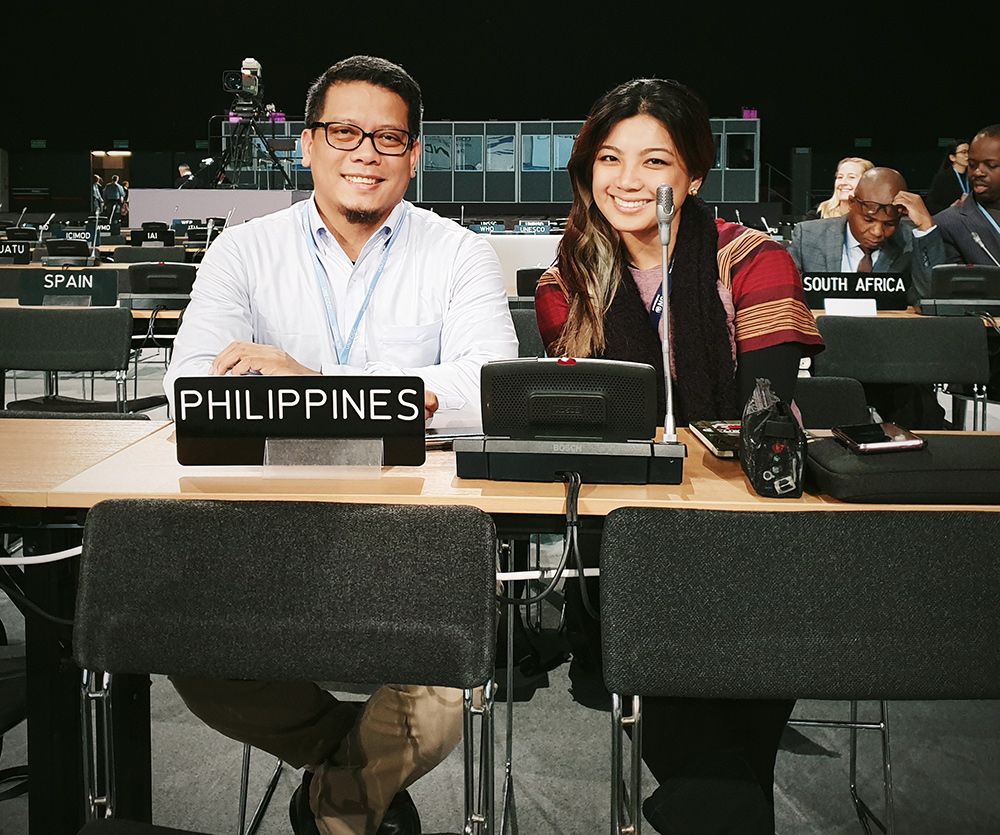
As the superstorm was about to make landfall in the country, Guiao was on her way to Warsaw. Together with a small contingent of Philippine environmental advocates, negotiators, and policy makers, she was going to attend United Nations-led climate talks in the two week-long 19th Conference of Parties.
When the Philippine delegation arrived in Poland, the international news feeds on television were full of horrifying images of the devastation in Leyte, Samar, and the rest of Eastern Visayas.
“Yun lang ang makikita mo sa TV,” remembered Guiao. “Umiiyak na lang kami doon.”
A part of her wanted to get the next flight out of Poland and go back to the Philippines — to volunteer, to be on the ground, to help out, like she did back in Ondoy. But she knew that she had to stay put. What the Philippine delegation would achieve here would set the stage for what would happen when the next Yolanda, the next Ondoy would come.
“Somebody needs to represent the country for that,” she said. “And obviously, we are victims of climate change. They need to hear our voice.”
At the opening of the conference, Yeb Saño, the climate change commissioner for the Philippines, announced that he would go on hunger strike for the rest of the negotiations.
In a thunderous speech that was greeted by a standing ovation by the rest of the attendees, Saño said, tears streaming down his eyes: “To anyone who continues to deny the reality that is climate change, I dare you to get off your ivory tower and away from the comfort of your armchair. [...] What my country is going through as a result of this extreme climate event is madness. The climate crisis is madness. We can stop this madness. Right here in Warsaw.”
Guiao was at the back of the room when the commissioner was giving the speech. Eight years later, she still gets emotional remembering that moment.
“It was great that we had Yeb as our leader then, because very strong siya in his stance,” she said.
Taking action
And it wasn’t just Commissioner Yeb. Later, during one of the breaks at the panels, Guiao saw a foreign delegate approach the Department of Agriculture’s Alice Ilaga, one of their other lead negotiators, to offer sympathies.
What Ilaga said in reply has lodged itself into Guiao’s memory.
“She was saying, 'Your sympathy is great. Thank you for your sympathy, but more than your sympathy, we need your action.' Yun ang [dapat] ipakita niyo sa amin.”
Action in environmental advocacy can sometimes feel, well, glacial. But a step is a step. In the past year, Niner has welcomed a new development in Philippine climate change policy: a slight increase in the country’s NDC, or nationally determined contribution. By 2030, the Philippines would reduce its carbon emissions by 75 percent — up from the 70 percent initially promised.
Of course, the reduction is contingent on financial contributions that the Philippines will receive from other countries. But “we have a 2.71 percent unconditional commitment,” said Guiao. So by 2030, whether we receive financial aid or not, the country guarantees that it will reduce its emissions.
To push forward her advocacy, she knows she needs to make people understand that climate change is real, and that it affects everyone. The realizations that came to Niner with the twin storms of Ondoy and Yolanda can't just stop with one person.
“How does [climate change] affect women? How does it affect PWDs? How does it affect indigenous people? How does it affect people who are living close to the coast?” she asked rhetorically. “That's what we're trying to do. We're trying to mainstream it into the conversation.”
It's an uphill fight against an implacable, impersonal, and imminent enemy. And just like in basketball, the Philippines, as a developing country, is fighting from an underdog position. But as more storms lash our coasts and yearly floods drive people from their homes, this is a fight that the country cannot afford to lose.
Get more of the latest sports news & updates on SPIN.ph
NOTICE ON UNAUTHORIZED AND UNLAWFUL USE, PUBLICATION, AND/OR DISSEMINATION OF SPIN.PH CONTENT: Please be notified that any unauthorized and unlawful use, publication, and/or dissemination of Spin.ph’s content and/or materials is a direct violation of its legal and exclusive rights to the same, and shall be subject to appropriate legal action/s.
