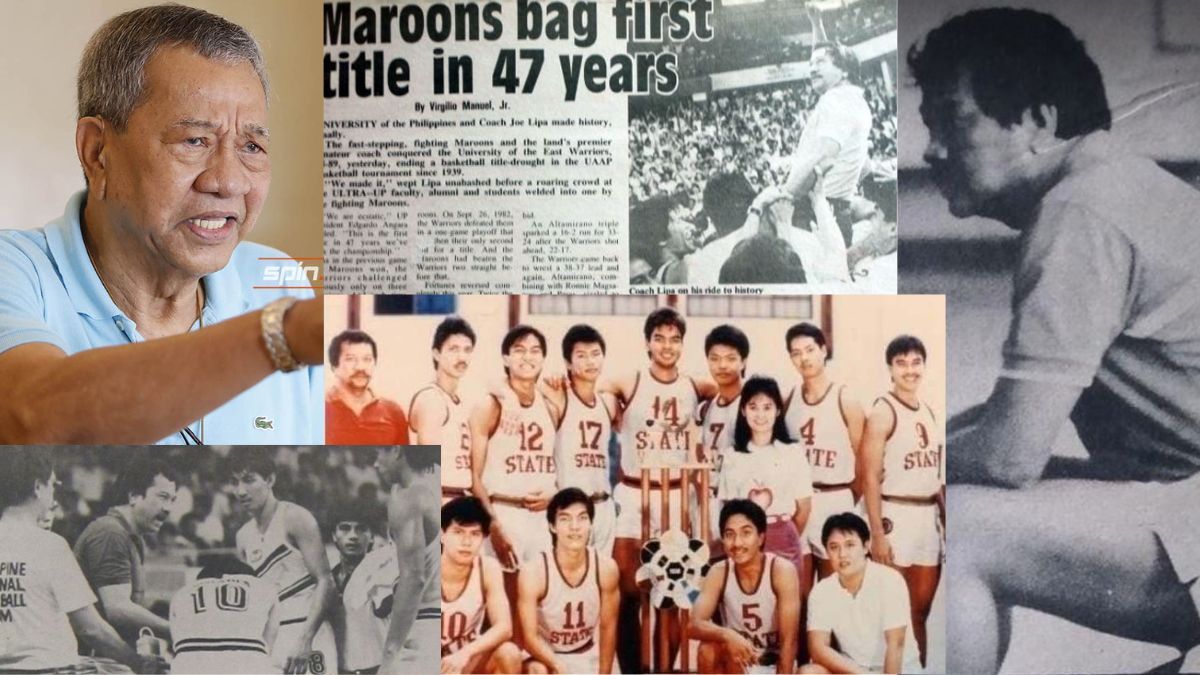
IF Joe Lipa hadn't gotten into basketball coaching, he could have become a corporate executive or a marketing guru selling probably the latest smartphone or electronic gizmo.
He was, after all, doing promotional work with a multinational company, pushing electronic calculators, among other things, when he was talked into his first coaching job.
It's difficult to picture him, then as now, doing something outside the world of basketball in the face of his intense devotion to the game and fierce single-mindedness. His first coaching gig may have come by accident – originally a one-season handshake deal, he said – but the fact that he stayed around all these years is not down to a mere stroke of good fortune.
READ: Coach Joe on Bobby Knight and the two active coaches who impress
For his contribution to the game, acute basketball mind and a ‘nose’ for coaxing the best out of underdog teams, Coach Joe is being honored with the Lifetime Achievement Award by the Philippine Sportswriters Association (PSA).
“Nagulat ako, hindi ko ini-expect,” the man known for his volcanic temper says, visibly moved.
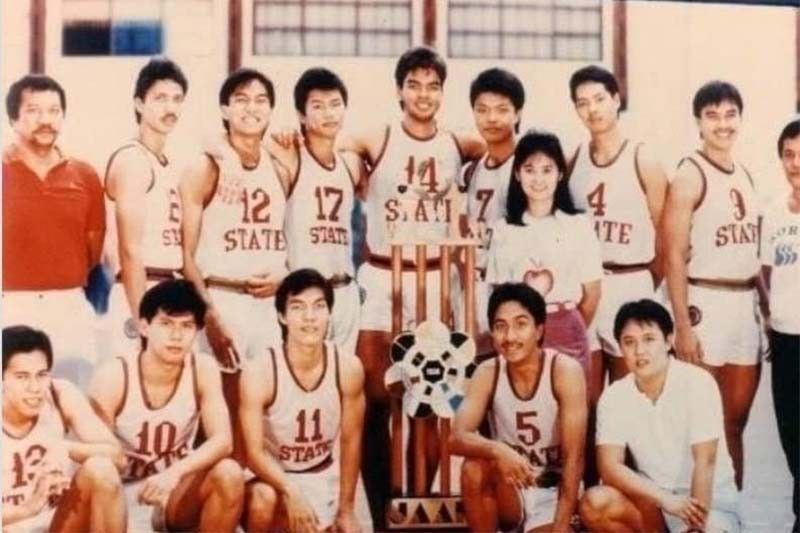
Although he coached other teams, most notably Ateneo and a couple of PBA teams, his name will forever be linked to his alma mater, the University of the Philippines, for whom he played from the mid-60s. He led the Maroons back to basketball relevance in the 1980s, culminating with that cherished UAAP championship in 1986. A success-starved Diliman campus celebrated it with a bonfire.
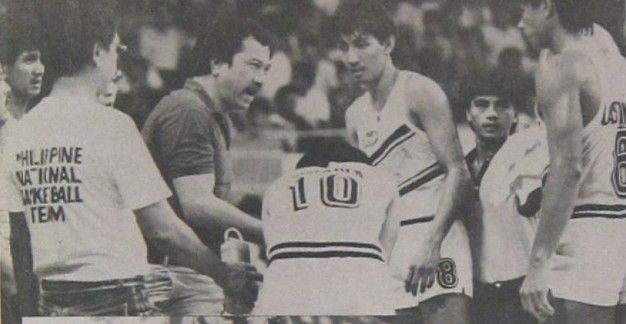
Earlier that same year Coach Joe led an all-amateur, under-20 Philippine Team to what was known as the “golden bronze” at the Asian Games. Samboy Lim, Allan Caidic, Alvin Patrimonio and Jojo Lastimosa starred for the team.
Can you imagine how difficult that Seoul assignment was? How about stepping into the shoes of a certain Ron Jacobs?
The EDSA People Power revolt a few months earlier had led to the exile of basketball benefactor Danding Cojuangco, a known Marcos ally. That left the country's amateur basketball program in shambles, with the team Jacobs custom-built for international battles, topped by a sprinkling of naturalized players, among the casualties.
'Miracle worker'
By that time, Coach Joe’s reputation as a sort of miracle worker was growing, his perpetual scowl and intensity becoming familiar sights on the sidelines.
“Hindi ako magaling na coach,” he says now. “I was just in the right place at the right time.”
That may be true at the start, when he was suddenly thrust into the UP job after death robbed the team of their handpicked coach before he can take over. But aware of his limitations, the man did his homework.
He read books, mainly by Bobby Knight, a huge influence on his basketball philosophy from whom Lipa would later learn first hand. And in the early days of his coaching apprenticeship, he cultivated a friendship with Filipino basketball old-timers.
Night after night in an old hangout across the Rizal Memorial Coliseum, he would pick the brains of the likes of the late Nilo Verona over bottles of beer.
“Dahil wala nga akong alam e, so I always talk with the coaches na nauna sa akin,” he recalls. “Gabi-gabi nandun kami, kainuman ko matatandang coaches, hinihingan ko ng advice. Mababait naman sila lahat sa akin.”
From Verona, he learned a coach “doesn’t need to rely always on his brain but sometimes go with instinct or gut feel.” Verona also taught him how to stand up to his critics, which were many.
Former Olympian Charlie Badion provided encouragement, telling Lipa he had the makings of a good coach, “wag ka lang magbabago.”
Jacobs too was generous to the man who would later succeed him. He opened the door to the national team’s practice sessions to Lipa.
Coach Joe accepted the UP job in 1981 on the condition that it was only for one season, but it didn’t turn out that way.
“Yung unang taon ko, labindalawang laro lang ang UAAP nun, isa lang ang panalo ko, anak ng putik tsamba pa,” he says. “Sabi ko, ayokong mag-retire na loser as a coach … so bumalik ako sa sports director, sabi ko ako naman ang may request ngayon – one more year.”
By the summer of 1985, the stars had aligned to produce the most successful stretch in Lipa’s career: a championship for UNO High School, followed by commercial team ESQ Marketing’s victory in the PABL finals over twice-to-beat Lagerlite, the Asian Games bronze medal and, finally, the Maroons’ UAAP success with a team led by Eric Altamirano, Ronnie Magsanoc and one Venancio Paras.
Looking back, there are a handful of players that Coach Joe, now 80, would have loved to work with but never got the chance to: Ricardo Brown, Hector Calma, Ramon Fernandez and Francis Arnaiz.
With the size and physical attributes of the current generation of Filipino players, we have more assets to work with to become more competitive internationally, he points out.
Catching up with Coach Joe
The urge to coach and teach how the game should be played surfaces occasionally. But just as quickly this is dismissed, for being hands-on demands a lot of energy – which a man his age with health issues has too little of.
Of the current state of Philippine basketball, Lipa is happy to see a benefactor like Manny Pangilinan, surrounded by executives who are “knowledgeable about basketball, especially international basketball.”
“But I think there are two things that Filipinos should improve on,” he adds. “We should work more on the art of passing. Nakalimutan natin ang art of passing, art of receiving the ball. Second, we should maximize the three-point shot.”
He’d also like to see less of the Filipino addiction to dribbling. “Hindi naman nananalo ang padamihan ng dribble,” he explains. “Kung ang basketball padamihan ng dribble, champion na ang Pilipinas.”
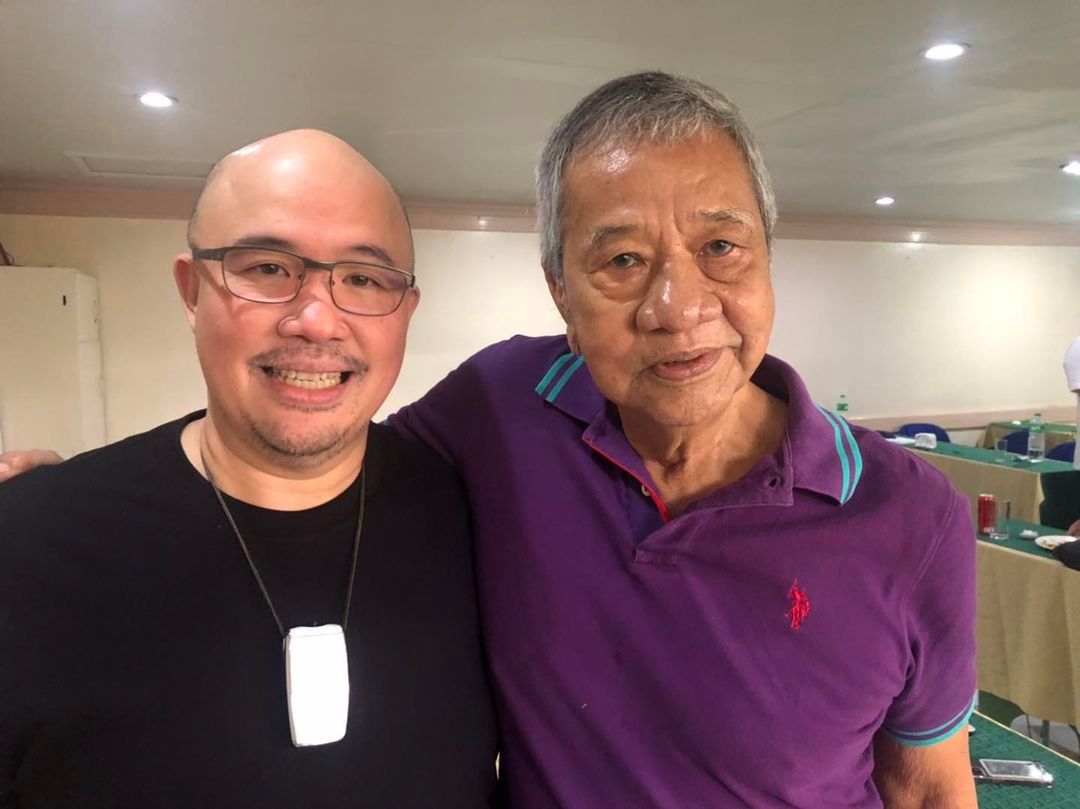
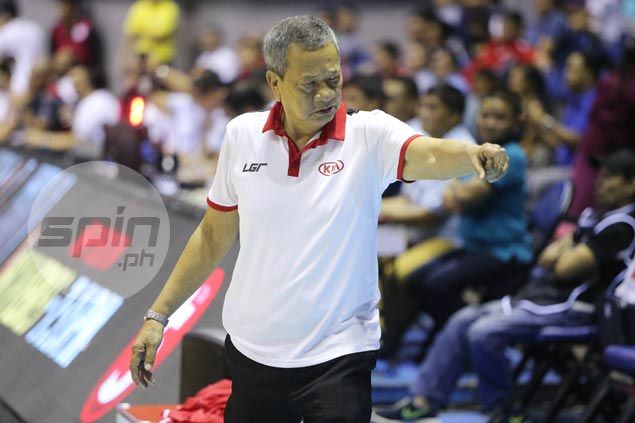
The once combustible coach is now contented to operate in the background while others call the shots.
He continues to share his basketball knowledge through consultancy and book projects.
His daily routine includes morning practices with the Terrafirma team, four-kilometer walks around his suburban neighborhood and, he says, “I spend a lot of the time praying.”
On the court, in the pressure-cooker atmosphere of big games during his pomp, the hard-driving coach who glared at referees and berated his players for glaring errors was the pious sort too.
Power of prayers
“I always believed in prayers,” he reveals. “Prayers helped me a lot in coaching.”
There was one particular play during UP’s championship season. The Maroons needed to beat Far Eastern University in a do-or-die game for the right to face twice-to-beat University of the East in the final.
“Eight seconds to go. Lamang sa amin ng one point ang FEU, kanila ang bola. Tumingin ako sa taas, sabi ko, 'God we've done everything, Ikaw na ang bahala.’
“Pagbaba ng mata ko, nakita ko naagaw ni Ramil Cruz ang bola.”
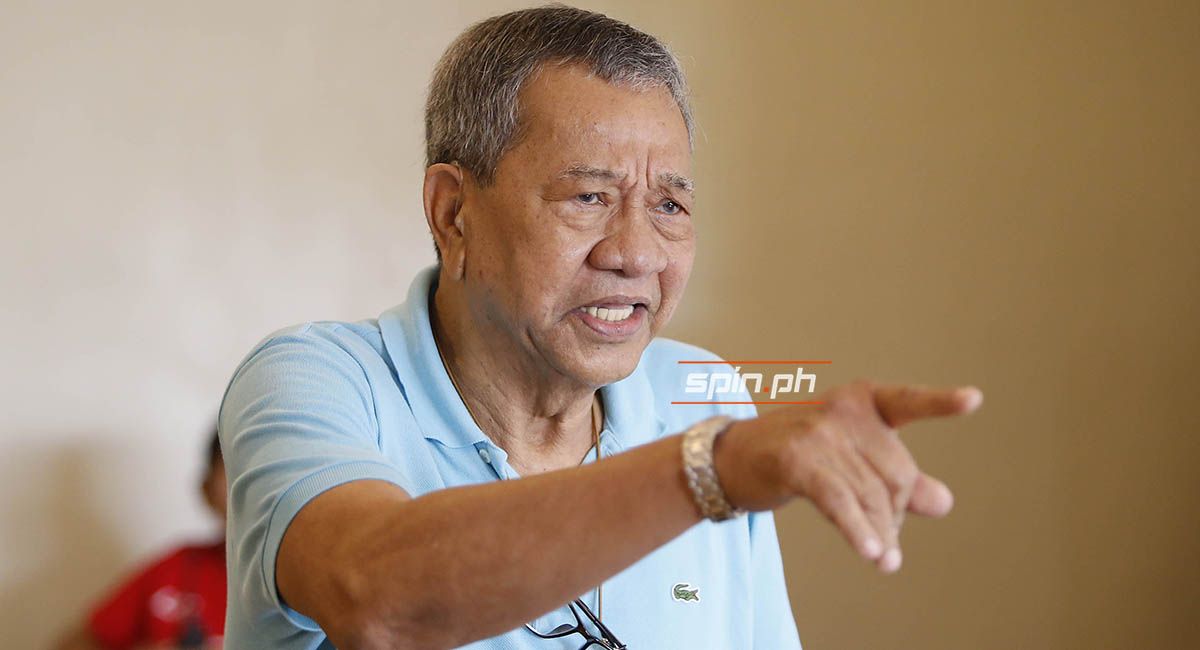
As Cruz rushed to UP’s frontcourt, the coach’s pulse raced with every step.
“It was the longest eight seconds of my life,” he says. “Nagdadasal ako, ‘Ramil wag kang madadapa.' Ayun na-shoot ni Ramil.”
Eight seconds. Two answered prayers in a career with plenty of them. Just one Joe Lipa.
Get more of the latest sports news & updates on SPIN.ph
NOTICE ON UNAUTHORIZED AND UNLAWFUL USE, PUBLICATION, AND/OR DISSEMINATION OF SPIN.PH CONTENT: Please be notified that any unauthorized and unlawful use, publication, and/or dissemination of Spin.ph’s content and/or materials is a direct violation of its legal and exclusive rights to the same, and shall be subject to appropriate legal action/s.
