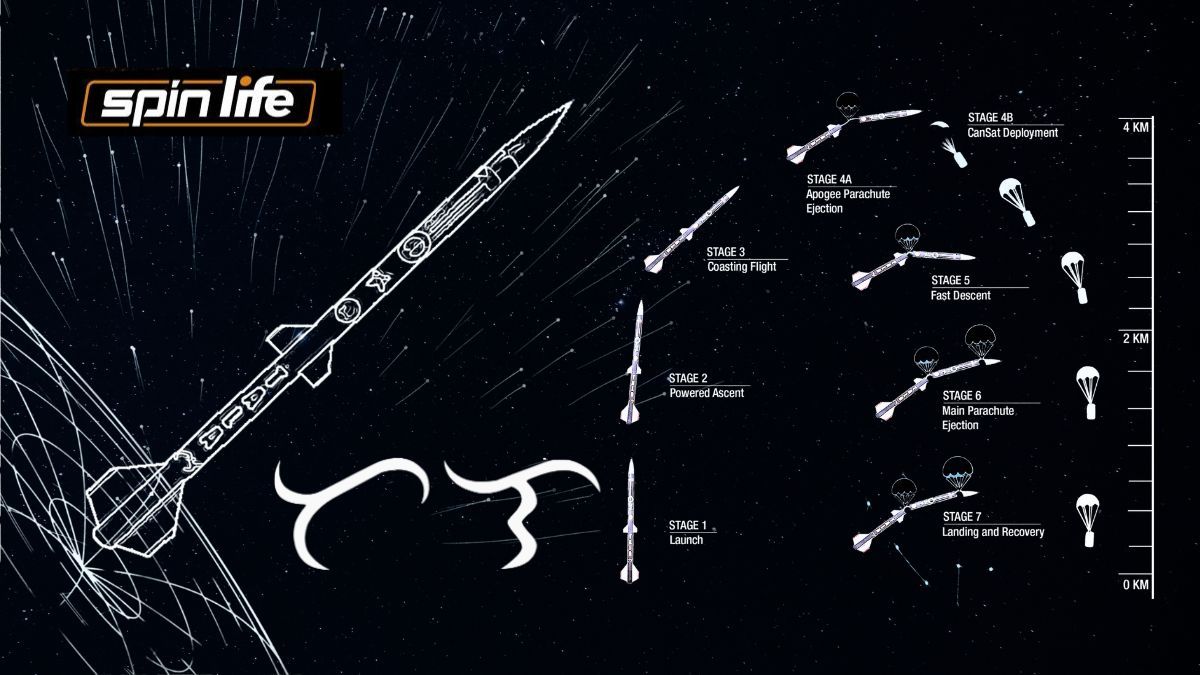
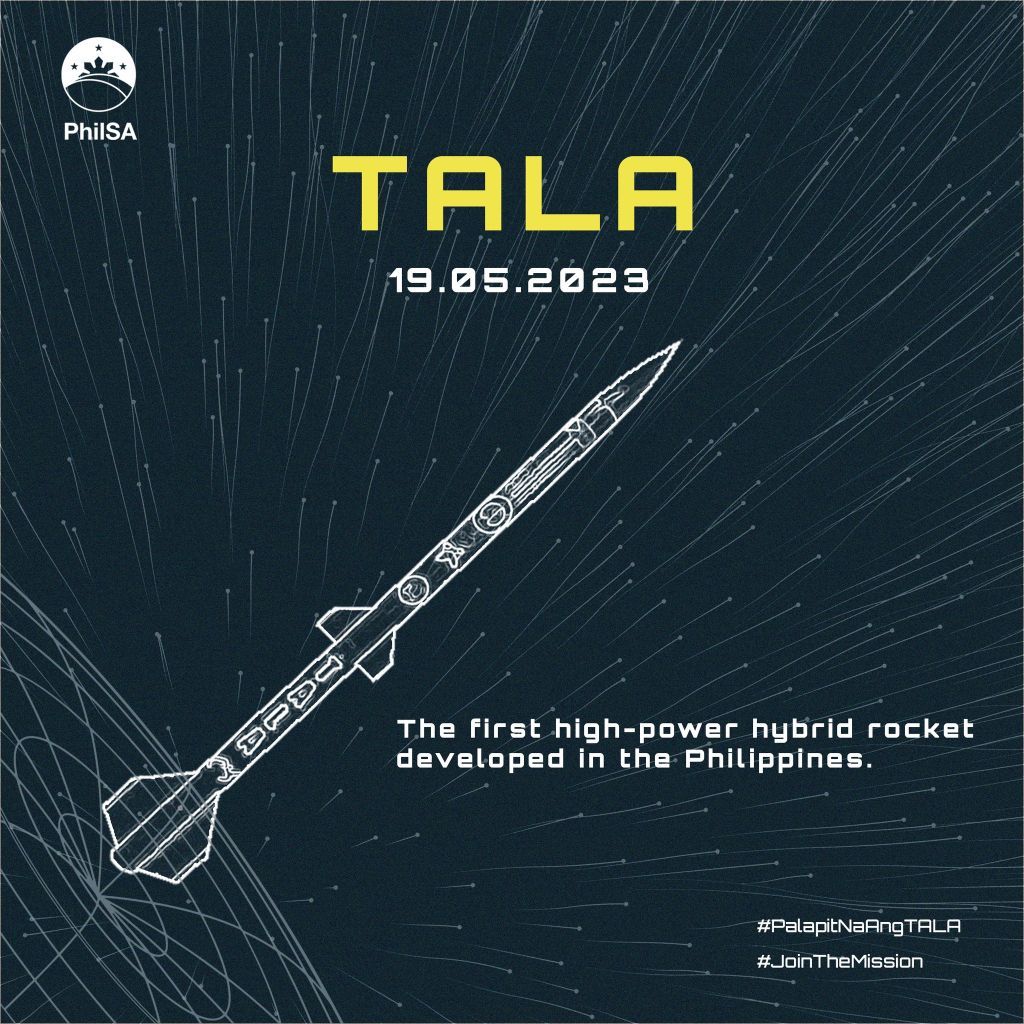
The Philippine Space Agency (PhilSA) has scheduled the launch of TALA today, May 19, in Capas Tarlac. The TALA rocket is the country’s first locally developed hybrid high-power space rocket. It was developed by students from St. Cecilia's College-Cebu. The project was started in 2018 and was originally scheduled for launch in 2020.
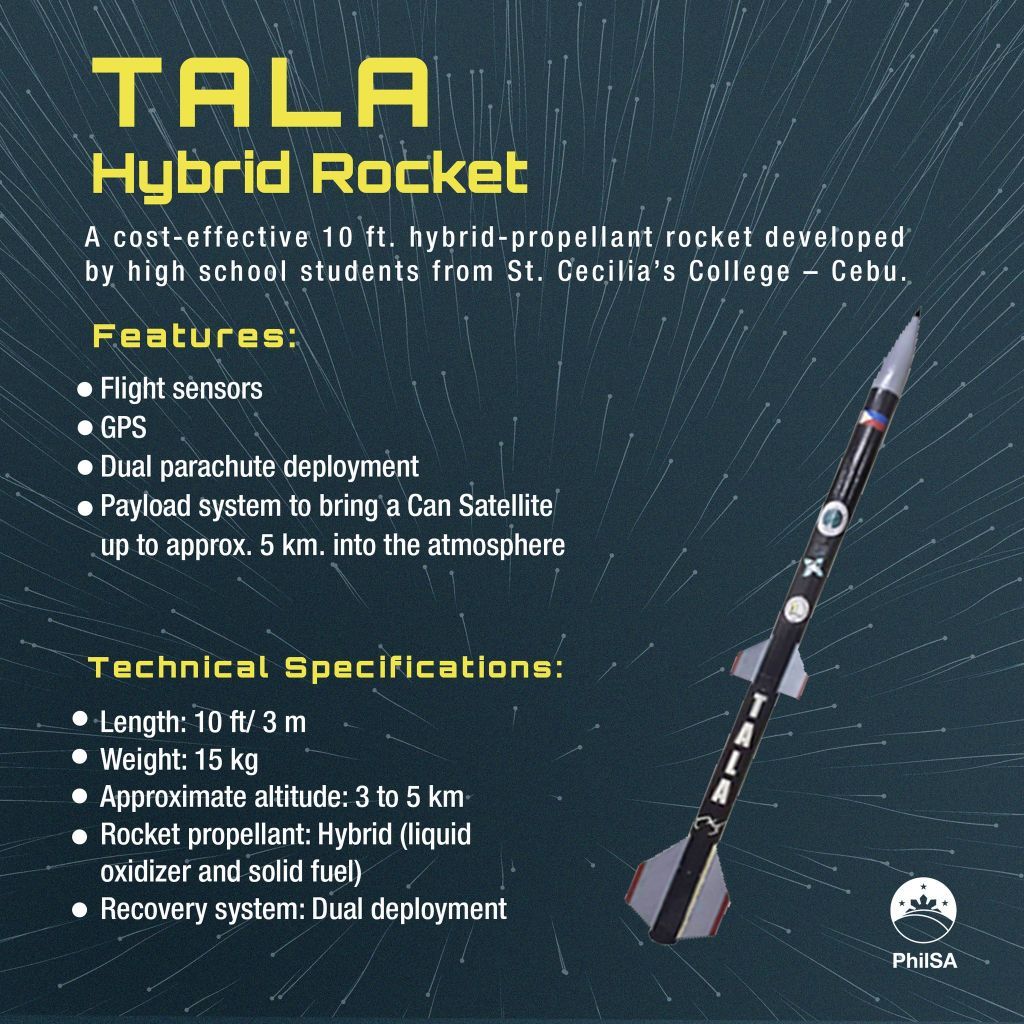
According to the PhilSA, TALA is 10 feet long and weighs 15 kilograms. It is made of 3D-printed advanced composite materials.
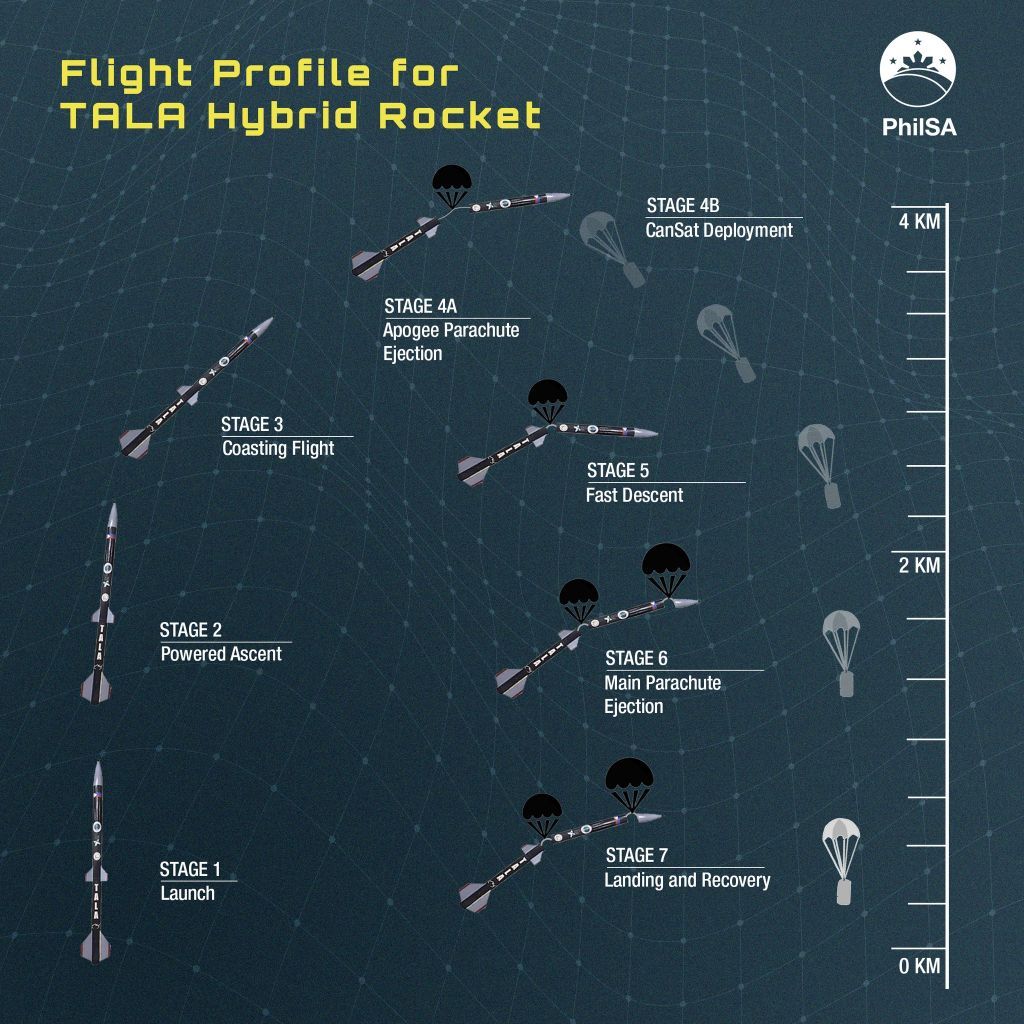
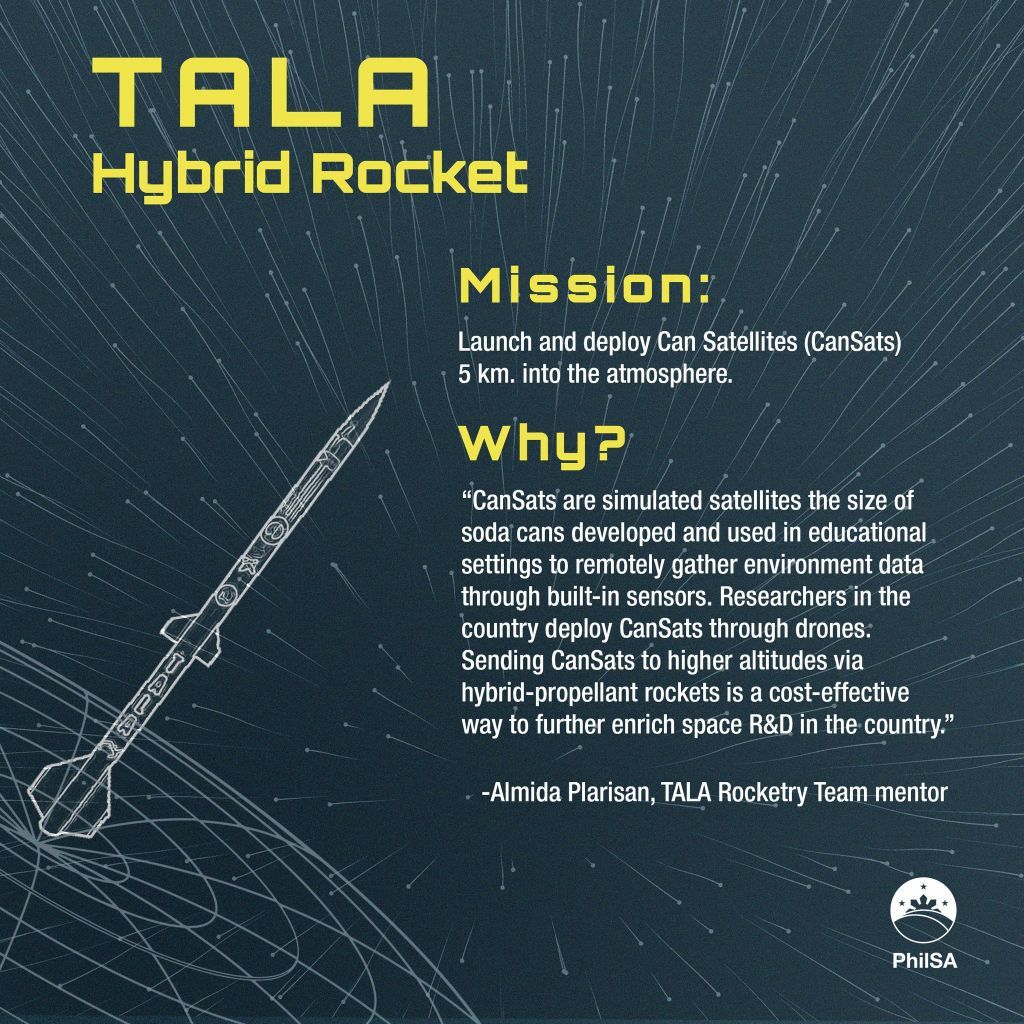
TALA rocket mission
TALA's mission is to bring a Can Satellite (CanSat) up to approximately five kilometers into the atmosphere. To help the ground crew with the launch, TALA has flight sensors, GPS, dual parachute deployment system, and a payload system capable of delivering can satellites 5 kilometers into the atmosphere. Can satellites are cans equipped with sensors and other instruments to gather environmental data. They are typically used for research.
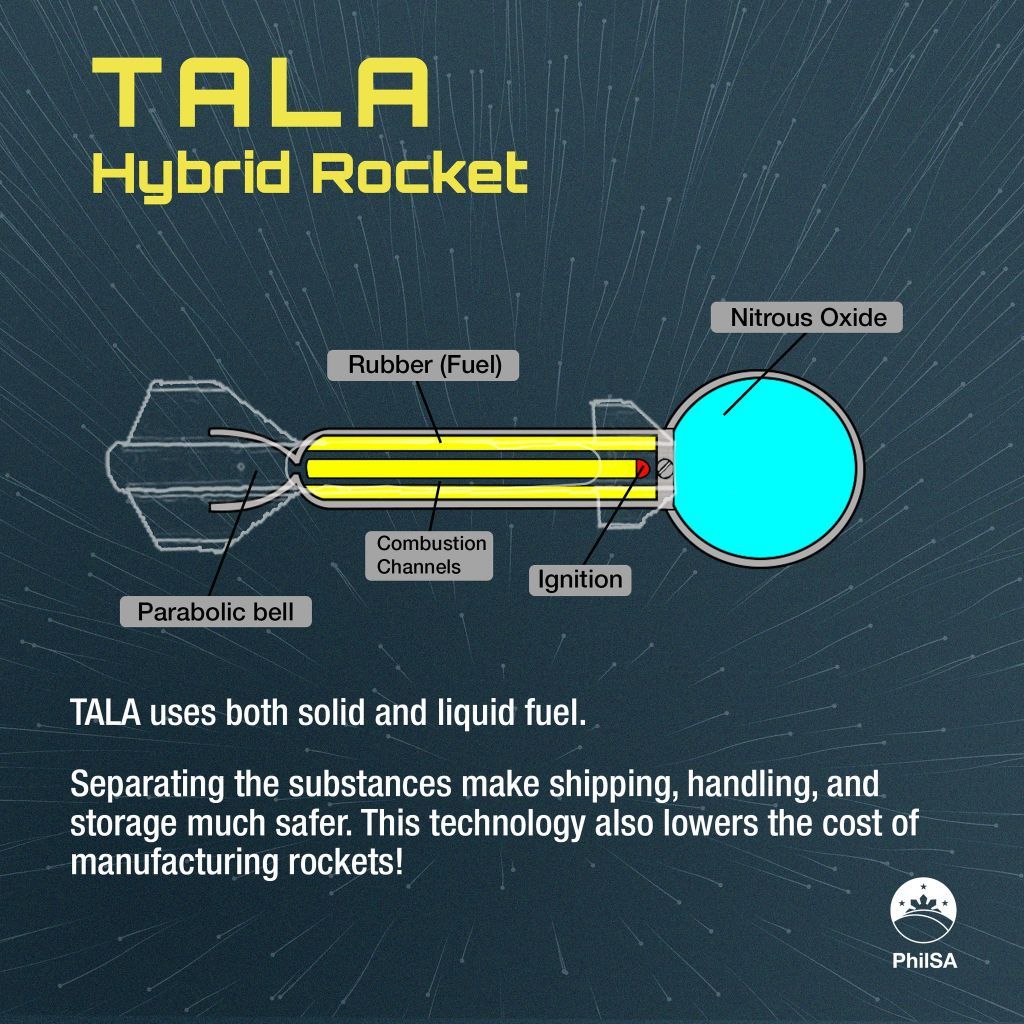
TALA uses solid and liquid fuels
TALA uses solid and liquid fuel propellants.”Separating the substances make shipping, handling, and storage much safer,” says PhilSA. “This technology also lowers the cost of manufacturing rockets.”
"Since early 2022, PhilSA and the TALA team, in collaboration with the Philippine Air Force through the Philippine Air Force Research and Development Center, have been jointly working on efforts to refuel the launch of TALA," said PhilSA.
TALA rocket and its Cebu origins
TALA was first conceived by space technology researchers, students, and their mentors from St. Cecilia’s College-Cebu in 2018. The team from Cebu originally set a launch date for March 2020, but that plan was postponed because of COVID-19 restrictions. In 2022, Cebu’s TALA team collaborated with PhilSA and the Philippine Air Force to push through with the launch.
TALA is funded by the Young Innovators Program of the Philippine Council for Industry, Energy, and Emerging Technology Research and Development.
Get more of the latest sports news & updates on SPIN.ph
NOTICE ON UNAUTHORIZED AND UNLAWFUL USE, PUBLICATION, AND/OR DISSEMINATION OF SPIN.PH CONTENT: Please be notified that any unauthorized and unlawful use, publication, and/or dissemination of Spin.ph’s content and/or materials is a direct violation of its legal and exclusive rights to the same, and shall be subject to appropriate legal action/s.
