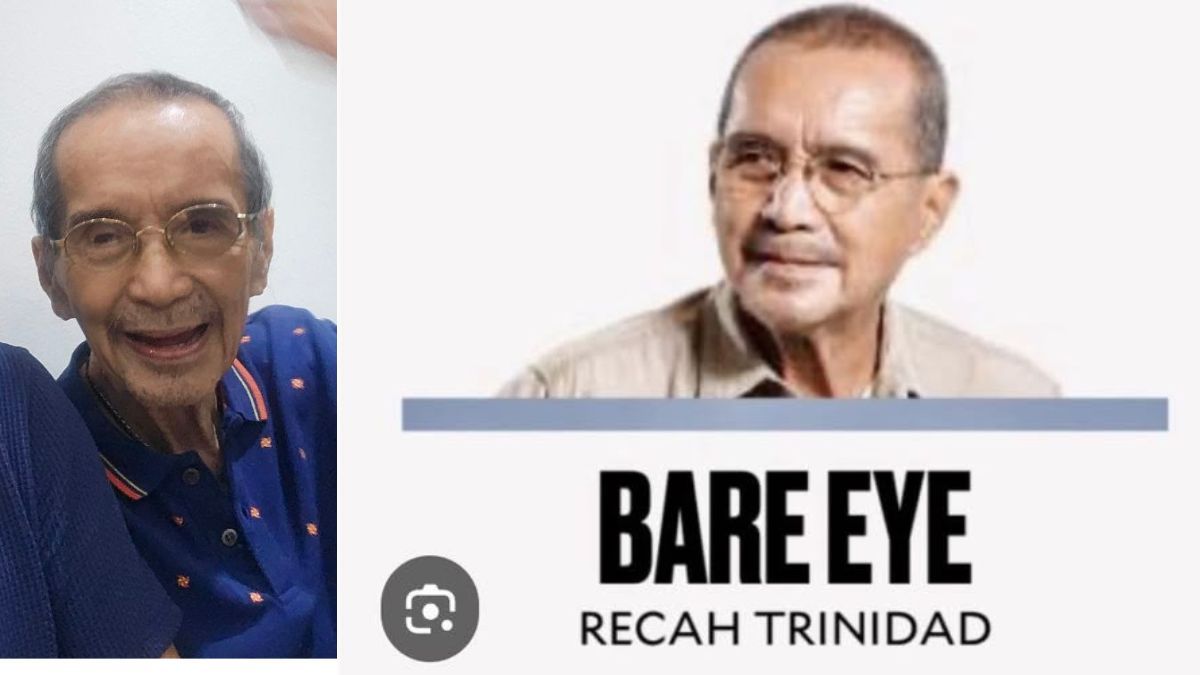
RECAH Trinidad is gone. Dead at 83, he leaves behind an immodest trove of writing. And in this, he will always be best known to the public as a first among equals in the sportswriting world.
He did, in fact, spend decades of reportage on the beat, producing coverage and commentary about nearly every field of play, with basketball up ahead as a clear passion shared with thousands of readers.
READ Veteran sports journalist Recah Trinidad dies at 83
But because the Philippines is still bigger globally in boxing, then that, too. See how he summed up Manny Pacquiao in his book Pacific Storm Dispatches on Pacquiao of the Philippines:
“He was a warrior who fought his biggest battle and won.
“All at once, he turned into the most recognizable, most saleable face in the Philippines, country of his birth. But tonight, the winner, he of the windy hair and eyes of live coal, was fireless, flickering. Sick.
“He had to wobble back to his chauffer-driven sports utility vehicle, in front of the vintage-1930 Rizal Memorial Stadium in Manila, onto the lap of his wife, a lovely mestiza.
“Sorry, there was one final round to go.
“So he dragged on and parked by another celebration, maybe the millionth, in his honor. Before this, he had howled like killer wind inside the boxing arena to topple a living monument to the sport, a Mexican boxing legend that had never been knocked out before.
“Long live Manny Pacquiao, last name often mispronounced obscenely (PAC-QEOOU) by international broadcasters.”
In the same book, he is written up, with a photo taken with the late King of Action Movies Fernando Poe Jr, thus:
“Recah Trinidad is the founding editor of Tempo, and he also edited the anti-dictatorship paper We Forum from 1984 to the end of the Marcos regime. He is a former international boxing judge. He headed the militant Amado Hernandez Resource Center for 10 years.”
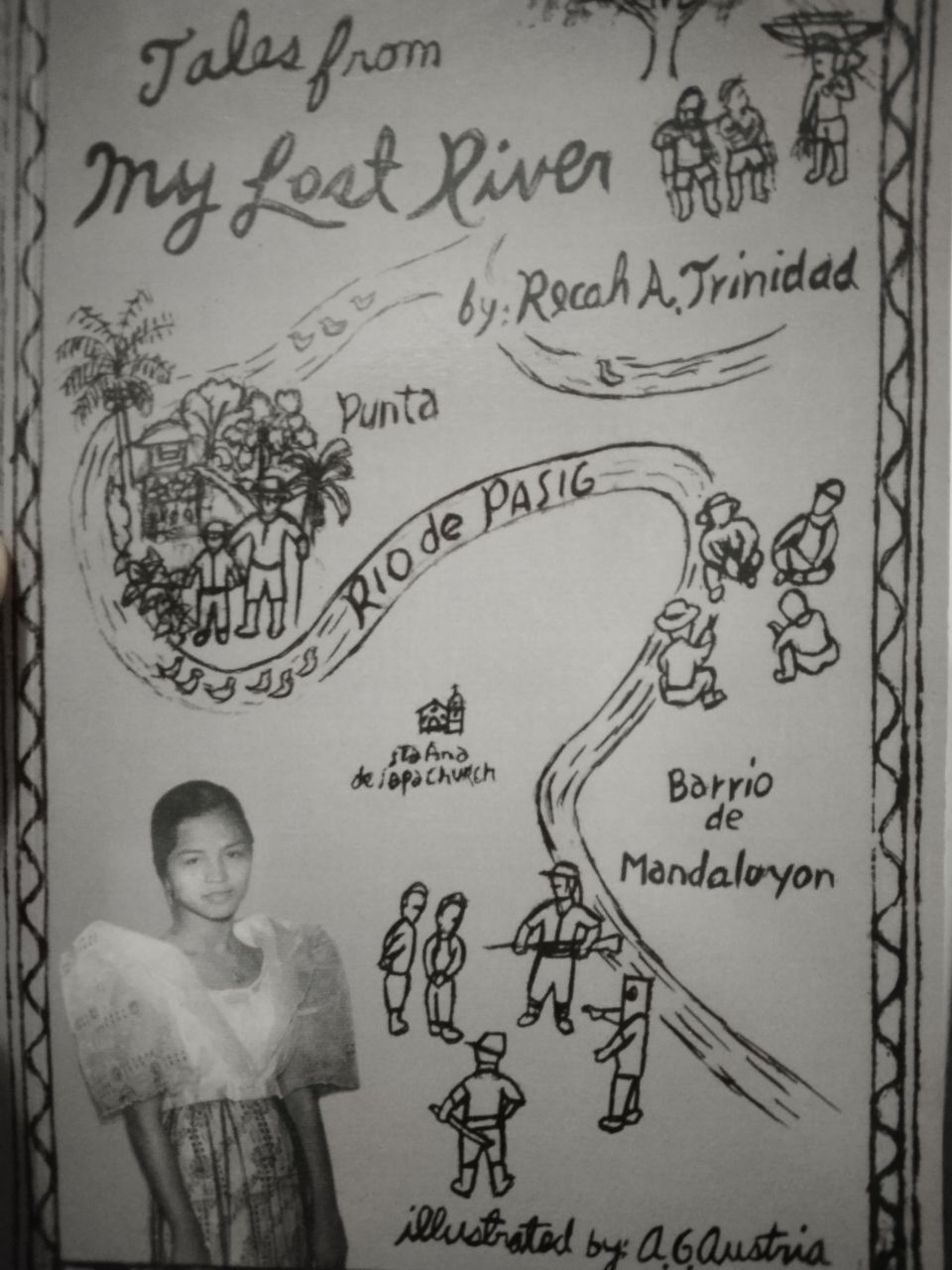
Less is known of his work outside his reportage. And yet, as literary giant Erwin Castillo wrote about Recah in introducing the latter’s book, Tales from My Last River, Recah was a recognized talent. He was not only a Palanca Awardee in poetry, he worked with National Artist for Literature Nick Joaquin, who admired him.
Says Castillo: “Recah, for those in the know, is much more than a veteran sportswriter and incisive social commentator. He is an award-winning poet of depth and skill. Indeed, Nick Joaquin had in the bright 60s singled him out as a literary light, next in succession to the likes of Greg Brilliantes and Ding Nolledo.” (Brilliantes is in the 2026 roster of National Artists; Nolledo, who died in the United States, is remembered for brilliant books of fiction.)
READ Chino Trinidad, crusading sports journalist, dies aged 56
A little taste of Recah’s craft as seen in Tales from My Last River, which, to the Mandaluyong native, is his recall of his beloved Pasig River:
“[The old man] would be up before the sun, praying before preparing for his needs. He sipped the honeyed pungence of steaming ginger tea, the salabat, before tending to his small garden, pruning plants that counted the bloomy sampaguita, the succulent tampuhin banana among his favorites.
“The old man often took one mudfish, the dalag, which would end up broiled over embers, if not boiled into the clear penesa soup. Tiny silvery shrimps, the tagunton, were always in abundance, clinging onto hyacinth roots like fancy earrings, a daily blessing there for the picking. The talangka, fresh-water crablet, was always a welcome bonus, crawling out in full view like an army of festival clowns from the rivers’ rich bosom. There was a host of other species to choose from, the spiky catfish called kanduli, the diya, ayungin, and other gifts.
“On top of these, there was the tulya, boiled into humble but nourishing sinuam soup, together with rice washing, tomatoes and crushed ginger, a year round favorite garnished with either chili shoots or malunggay tips.
“A gifted hardworker, the old man was seldom in need.”
Trinidad’s prose lit up generations of writers who read him in the Sunday Times Magazine of the premier newspaper of pre-martial days, The Manila Times, shortly after he graduated from the University of Santo Tomas in the 60s, and up to the time he ended his public career at the Philippine Daily Inquirer where he wrote the sports column, Bare Eye, that was one of the most highly read in the paper.
He cut such a figure in sports journalism that there were times when he appeared to be more popular than the athletes he profiled. In turn, these athletes, some of them unknown, became celebrities after a Trinidad piece.
Recah’s reputation was built over years of constant presence in stadiums and fields where he established enduring connections, not just with athletes, coaches, ball boys, and janitors, but also with scalpers who, hounded by authorities, turned to Recah for help in order to ply their trade.
At Tempo, where I was his managing editor, he put together one of the strongest reportorial teams at the time, Under his editorship, Tempo rose to become the country’s No. 1 tabloid.
Days and nights, however, were not over until Recah and chums, who counted writers as well as the detritus of the game, ended them with a few bottles at whatever joint stayed open till the wee hours.
That guy Recah. He shall be missed.
[Recah Trinidad, poet and sports journalist, died on Sunday morning, his family announced. He is survived by his wife, Fe; sons Paolo and Baste; and six grandchildren. Wake arrangements will be announced soon.]
Get more of the latest sports news & updates on SPIN.ph
NOTICE ON UNAUTHORIZED AND UNLAWFUL USE, PUBLICATION, AND/OR DISSEMINATION OF SPIN.PH CONTENT: Please be notified that any unauthorized and unlawful use, publication, and/or dissemination of Spin.ph’s content and/or materials is a direct violation of its legal and exclusive rights to the same, and shall be subject to appropriate legal action/s.
