

THE Philippine Football Federation is again on the warpath, not against our football rivals in the region where our country, in the past, had tried repeatedly to beat with little success, but against the country’s sports media, in particular the men and women covering the ‘beautiful game.’
In a move that stunned reporters on the beat, the federation, headed by PFF president John Gutierrez, issued an order to ban media practitioner Venice Furio from getting interviews with members of the Philippine women's football team who are currently in Manila for a training camp and an intra-squad match at the Mall of Asia Football Field.
Furio is not your run-of-the-mill reporter. Her specialty is covering football and she is one of the few who had spent time profiling many of the stars of the game, particularly women's football.
READ Maz Pacheco will soon be eligible to play for Filipinas, says PFF
She also has a podcast, Futbol Brew, which often interviews women players, some of whom she has become friends with because they appreciated her dedication to give them the spotlight in an environment that allows little promotion for women in sports. Recently, longtime Filipinas team captain Tahnai Annis appeared on the podcast to announce her retirement.
According to sources, Furio had gotten the ire of some highly-placed people in the association who did not like her commentary about the state of women’s football in her account on Twitter, now known as X.
Furio told her colleagues that she learned she has been banned when she approached the association for permission to interview some of the women players.
'Access to players denied'
An official told her that she is being denied access to members of the team because “certain individuals took issue with some of my online posts.” As a result, “my access to the players – being a privilege – is revoked.”
Furio was also told that “just as I have the right to share my opinions online, they have the right to limit my access to the team.” She apparently was being personally targeted because she was informed that “the interview can still be scheduled but I would not be allowed to conduct the interview myself.”
The ban can be interpreted as an infringement on the freedom of the press which is enshrined in the country's Constitution. It is also slap on the age-old tradition of the media's role of giving people the right to know.
As precedents go, this is probably the first time a football reporter is being prevented to do his or her job for a perceived criticism of a public official. Even the president of the Philippines, oftentimes criticized and attacked by the press, has not gone this far to stifle criticism.
The reporters covering football is composed of just a small circle as many other sportswriters are assigned and spend most of the time doing stories of more popular sports for Filipinos such as basketball and volleyball. This is in total contrast to other countries where football gain most of the attention from their press being the No. 1 sport in the world.
But thanks to sportswriters and other social media practitioners, football's popularity in the Philippines soared with their in-depth accounts of first, the exploits of the men’s team formerly known as Azkals, and then of the women's team called Filipinas, especially after it played in the Women’s World Cup and made history by beating New Zealand in 2023.
History of cooperation
The press and football have a long and shared history of cooperation. But that seems to change under the leadership of Gutierrez, the man who has big shoes to fill after succeeding Mariano ‘Nonong’ Araneta Jr., under whose term football reached new heights.
Last January, for instance, Gutierrez told the football press "to behave," admonishing them as if they were his children who had just spilled milk.
This was when the women's futsal team had a major overhaul that included the transfer of Vic Hermans, a Dutch coach, from his position as coach of the women's futsal team to the men’s side, a move that disappointed Danny Moran, who is known as one of football's strongest supporters, morally and financially.
It was also the time when the PFF bolstered the team by bringing in Filipinas players Katrina Guillou and Bella Flanigan for the AFC Women’s Futsal Asian Cup qualifiers in Tashkent, Uzbekistan. The team went on to qualify for the main tournament to be held in June in China for the first time ever.
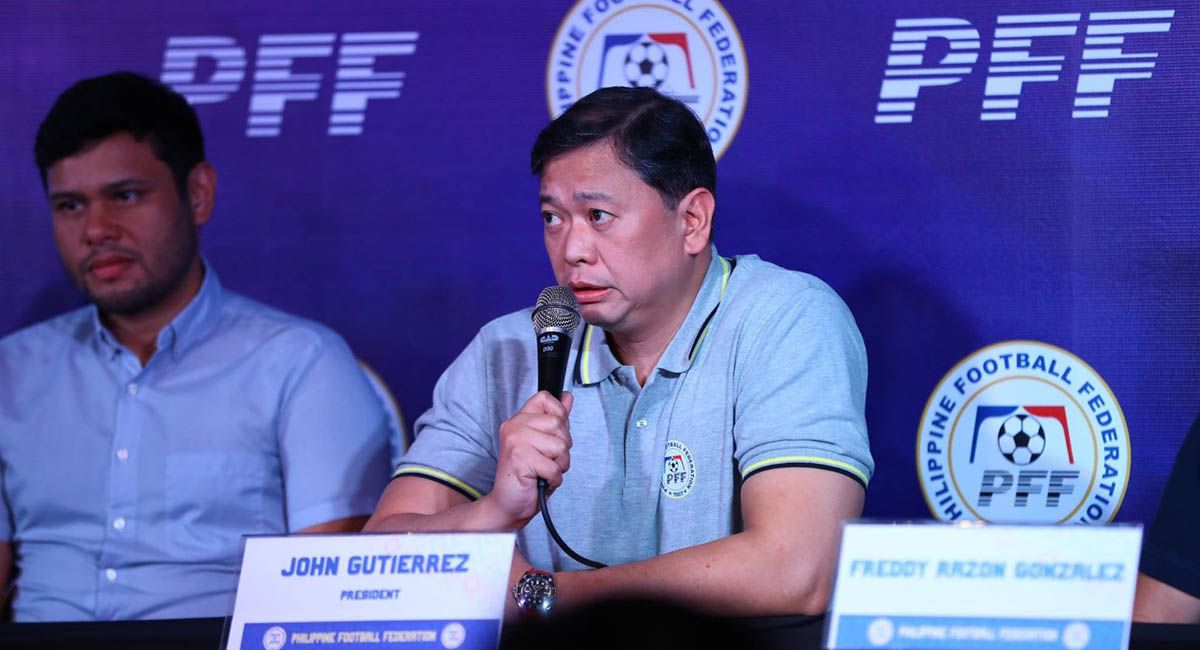
A press conference was held to introduce the new women’s futsal team’s roster to begin the new year. And following the moves, reporters, in the spirit of fairness, naturally also wanted to get the PFF’s side of the story and know why the changes were made. But Gutierrez began the presser by saying he won’t be addressing the matter and it was here that he told them to "behave."
“Let’s make sure that we keep our eyes on the ball,” Gutierrez said during the press conference. “For those of you in the media who are itching for a story, I promise you. I promise everyone. When the girls come back from Uzbekistan, I will personally give each and every one of you a sitdown, one-on-one, and will answer any questions you might have with regards to anything.
“In other words, please behave,” said Gutierrez. Though he used the word please, the succeeding word had a chilling effect on the reporters.
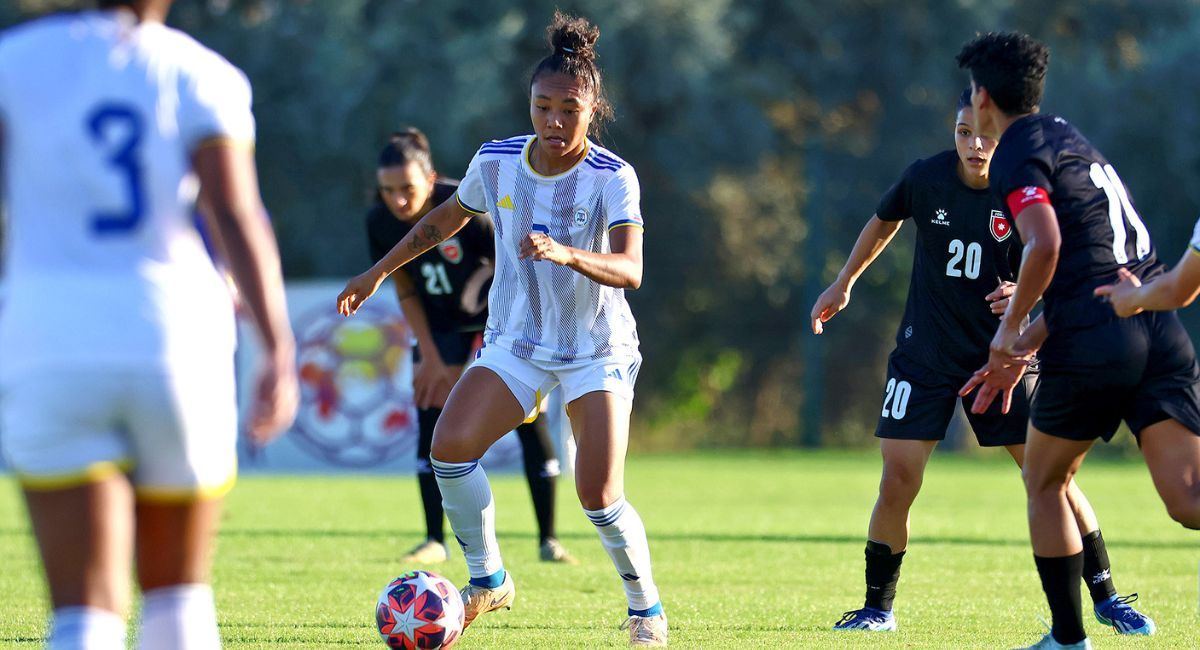
In a rare instance, the national women's football team is currently in town and it would have been a big opportunity to make the players available for interviews to also promote its game that will be christened the Mall of Asia Football Field located at the mall’s roofdeck.
Alarming message
Among the players available include star striker Sarina Bolden, the player who scored the winning goal against New Zealand in the World Cup. Instead, the PFF leadership, by banning Furio, sent an alarming message – that the media must toe the line, or else.
This year, the men’s team will begin the campaign in the AFC Asian Cup qualifiers in March, and optimism is high after the landmark semifinal finish at the Mitsubishi Electric Cup, Southeast Asia's biggest football tournament, highlighted by a win over Thailand for the first time in 52 years, and the entry of new players.
The same can be said of the women's squad. They are eyeing supremacy in the Southeast Asian region in the AFF Championship and the SEA Games in 2025. And the biggest event of the year will come later, when the country hosts the first-ever FIFA Futsal Women’s World Cup to be held in Victorias City and Pasig City.
And just like the sport’s fans in the Philippines, the football journalists will be there. While it is a small community, they are a passionate group, and are mindful of the challenges to bring awareness to the sport to the Filipinos in this basketball and volleyball-crazy nation. They have been there through the ups and downs of Philippine football. They are partners to the development of football in the country.
Unfortunately, based on its recent interactions with the media, the PFF doesn’t see it that way.
Get more of the latest sports news & updates on SPIN.ph
NOTICE ON UNAUTHORIZED AND UNLAWFUL USE, PUBLICATION, AND/OR DISSEMINATION OF SPIN.PH CONTENT: Please be notified that any unauthorized and unlawful use, publication, and/or dissemination of Spin.ph’s content and/or materials is a direct violation of its legal and exclusive rights to the same, and shall be subject to appropriate legal action/s.
