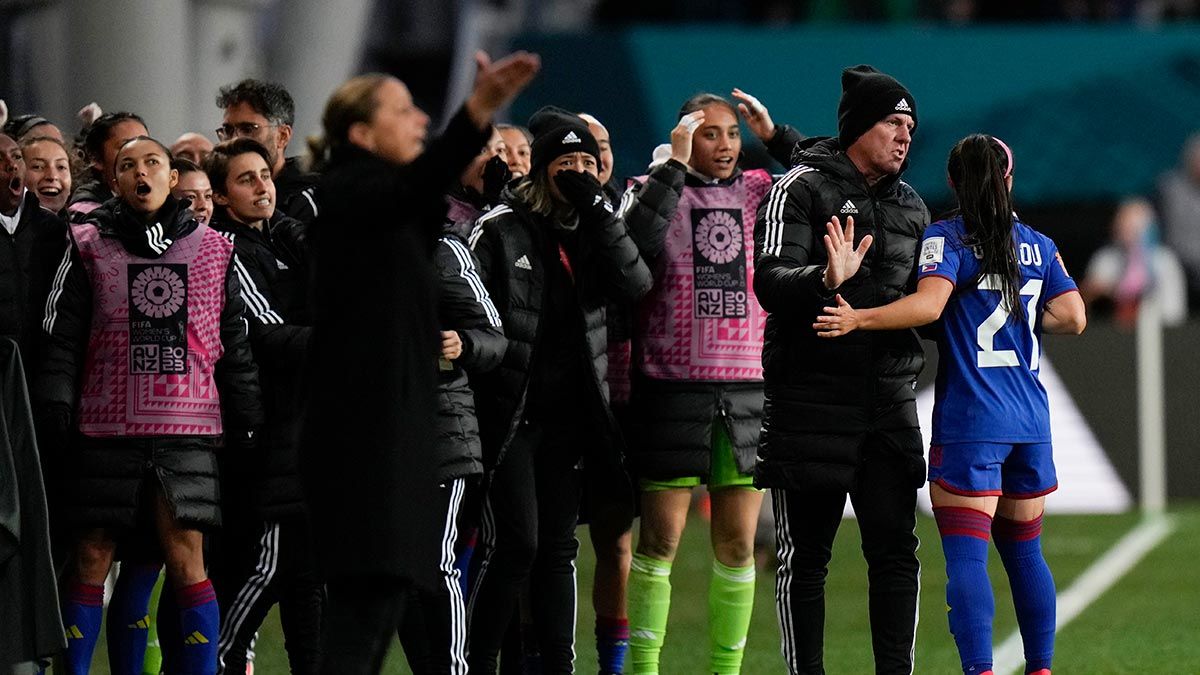

HOPE HAS ARRIVED
That was the general feeling of the Philippine football community, the moment the final whistle was blown, as the Filipinas (ranked 46) prevailed over New Zealand (ranked 26) to secure their historic first win in the FIFA Women's World Cup 2023.
It was no easy task to the point where it seems like mission impossible given New Zealand's momentous victory over the heavily favored Norwegian squad.
And speaking of Norway they drew against Switzerland, opening a floodgate of opportunities for the Filipinas.
It was an emotional victory as the odds initially seemed against us, but like the usual sporting narratives, the grit and determination of the Filipinos were a driving force to victory.
But it wasn't just our fighting spirit that gave us a beacon of hope as Alen Stajcic's tactical switches also need to be acknowledged.
Upon looking at his gameplan against Switzerland and compare it to New Zealand, the Australian gaffer managed to find a solution to our offensive woes.
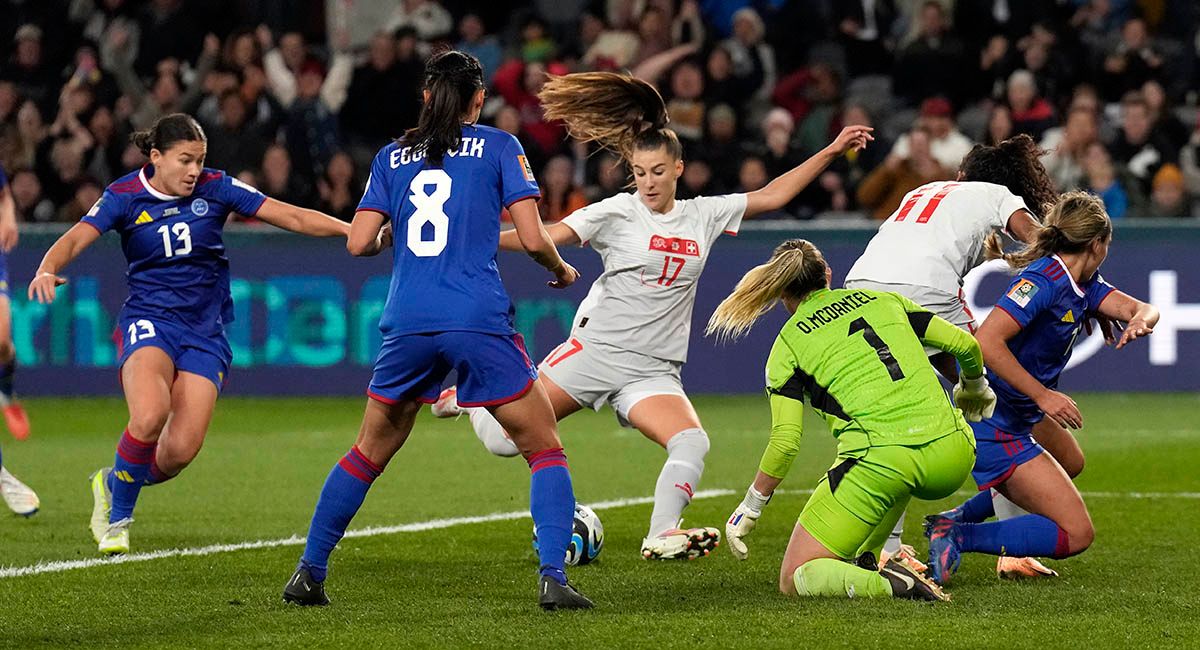
The difficulties against Switzerland
Heck it can also be argued that things could be different had the referee not awarded a harsh penalty on the Philippines, which could suggest that the scoreline should be around 1-0 (Switzerland wins) or 0-0.
While our defense has been admirable given our status as a newcomer in the scene, the emphasis on that part of the game somewhat weakened our attack.
Against Switzerland, we defended with a deep 5-3-2 formation, with an emphasis on shutting down the flanks, but due to the deep lines we have there would be more distance to cover when transitioning from defense to attack.
It likewise didn't help that our two forwards in Sarina Bolden and Katrina Guillou were left isolated upfront.
In the end our Swiss foes managed to immediately organize their defensive lines and shut us down.
While there are teams like Thomas Tuchel's Chelsea and Jose Mourinho's Inter Milan that managed to puncture their way from these deep areas, those teams have key attributes.
Both Chelsea and Inter have players like Jorginho, Antonio Rudiger, and Esteban Cambiasso, who can attract a high press and systematically launch long balls to a runner upfront.
Combined that with their calmness in controlling the ball amid the high press, spaces are made for the likes of Timo Werner, Diego Milito, Samuel Eto'o, and other players upfront.
Meanwhile the Filipinas struggled to deal with Switzerland's high press and while we did manage to launch long balls, the physicality of the European side and their ability to deny the open spaces thwarted them.
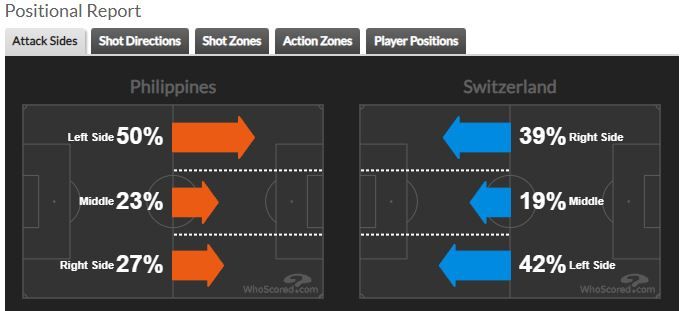
It likewise didn't help that most of our attacks stem from the left flank, making us look predictable.
A different approach against New Zealand
So based on our performance against Switzerland, there were takeaways that Stajcic may have written on a rock, namely the struggles we had from transitioning from defense to offense in the deeper areas, and our issues in generating goal scoring opportunities from open play.
And given these issues Stajcic decided to make key changes. While he remained with his initial approach of using Bolden and Guillou to deny the central areas, things are different in the wide areas as the Philippines opted to press high and aggressively disrupt these lanes.
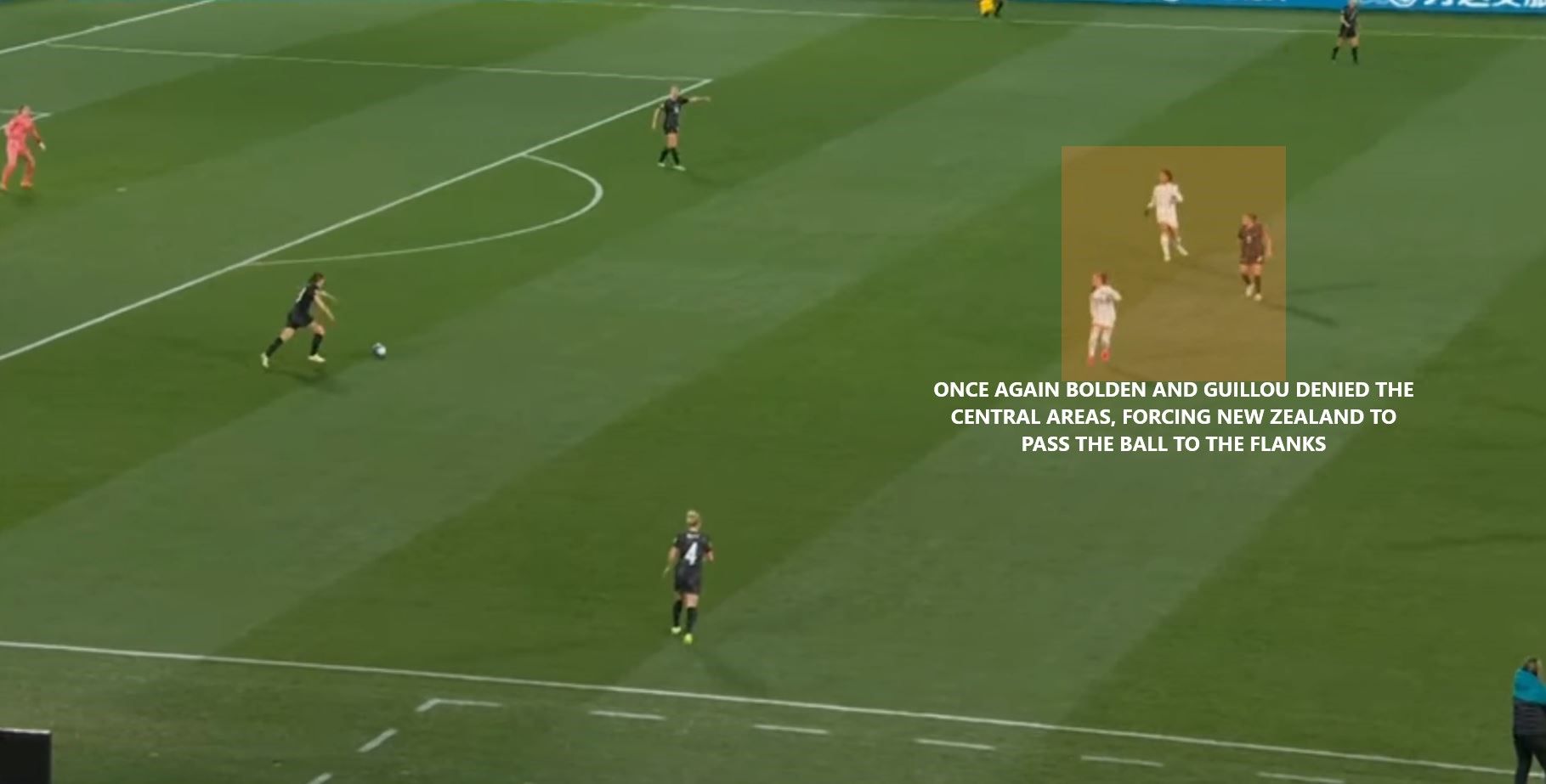
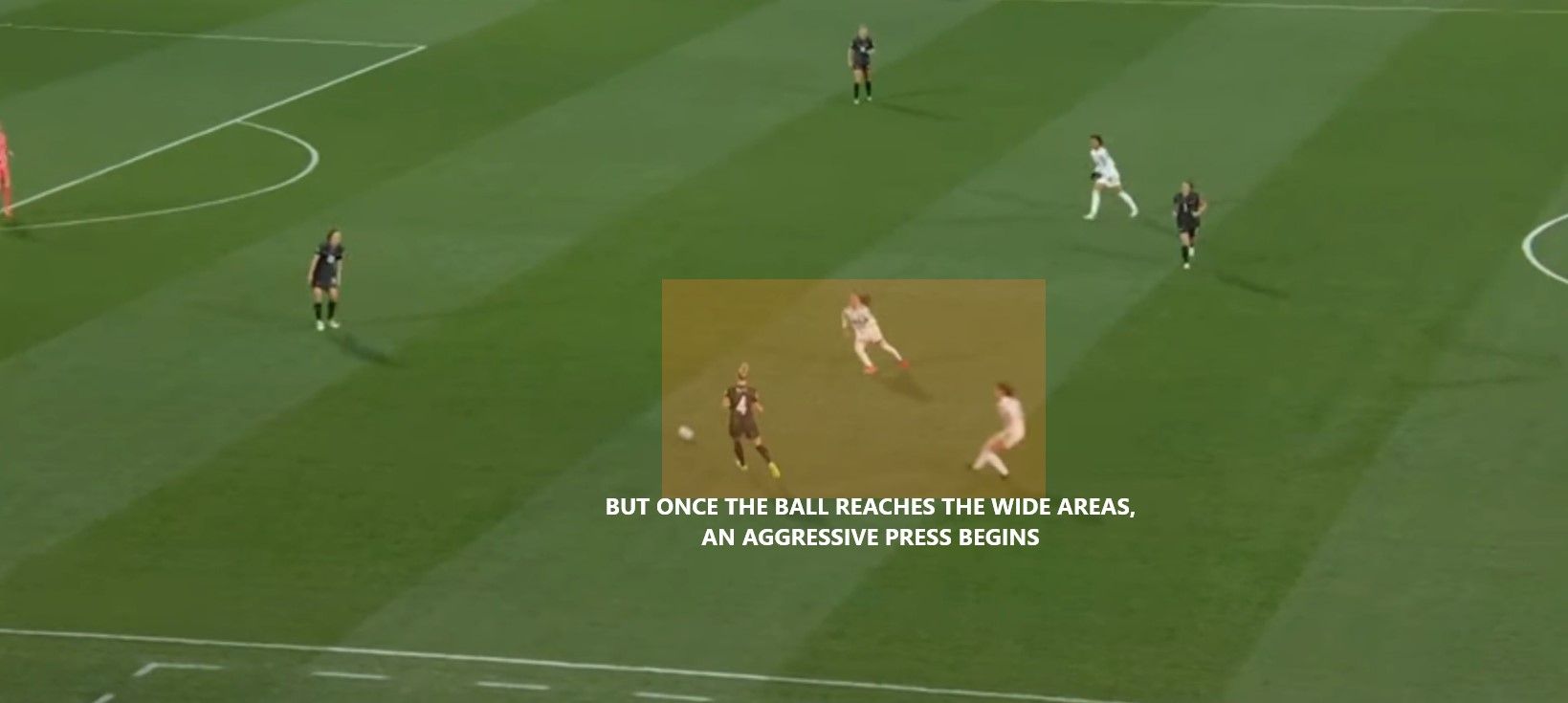
Here's a pattern I noticed, if New Zealand attacks from their left, then one of the forwards combined with Quinley Quezada, Jaclyn Sawicki, and centre back turned defensive midfielder, Jessika Cowart would charge towards that area, with Sara Eggesvik providing some cover in the central areas.
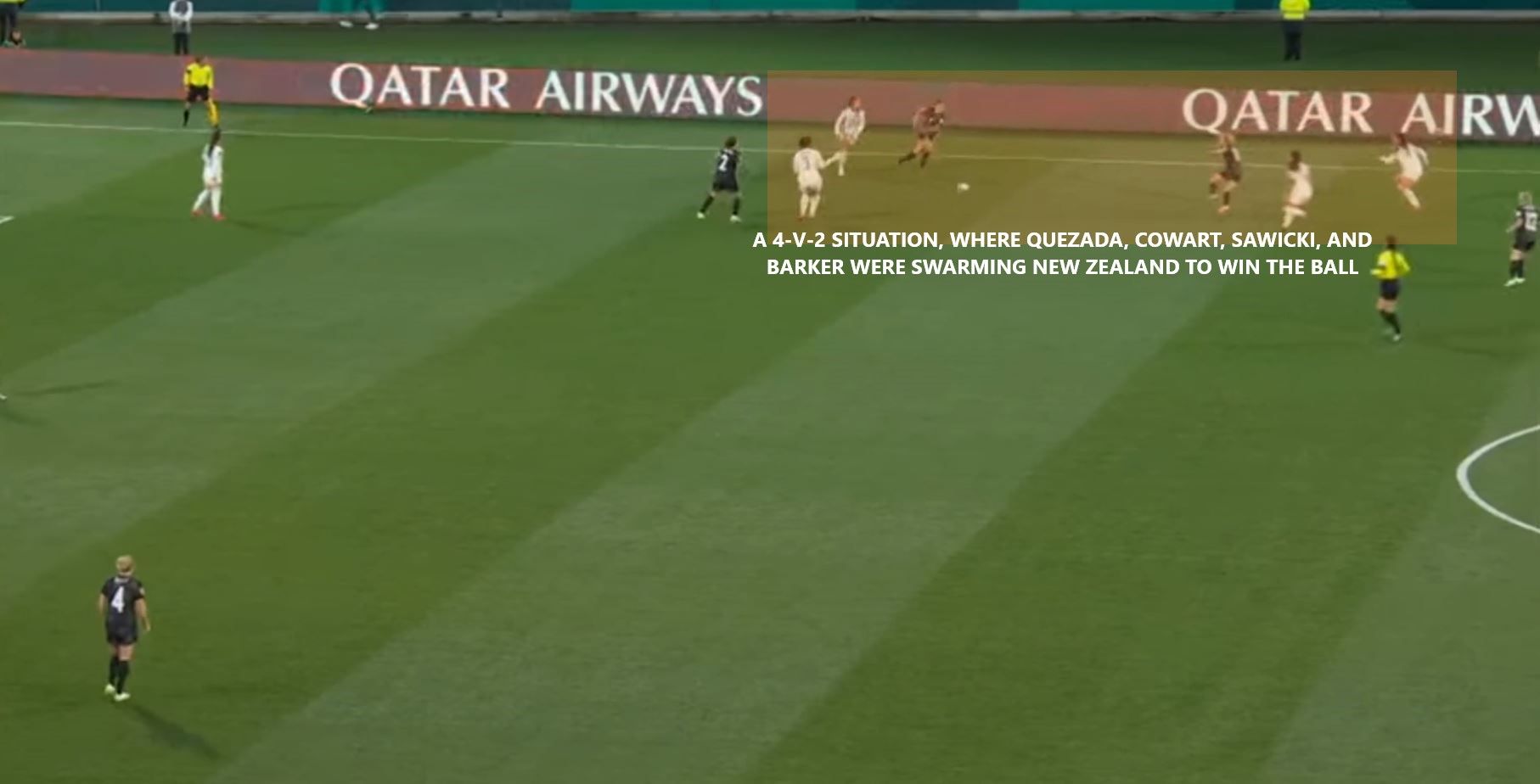
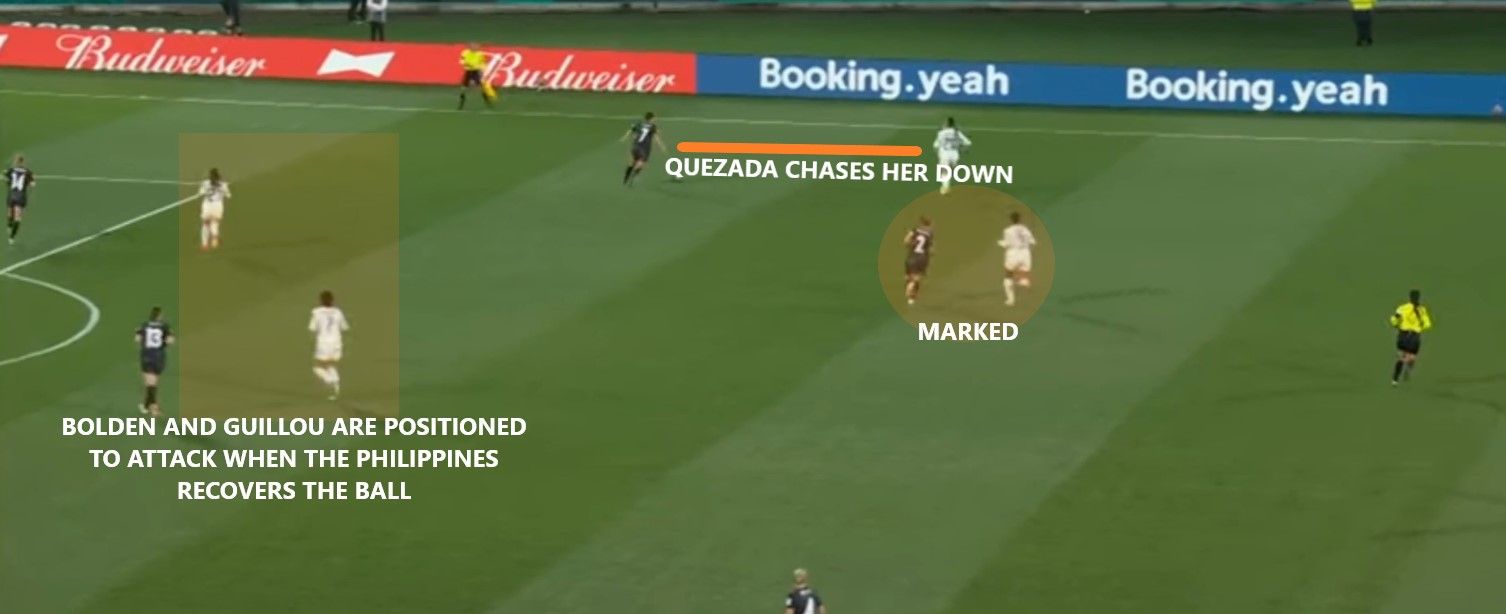
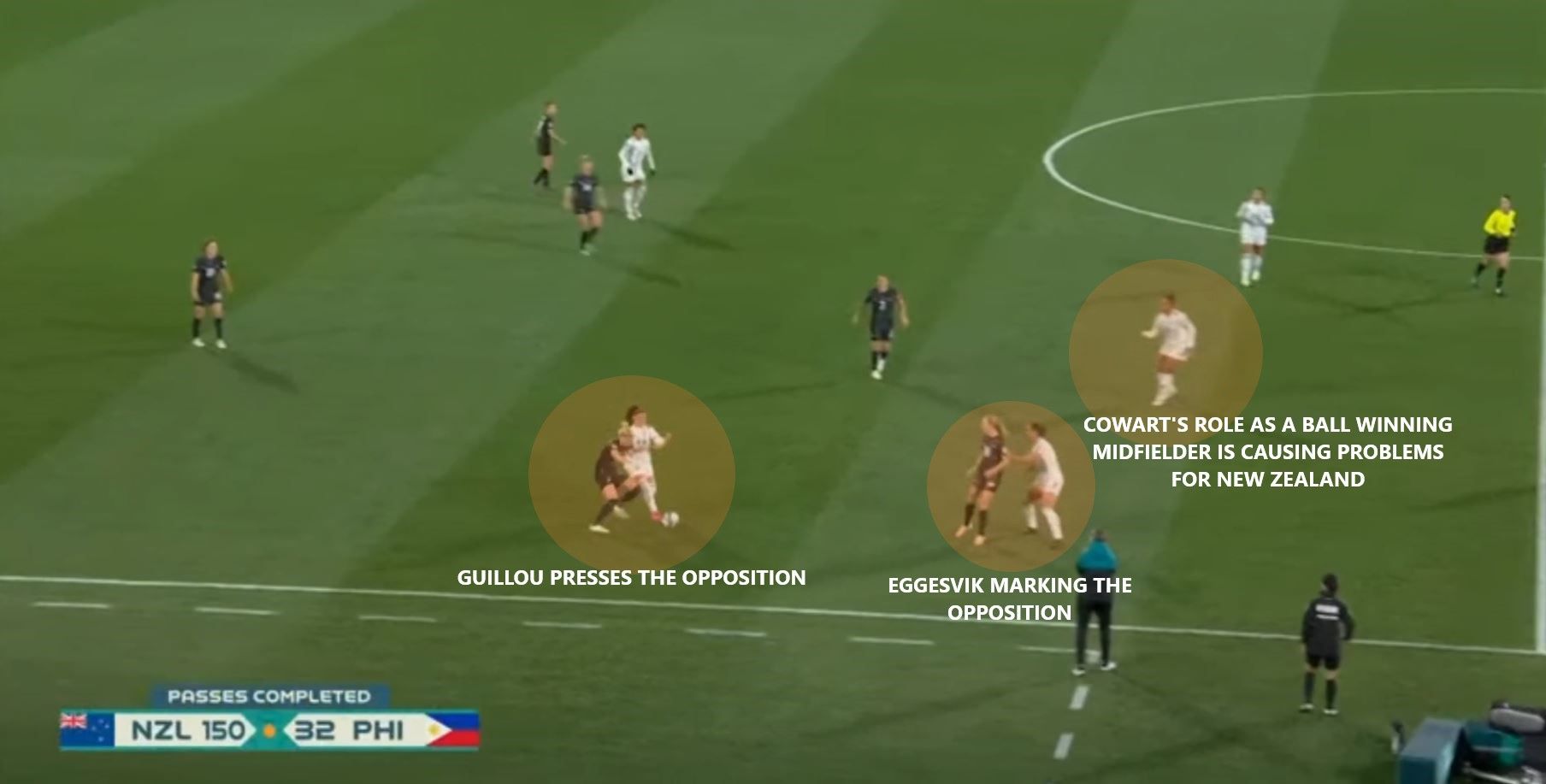
Then if they try to switch to the right, the other forward would partner with Eggesvik, Cowart, and Harrison to harass that side of the field.
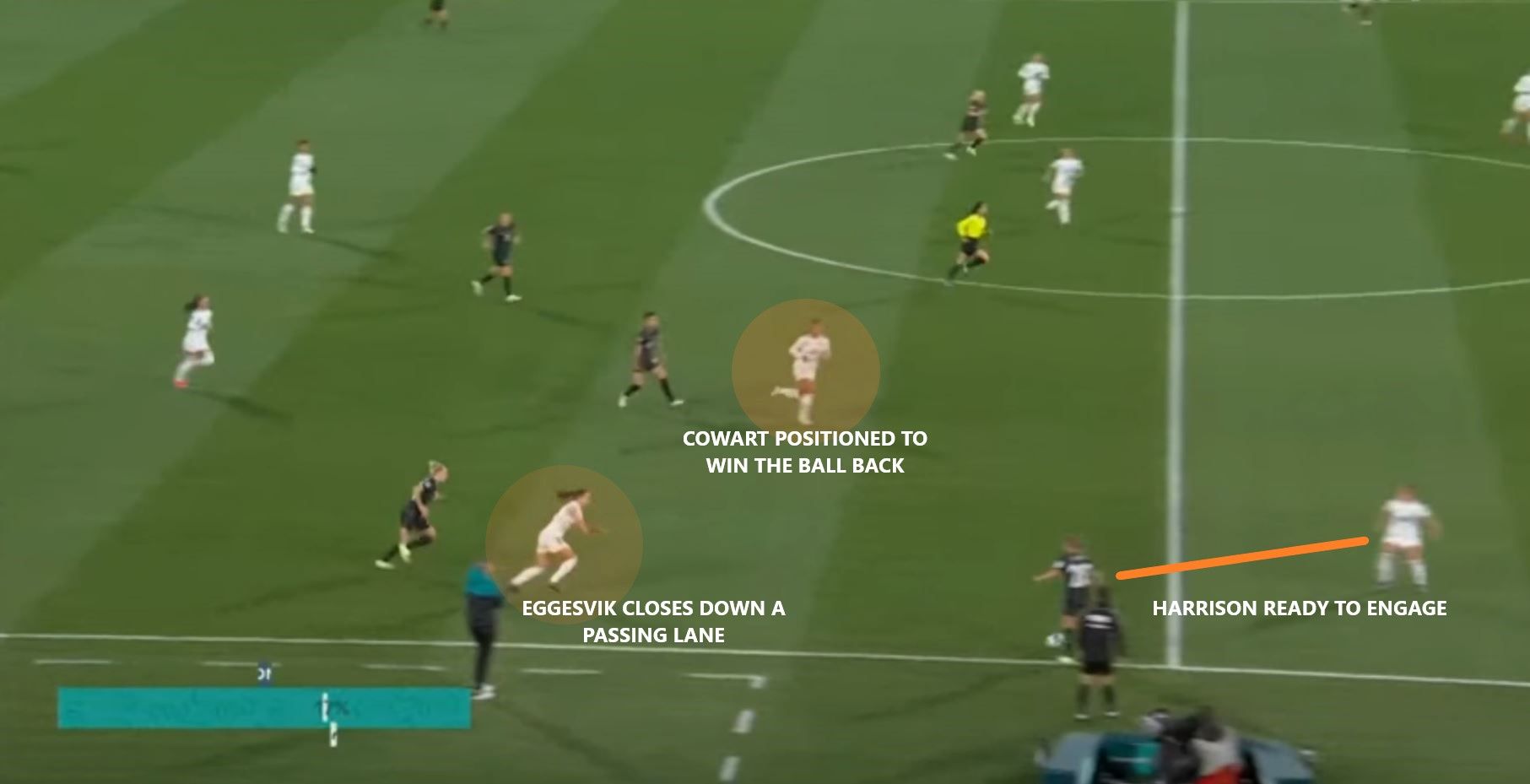
So why did Stajcic go for this approach? Well both Harrison and Quezada have the speed to support Bolden and Guillou when the Philippines are on the break, and the high defensive line means that they're both immediately ready to support the two forwards.
Meanwhile, Cowart would play the ball winning midfielder role of using her physicality to win the ball at all costs, and lay it off to any advancing player.
And as New Zealand would frantically try to recover the ball to prevent the Philippines on the break, the fouls would pile up in the attacking third, leading to set pieces for the Filipinas.
The more set pieces upfront, the more chances the ball will reach the penalty area, the more opportunities to score, hence Bolden's header.
Meanwhile on the defensive end when New Zealand pushed are backs deep, the gameplan remains similar to the Swiss game as the Philippines maintained their 5-3-2 shape.
The only difference stems from Cowart serving as an anchor, while one of the central midfielders (Sawicki, Eggesvik) would drop deep to support Hali Long and form a back five.
Overall the outcome of the match against New Zealand, proved that Stajcic has some tricks under his sleeve and it would be interesting to see how will he approach the game against the European juggernauts, Norway.
Will he stick with his gameplan and further refine it? Will he introduce something new? The stakes are high now that the Philippines has a chance to further make their mark in this year's women's World Cup.
Get more of the latest sports news & updates on SPIN.ph
NOTICE ON UNAUTHORIZED AND UNLAWFUL USE, PUBLICATION, AND/OR DISSEMINATION OF SPIN.PH CONTENT: Please be notified that any unauthorized and unlawful use, publication, and/or dissemination of Spin.ph’s content and/or materials is a direct violation of its legal and exclusive rights to the same, and shall be subject to appropriate legal action/s.
