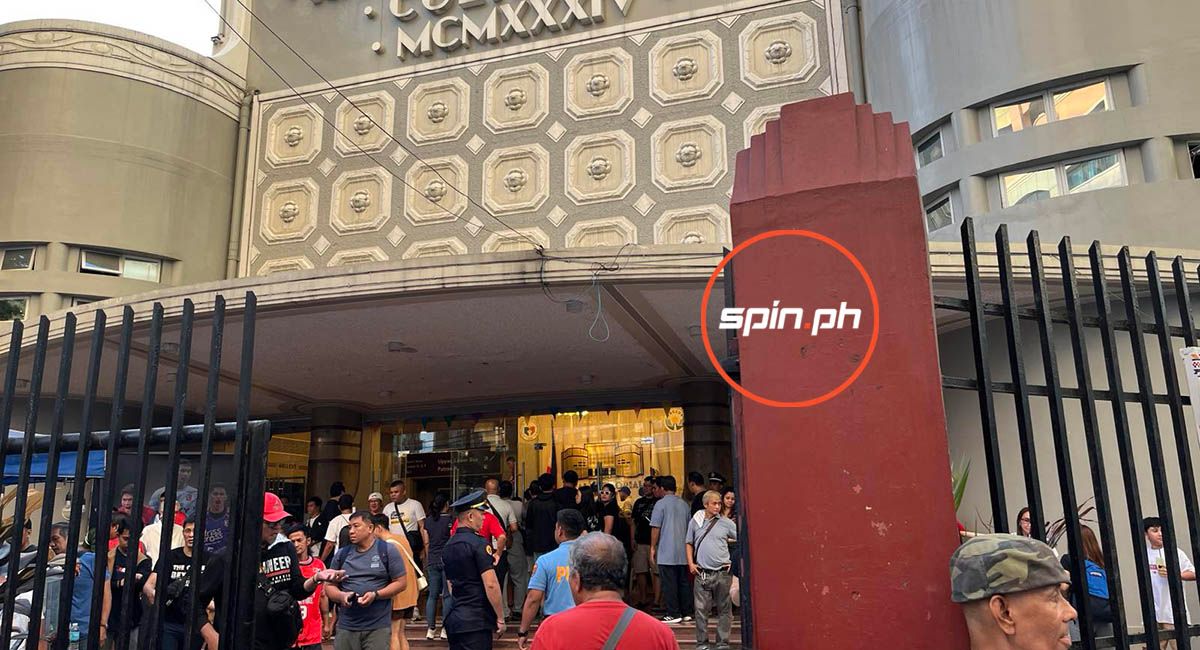

THE Rizal Memorial Coliseum just came alive for me again.
I went there to see Terrafirma take on San Miguel in the quarterfinal battle of the PBA Philippine Cup. It was a fight, of course, between David and Goliath. But, when it was over, Goliath lay wounded and David emerged triumphant. Sure, this was just one win. Eighth seed Terrafirma must beat top seed San Miguel one more time to complete the upset and earn for itself a semifinal berth. To everyone’s delight, the quarterfinal was a PBA doubleheader pitting two of the most popular teams in the country with earnest contenders — San Miguel Beer vs. Terrafirma; Barangay Ginebra vs. Magnolia.
But for all the excitement, to me, walking into the Rizal Memorial Coliseum was the real draw.
The Grand Old Place is still where it is in Malate, not moving an inch, not adding height or heft, but just standing strong and proud as I remember it. The bombs that rained on Manila in ’45, at the end of the Second World War, had left the city — and the coliseum —in rubble, but by some inspired decision-making the place was rebuilt in ’53, in time for the 1954 Asian Games that the Philippines was to host.
READ PBA games in small venues may be a bad look - but not exactly a bad thing
The Games turned out to be historic in itself, with the Philippines, competing in a field of 970 athletes from 18 countries, placing second overall with 45 gold medals, just behind Japan with 98. Then fast-forward to 2019, when another inspired decision-making allotted P250 million for the coliseum’s renovation, just in time for the Philippines to play host to that year’s SEA Games. History was again made in these Games, when the Philippines was declared overall champion. (The 2019 multimillion renovation was, of course, marred by stories of corruption at many levels, but that is a story for another day.)
Since then, the Rizal Memorial Coliseum has become a welcome sports complex — with playgrounds for tennis, swimming, baseball, football, and track and field — and a good place where sports history can still be made.
We like to call it Rizal, and it is where I cut my teeth as a sportswriter. But, suddenly, it is more than one decade since I saw it last.
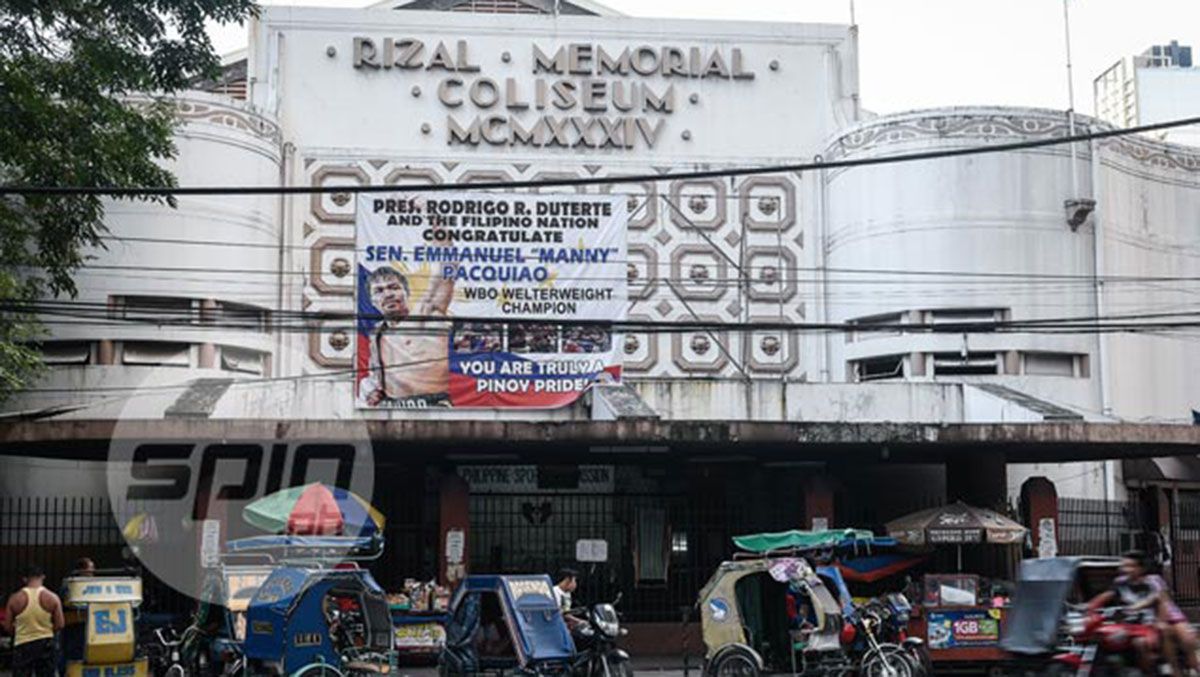
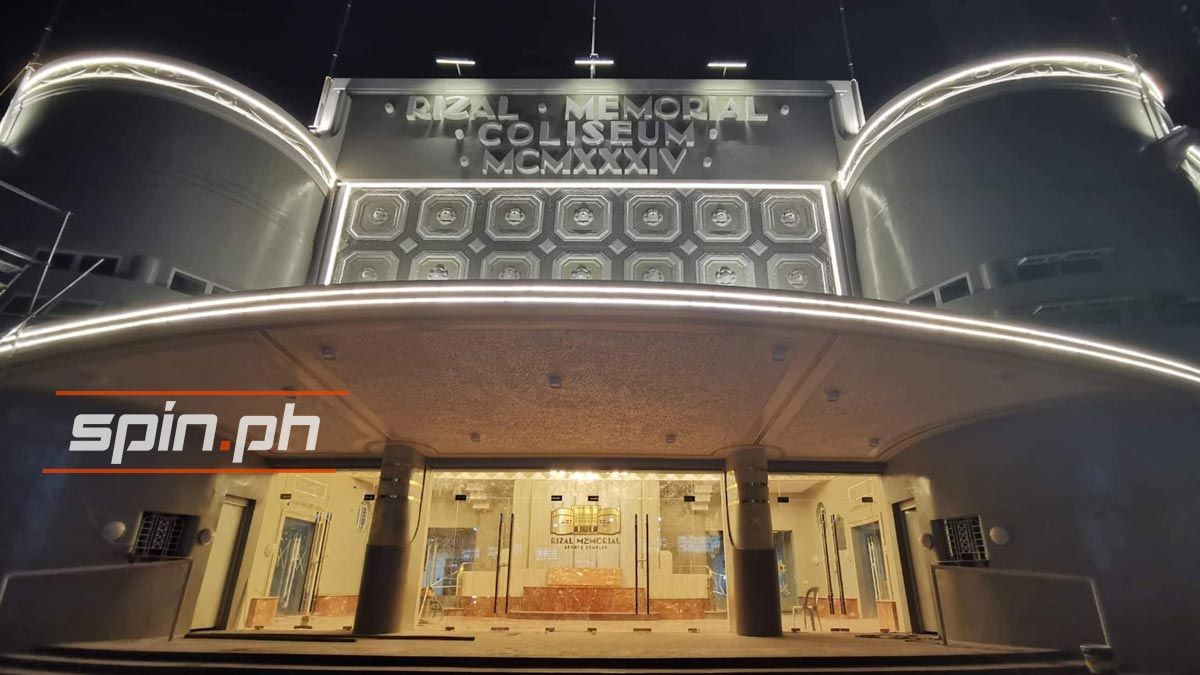
Its façade is largely unchanged and remains a sight to behold. The year 1934, when it first opened, is still engraved in Roman numerals, MCMXXXIV, in its cement walls. There have been changes, certainly. Nearly every chairman of the Philippine Sports Commission, recognizing Rizal Memorial’s place in the country’s sports history, has taken a crack at making it more attractive and modern.
They succeeded in turning Rizal into a quaint, intimate venue that currently sits around 6,200. (Nothing like Araneta’s or MOA’s over 16,000, but we never said those venues were intimate.) The offices at either side of the entrance, where top sports officials once held office, are no longer there, with the rooms seemingly in use for various purposes. The wooden bleachers remain. Which may be a wise move because replacing these benches with individual seats would cut Rizal’s capacity by at least a fourth.
The view from the bleachers is not bad either. Spectators can still see players’ faces clearly, even see sweat trickling down their faces and, if coaches speak loudly enough, actually hear them laying out game strategy. The unattractive, old chicken-wire screen dividing this section from the upper and lower boxes is gone. The basketball court itself is shiny and up to standard, the locker rooms more modern, and the whole coliseum is now air conditioned.
All right, it lacks a giant scoreboard. It makes do with small ones on opposite ends, making it difficult for spectators to determine which team is actually ahead. Neither is the team’s name on the board, nor the players’ names and numbers, so it becomes a bit of a guessing game particularly for the uninitiated. In the end, I have to say the place is not passable for serious international games. But, well, maybe this calls for another renovation that the PSC may welcome.
Looking from the bleachers, where I sat, at the press section below, which is now just a row of chairs with no tables, I begin to recall how it felt during my first coverage, when, as sportswriter for our University of the East school paper, Dawn, I was assigned to cover the Red Warriors, then led by UE’s star player Robert Jaworski.
It was thrilling but also nerve-wracking. I sat nervously in the press box with my idols all seated in a row beside me: Ernie Gonzales of The Manila Times, Cris Maralit of the Philippines Herald, Roger Flores of Manila Chronicle. Heck, they were all there covering college hoops. Occasionally, the venerable Tony Siddayao, Manila Times sports editor and arguably the best sportswriter the country has produced, would appear, nearly always stoic, his notes and fountain pen in his hand, there to be greeted by coaches, players, ball boys, and even the mop guy.
Mind you, campus writers were second-class citizens on press row. Players, coaches, officials hardly gave them a second look. They were also warned by the big media reporters not to shout or bang tables when their teams scored, but we couldn’t help doing this anyway. College ball is partisan ball. And then as now, college hoops were big, meriting good space in national papers.
Rizal Memorial was, of course, the chosen venue for important basketball games. NCAA teams battled each other nearly to death there, with their hyper supporters throwing stones and breaking car windows after contentious games. UAAP also took rivalry to new heights there and, not to forget, so did MICAA, the biggest basketball tournament of the ‘60s and ‘70s, packing in fans to the rafters, from where they had an open view of Vito Cruz, of the baseball and tennis grounds where games could be ongoing, and of the basketball game below.
Rizal Memorial of my youth
Some of the time, and perhaps very few remember this, the basketball court was transformed into a tennis court, where the likes of John Newcombe and Bjorn Borg displayed their genius. For the tennis matches, the wooden floors would be dismantled, set aside somewhere in the complex, and, voila, a hard dirt court would appear!
Rizal also hosted the World Weightlifting Championships of 1974, with 32 nations and 143 men going into action. This one featured the world’s strongest man, the Soviet Union’s Vasily Alekseyev, who successfully lifted all of 425 kilos. Alekseyev is still considered the greatest super-heavyweight lifter in history.
Outside, right across the coliseum, was Memorial Café, a small restaurant serving good food, unlimited beer, and jukebox music. It was here where players, coaches, and sportswriters mixed it up, passing the time before and after games, discussing the merits and demerits of whatever sport was the flavor of the moment, often animatedly and, occasionally, violently.
Memorial Café is gone, as are the rest of the beer joints in the area, replaced by towering buildings filled with residential condominiums and business spaces offering services for condo owners, office employees, and students from nearby La Salle and St. Benilde.
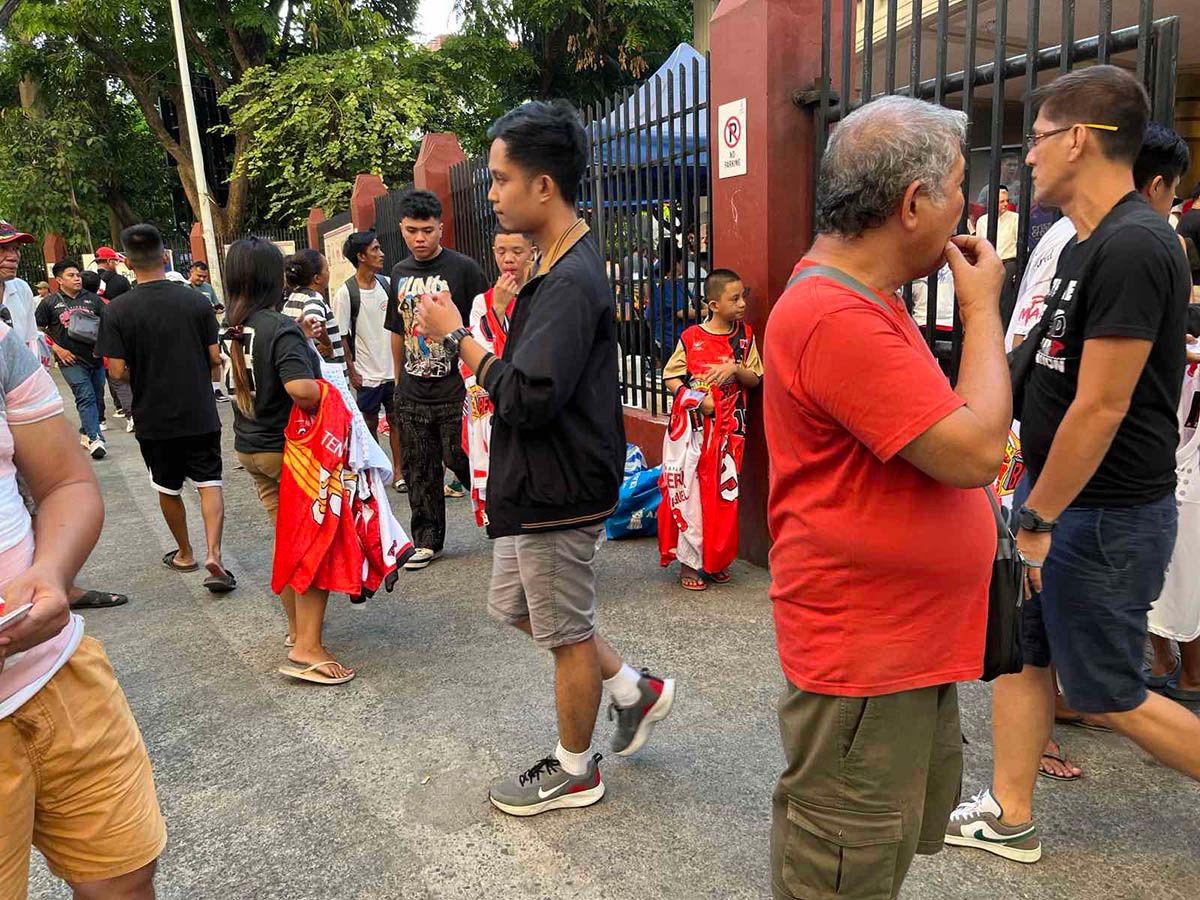
Rizal Memorial is now 90 years of age, but I feel it will stay alive and kicking and aging gracefully. On the day I visited it, boys and girls and their elders were outside the venue peddling PBA shirts and manning food stalls. Traffic continues to roll in always busy Manila, the LRT is just a few meters beyond, tricycles dot the curbs. But the one sign that says all is alive and well is this: scalpers are still around after all these years.
Get more of the latest sports news & updates on SPIN.ph
NOTICE ON UNAUTHORIZED AND UNLAWFUL USE, PUBLICATION, AND/OR DISSEMINATION OF SPIN.PH CONTENT: Please be notified that any unauthorized and unlawful use, publication, and/or dissemination of Spin.ph’s content and/or materials is a direct violation of its legal and exclusive rights to the same, and shall be subject to appropriate legal action/s.
