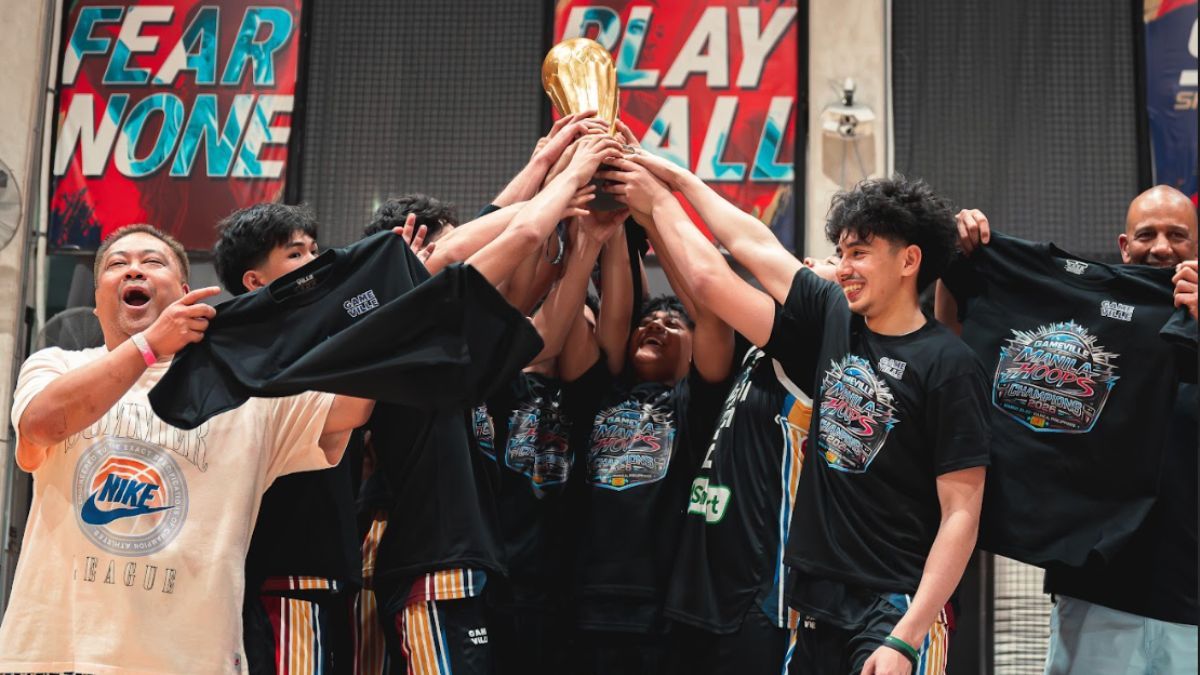
A COMPRESSED, high-volume schedule took center stage at the Manila Hoops Tournament on March 21–22, where 36 high school teams combined for 97 games in just two days — offering a glimpse at a different approach to grassroots basketball competition in the country.
At the heart of the event was a shift in format.
Games were played in two 20-minute halves with a running clock, a structure that sped up play and placed greater emphasis on quick decision-making and efficient execution. With less stoppage time, teams had fewer chances to recover from mistakes, often turning short scoring runs into decisive swings.
AAU in the PH
The setup also allowed teams to log multiple games in a day, increasing in-game reps compared to traditional tournament formats. That volume, while demanding, gave players more exposure to game situations — particularly late-game scenarios where time and possessions were limited.
The pace and structure led to tighter margins and a number of unpredictable results, as momentum shifts became more pronounced in shorter, continuous play.
For coaches, it meant adjusting rotations and strategies on the fly, often within the same day.
Organized by Gameville Sports Events and Tournaments (GSET), the event served as an early test of whether a condensed, AAU-style system more common in the U.S. can translate to the local setting.
Whether the format becomes a staple remains to be seen, but the early returns point to a model that prioritizes volume, pace, and adaptability — elements that could influence how future youth tournaments are structured.
Get more of the latest sports news & updates on SPIN.ph
NOTICE ON UNAUTHORIZED AND UNLAWFUL USE, PUBLICATION, AND/OR DISSEMINATION OF SPIN.PH CONTENT: Please be notified that any unauthorized and unlawful use, publication, and/or dissemination of Spin.ph’s content and/or materials is a direct violation of its legal and exclusive rights to the same, and shall be subject to appropriate legal action/s.
