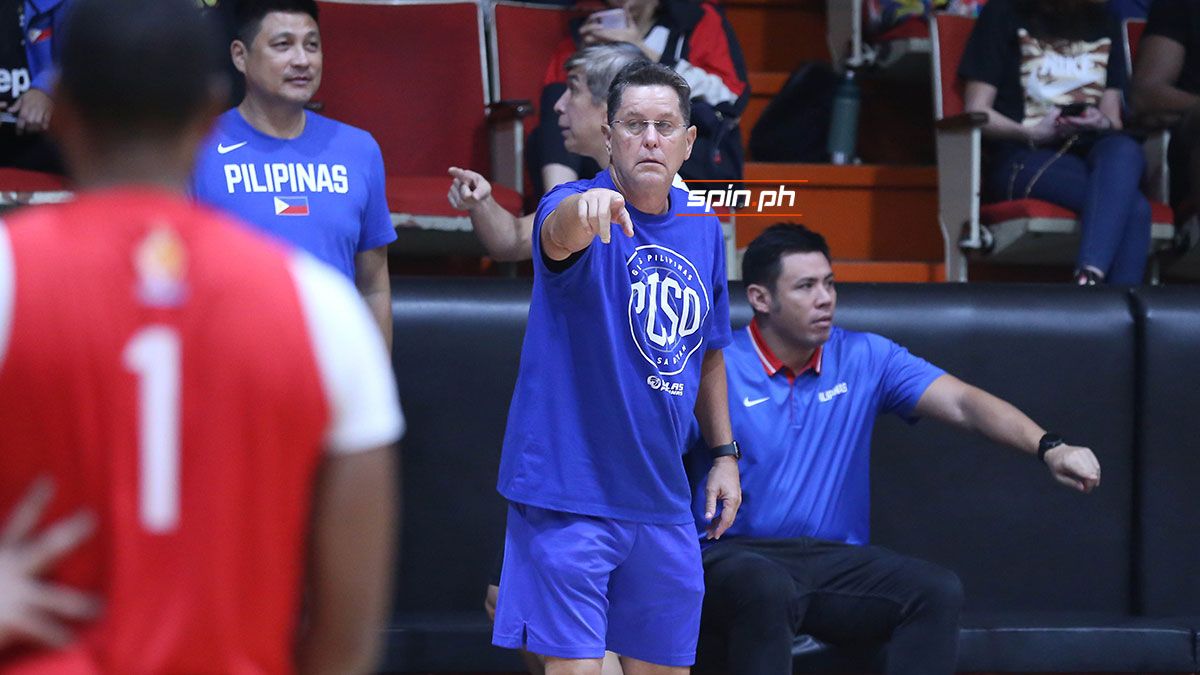
IN coach Tim Cone's eyes, the key in making Gilas Pilipinas reaching its dreams to become world beaters falls down in a simple matter of continuity.
"We're never giving the national team a chance to process into what they could be, to reach their pinnacle of how best they could be," he told Coaches Unfiltered on Thursday.
The Ginebra mentor, who's the most decorated bench tactician in PBA history, gave a lengthy assessment on how the national team has been ran over the years and feels that the repeated start-and-stop process in building Gilas Pilipinas has hampered the country's progress as a whole.
"Coaching is all about failing and achieving, failing and achieving, and failing and achieving. You're winning and you're losing and you're learning from the losing and you're bringing that on to the winning," he said. "When you have that patience and when people change coaches, if you're looking at that that instant gratification, you're not growing, you don't get the chance to grow and learn, and you don't give your people a chance to grow and learn. That's what I've always felt about the national team."
Over the past two decades, the longest tenure for a national team coach here is two years.
Serbian mentor Rajko Toroman handled the all-amateur Smart Gilas team from 2009 to 2011, while Chot Reyes also steered Gilas Pilipinas from 2012 to 2014, culminating in the 2014 Fiba World Cup in Spain, and once again from 2016 to 2018.
For his part, Cone has had the chance of taking the lead for the national team twice, first in 1998 with the Philippine Centennial Team where it finished with a bronze medal in the 1998 Asian Games in Bangkok, and once again last year when he led Gilas Pilipinas to a gold medal in the 30th Southeast Asian Games here.
"I coached two decades apart and I had to really, really look back at that two decades earlier and try to figure out the things we did that were successful and what are the things we did that weren't successful and I won't try to do it again with the Gilas team in the SEA Games," he said.
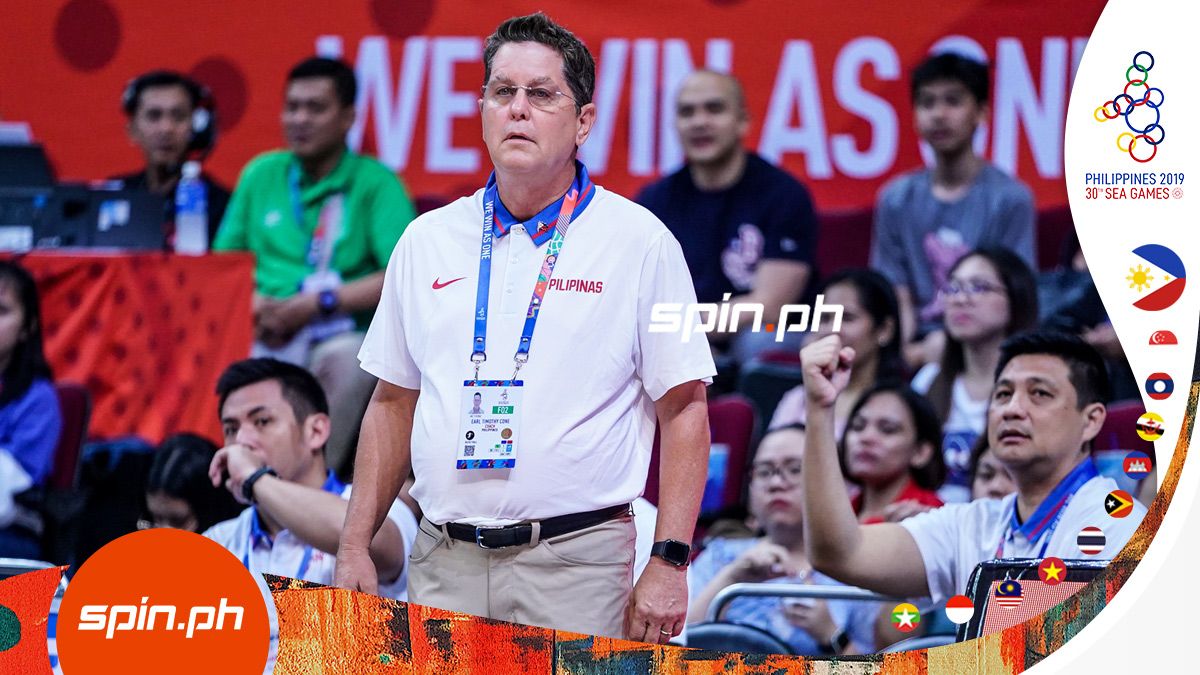
Those stints, however, are only one-offs.
And for Cone, having that continuity is integral in the overall development of the national team.
"Every time you change the coach, you start from zero, pick the team, put the system together, and then go through trial and error. Is this the right system? Am I doing the right thing? Are these the right players? Do I need to change them?," said the two-time Grand Slam-winning mentor.
But it's not limited to the coaches, as Cone said that having a solid core of players also works hand-in-hand in achieving success.
After all, that's what the other countries, especially in Asia has done, from China and Iran to Korea and Chinese Taipei.
"They may change coaches but they don't change players. It's the same guys every year. Sooner or later, they get older and slowly, they bring in younger players, but the core stays the same. And if a core guy leaves, then a player who they already have steps up and be a core. There's a continuity of players," he said.
Of the players who suited up for Cone in this past SEA Games, the longest-tenured member of the national team is Japeth Aguilar, who has been a fixture in the Gilas program since 2009.
Gabe Norwood, who was the team captain of the 2019 Fiba World Cup squad, has been donning the national tri-colors since 2007, but was not called up for the biennial meet.
It's no different to the formula Cone used in the PBA where he won 22 championships across Alaska, Purefoods, and Ginebra.
"If we had stayed with the (Alaska) team in 1991 and kept that same team up to 1996, there's no way we'll win the Grand Slam. We had to figure out that we have to change personality into 1996," the American bench tactician said. "We had to do the same thing in Purefoods, and by the time we won the Grand Slam, we had different players."
"The core was the same, and you keep the core because that's the core who you'll rely on, but you got to find the pieces that all fit together and create that chemistry that's gonna get you to play at a higher level and not just at your talent -- chemistry that will allow you to play beyond your talent."
He furthered: "Over time, you keep that team together, they're gonna get better and better. Sooner or later, they're going to a point where they're gonna reach their peak and that's what you're building to to whatever tournament you're looking at. And you're gonna use the other tournaments to learn."
To Cone, that continuity will really come in handy when it comes to preparing for various international tilts, quipping: "If you keep a team continuously over the years, that's preparation in itself."
It's all a process, Cone said, and losses are part of the growing pains.
What matters is how the team rebounds after a character-testing defeat, and reiterated that one failure shouldn't always force a massive overhaul of a program, especially in a scale of the national team.
"The worst thing is to say after one tournament that, 'Ugh, we failed. We were bulok. It's time to change the coaches, time change the system.' And now we go to the next one and do the same thing again. That's been my issue with the national team, we're not allowing teams to grow and get better," he said.
"How does our system, how does our coaching, how does our philosophy, how does our relationships with players, how does that continue? That is, to me, the biggest question that needs to be answered by the national team. I think that through 30 years of watching the national teams, that is, to me, the biggest problem, the most prominent problem."
"Once you figure out how to do that and attack that, I think our national team's gonna become a force in Asia and maybe even in the international arena. I really do believe that, but I just don't think that we're able to answer that question. The answers are really really difficult and are hard to find and I don't have the answers."
Get more of the latest sports news & updates on SPIN.ph
NOTICE ON UNAUTHORIZED AND UNLAWFUL USE, PUBLICATION, AND/OR DISSEMINATION OF SPIN.PH CONTENT: Please be notified that any unauthorized and unlawful use, publication, and/or dissemination of Spin.ph’s content and/or materials is a direct violation of its legal and exclusive rights to the same, and shall be subject to appropriate legal action/s.

