IN life, as in basketball, you're only as good as your last performance.
No wonder the noise around June Mar Fajardo got louder once again, as some basketball fans tagged him as “pang-PBA lang” after his most recent outings with Gilas Pilipinas in the second window of the FIBA World Cup 2027 Asian qualifiers.
To be fair, the stats from the Gilas losses to New Zealand and Australia paint a painful picture for those who want to defend Fajardo’s greatness as he 36-year-old Cebuano giant averaged only 1 point, 1.5 rebounds, with 0 field goals, in 6.5 minutes.
READ Fajardo the magic bunot as Gilas ends World Cup drought
But to be fair, those two games were against two teams that exploit his weaknesses and don’t render the nine-time PBA MVP less valuable in the international scene. In fact, a closer look at his overall numbers in international tournaments would debunk the claim.
It’s natural to see a decline in Fajardo’s PBA numbers in in international play. He may not be as dominant against higher-ranked teams of the world, but that doesn’t mean he is not essential for Gilas. June Mar may not be the sun to the solar system that he is in the PBA, but he's a vital cog in the Gilas machine, where he is arguably the most efficient part.
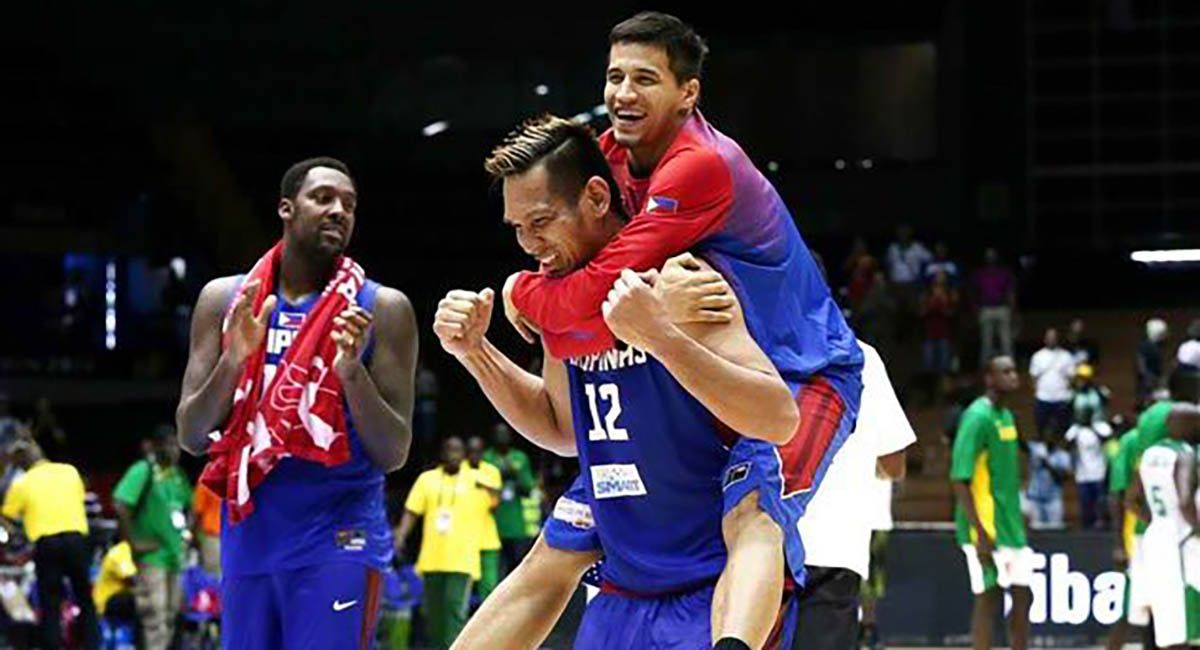
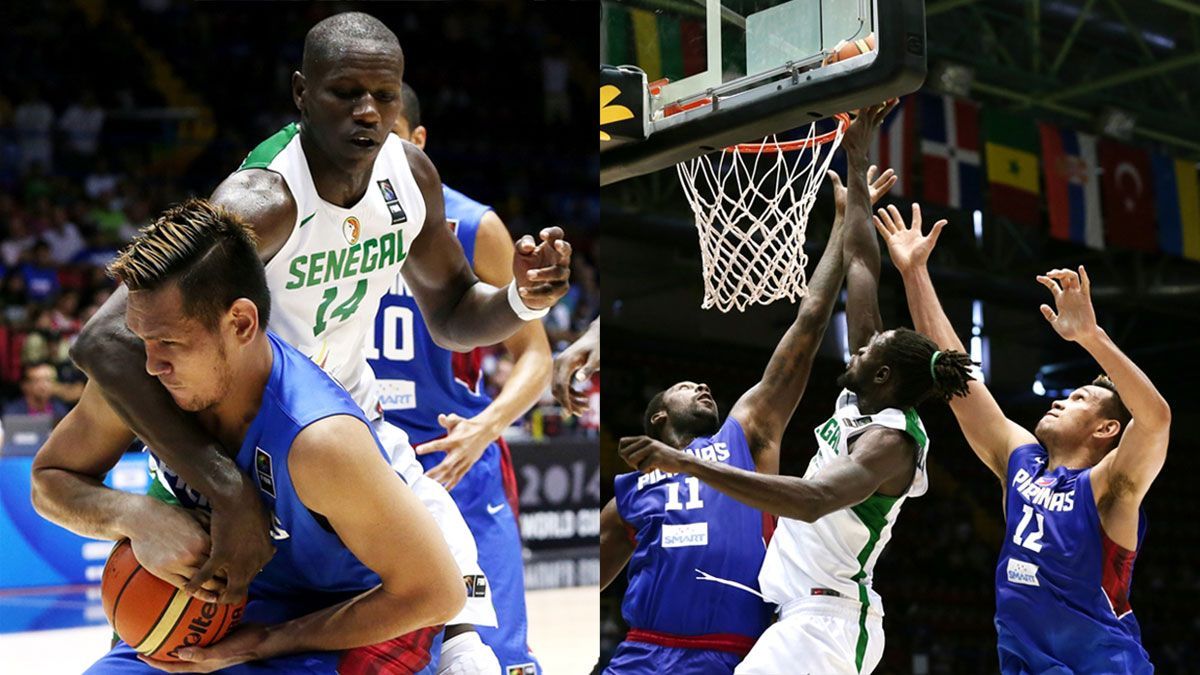
When he started playing for the national team, Fajardo began as a backup to naturalized bigs Marcus Douthit and Andray Blatche. That early, the 6-foot-10 behemoth showed just how valuable he could be to the national team program. In the 2014 FIBA World Cup, Fajardo scored double digits twice even in limited minutes, including his breakout game in the historic 81-79 win over Senegal that broke a 40-year drought for the Philippines. His stats: 15 points on 54.5% shooting, with 9 rebounds and 2 assists in 32 minutes.
He has since gone through a couple of coaching and system changes in Gilas duty, yet remained the team’s best big even while producing numbers below his PBA averages. Where he puts in double-doubles night in and night out in the PBA, Fajardo only came up with under 7 points and 5 rebounds per outing under coaches Tab Baldwin and Chot Reyes.
He has since grown to be a tactical anchor in the hybrid triangle that coach Tim Cone runs. It's easy to forget these days how he put up 9 points on 57% shooting, along with 7.3 rebounds against some of the world’s best teams during the 2024 Olympic Qualifiers. In the 2023 FIBA World Cup, he also stood his ground against top competition, averaging 6.6 points and 5 boards in 19 minutes, including a 16-7 game against Karl-Anthony Towns and the Dominican Republic.
Even at his age, he remains an important part of Gilas with unique strengths he brings to the table, especially against the right matchups.
Impact beyond scoring
The box scores may not be impressive, but once Fajardo gets the touches with Gilas, he rarely misses. His field goal shooting is top tier, going 53% or higher in major tournaments he has played. His true shooting percentage of around 66% is elite — think Giannis Antetokounmpo MVP-level elite — highlighting how lethal he is when he gets to seal his man and get in scoring position.
Teams here and abroad know the San Miguel superstar’s seal-and-finish game is first class, but there’s another aspect of Fajardo’s game that he also brings overseas — his elite offensive rebounding prowess. In fact, at the 2023 World Cup, he grabbed 2.2 offensive boards a game, which puts him at No. 7 in the entire tournament.
The best part: June Mar cleaned up 13.4% of missed shots by his teammates in that World Cup campaign. That’s just the second-best rate in the tournament, behind Cape Verde’s Edy Tavares’ 16.8%. The PBA all-time leader in offensive rebounds continues to prove he is world-class when it comes to crashing the boards.
Flashes of dominance
Given enough minutes, Fajardo has shown he can deliver stats closer to his PBA averages even against the top teams in the world. His player efficiency rating per 40 minutes in FIBA play is around 18, which puts him in position to produce his MVP-worthy numbers with extended usage.
Still, even with limited burn, Fajardo manages to hang with the best bigs of the world. He showed apex Kraken form at the 2023 FIBA World Cup and 2024 Olympic Qualifiers. He notched his new World Cup-best 16 points and a 21 efficiency rating against Towns. He had his peak performance in FIBA world competition in the Olympic qualifiers with a near double-double average against NBA bigs like Latvia’s Davis Bertans, Brazil’s Bruno Caboclo, and Georgia’s Goga Bitadze and Sandro Mamukelashvili.

Ever humble, Fajardo will be the first to downplay his role and credit his teammates and coaches — and there’s a grain of truth to that. The longtime Gilas center had his best individual stats when he teamed up with fellow towers Kai Sotto and AJ Edu. Why? When teams attacked Fajardo in switches, the two young, athletic rim protectors have his back. He also enjoyed ample space to operate in the paint as both Sotto and Edu have the shooting, athleticism, and size to attack mismatches in the frontcourt. Fajardo’s role became more focused — patrol the paint, crash the boards, making him more effective and efficient.
Big but less agile players like Fajardo tend to perform well against technical, half-court systems employed traditionally by European teams like Latvia and Georgia. Even the Latin American teams Gilas battled like Brazil and Dominican Republic played a more structured, slow-paced game with traditional drop coverage on defense. All these things suit June Mar’s strengths really well, as he can use his full 122-kg frame to play bully ball in the paint and crash the glass.

Now why can’t June Mar play consistently well against Australia and New Zealand?
A few factors stand out. For one, it’s hard to play consistent when the touches are inconsistent. In the PBA, Fajardo has a usage rate of more than 30%. In Gilas, that rate goes down to around 15-20% as the offense leans less on him as the hub but more as a support pillar. It’s also natural to see a dip in touches with the Gilas roster loaded with talent.
Then, there’s the Oceania wall. Fajardo has almost always struggled against Australia and New Zealand, going scoreless in 2 of the last 3 games he played against either of these teams. The Boomers and Tall Blacks aren’t just big, they play fast. Think F1 cars with SUV bodies, that’s what June Mar contends with against Australian and New Zealand bigs. These teams also tend to play more at the high post with quick ball movement, forcing Fajardo out of the paint in defensive coverage. Matched up against quick but hefty guards on the switch, the Kraken is what Shaq calls barbecue chicken. Hence, the low minutes and lower numbers.
Down but not out
That notwithstanding, Fajardo has long debunked he’s “pang-PBA lang.” June Mar is the most efficient interior finisher the Philippines has ever produced, hands down. He just has glaring weaknesses that particular teams are built to exploit. But with the right Gilas roster and against specific foes, the Kraken remains a beast.
Gilas may soon be seeing a new wave of big men patrolling the paint as Fajardo winds up his more than a decade of service to the national team. Rather than watering down the Kraken’s value because of a few duds, it’s best to put the pang-PBA label to rest and appreciate this generational talent that we have the pleasure to witness.
Get more of the latest sports news & updates on SPIN.ph
NOTICE ON UNAUTHORIZED AND UNLAWFUL USE, PUBLICATION, AND/OR DISSEMINATION OF SPIN.PH CONTENT: Please be notified that any unauthorized and unlawful use, publication, and/or dissemination of Spin.ph’s content and/or materials is a direct violation of its legal and exclusive rights to the same, and shall be subject to appropriate legal action/s.
