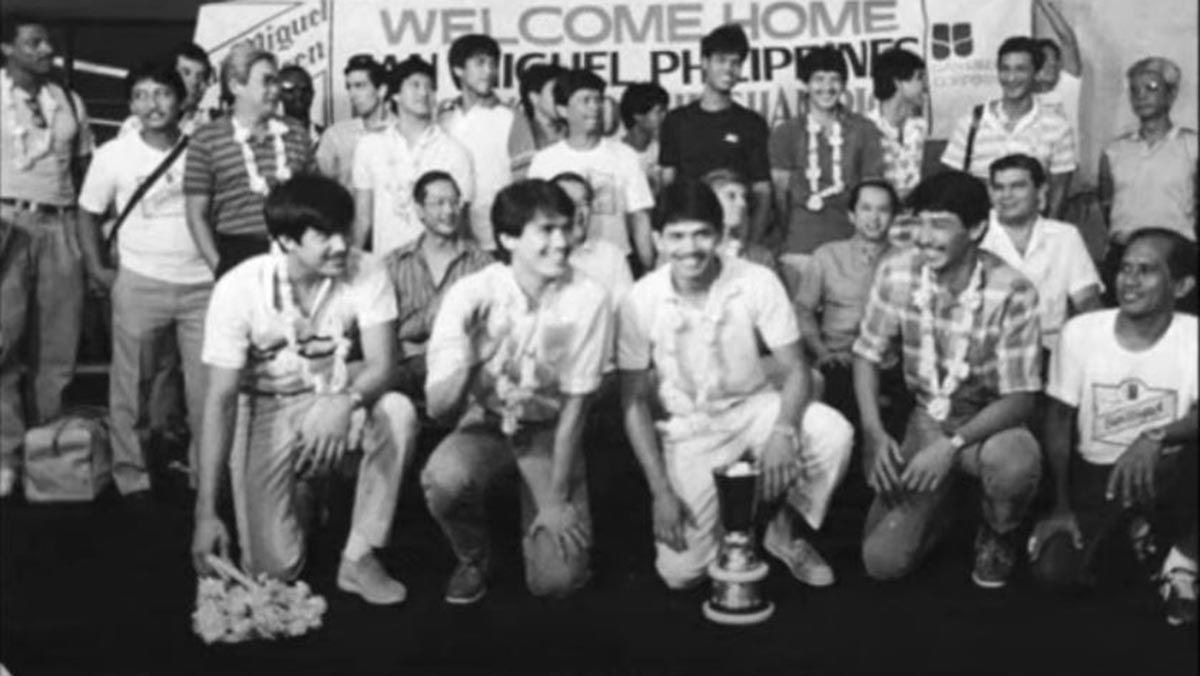
FORTY years.
It's been that long since Philippines won the FIBA Asia Cup, whose 31st edition as Asia's most prestigious championship gets underway on Tuesday in Jeddah, Saudi Arabia with Gilas Pilipinas hoping to end the drought.
It was 1985, the year the PBA held its first ever rookie draft, Larry Bird and Magic Johnson were in their primes as their teams - Boston and Los Angeles - reignited a rivalry that made the NBA what is today. Also that year, Marvelous ‘Marvin’ Hagler and Thomas ‘Hitman’ Hearns clashed for the undisputed world middleweight championship turning it into one of the greatest fights in boxing history.
READ What Gilas can learn from the successful NCC program of the 1980s
It was also around this time that the country won the Asia Cup championship behind the Northern Consolidated team under the late American coach Ron Jacobs..
The tournament was then known as the ABC Championship for Men, and was held from Dec. 28 1985 to Jan. 5, 1986, during which the Philippines beat every challenger as it went undefeated in six games. The wins included an 82-72 thrashing of defending champion China in the finals as the country regained the honor of being Asia's best.
The team was made up of PBA stalwarts Allan Caidic, Hector Calma. Franz Pumaren, Pido Jarencio, Elmer Reyes, Tonichi Yturre, Yves Dignadice, Jerry Codinera, and a pair of naturalized Filipinos Dennis Still, Jeff Moore. Also in the team were the late Alfie Almario, and Samboy Lim.
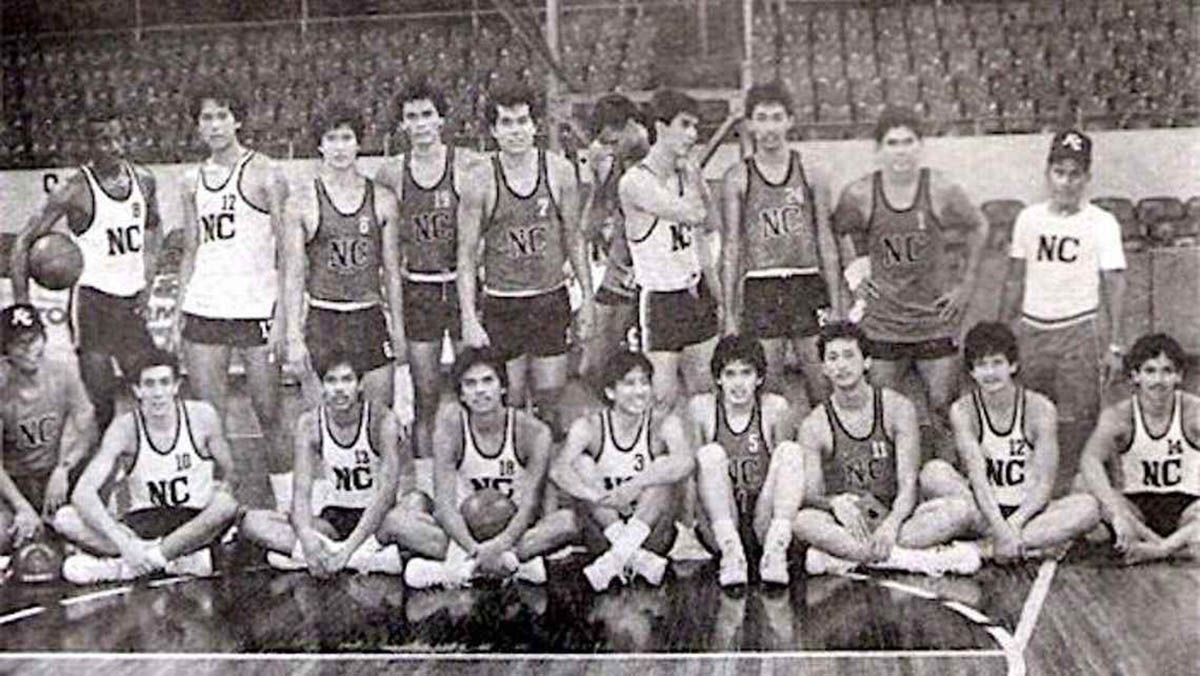
It was the country's fifth championship having won the first two editions including the inaugural staging held at the Rizal Memorial Coliseum in 1960.
The 1985 win also proved to be the last.
The Northern Consolidated program was disbanded in the wake of the 1986 EDSA Revolution, as then team owner and patron Danding Cojuangco Jr. fled the country along with the family of Ferdinand Marcos whose son, Marcos Jr., is now the country's president.
With its disbandment, the country forfeited its chance of seeing action in the 1986 FIBA World Cup in Madrid, Spain.
In the years that followed, the country advanced to the semis just twice. That was in 1987 in Bangkok behind a team coached by Joe Lipa and bannered by Codinera, Alvin Patrimonio, Jojo Lastimosa, Bong Alvarez, Nelson Asaytono, amd Benjie Paras, among others, and in 2011 in Wuhan, China behind a hybrid Smart Gilas Pilipinas unit under Serbian mentor Rajko Toroman
It wasn’t until 40 years later when the event, now renamed as the FIBA Asia Men’s Championship, returned to Manila for the first time since 1973, the year the Philippines last won the tournament with an all-Filipino crew.
In 2013, the country, as host, finally returned to the podium under coach Chot Reyes and, in fact, strongly contended for the gold, eventually losing to defending champion Iran in the title game, 85-71.

Two years later, coach Tab Baldwin steered Gilas back to the finals in Changsha, China, only to go down against the host country during the gold medal match played before a hostile crowd at the Changsha Social Work College’s gymnasium.
That was a decade ago.
The tournament was later rechristened as the Asia Cup and, with this new brand, it expanded and merged with the Asia Oceania zone and made into a quadrennial event. At the same time, its status as qualification for both the Olympics and World Cup was removed by FIBA.
Since adopting the new format, Oceania powers Australia and New Zealand, known for its higher quality of basketball, have crowded the rest of Asia for honors.
The Boomers (Australia) retained their title in Jakarta, Indonesia in 2022 by evading the upset axe against Lebanon, 75-73, while the Tall Blacks edged Jordan for the bronze, 83-75.
Baldwin called the shots for Gilas back then, but couldn’t generate the old magic as the national team, backstopped by the likes of Kiefer Ravena, Rhenz Abando, and Carl Tamayo, only managed to reach the playoffs, and eventually finished ninth.
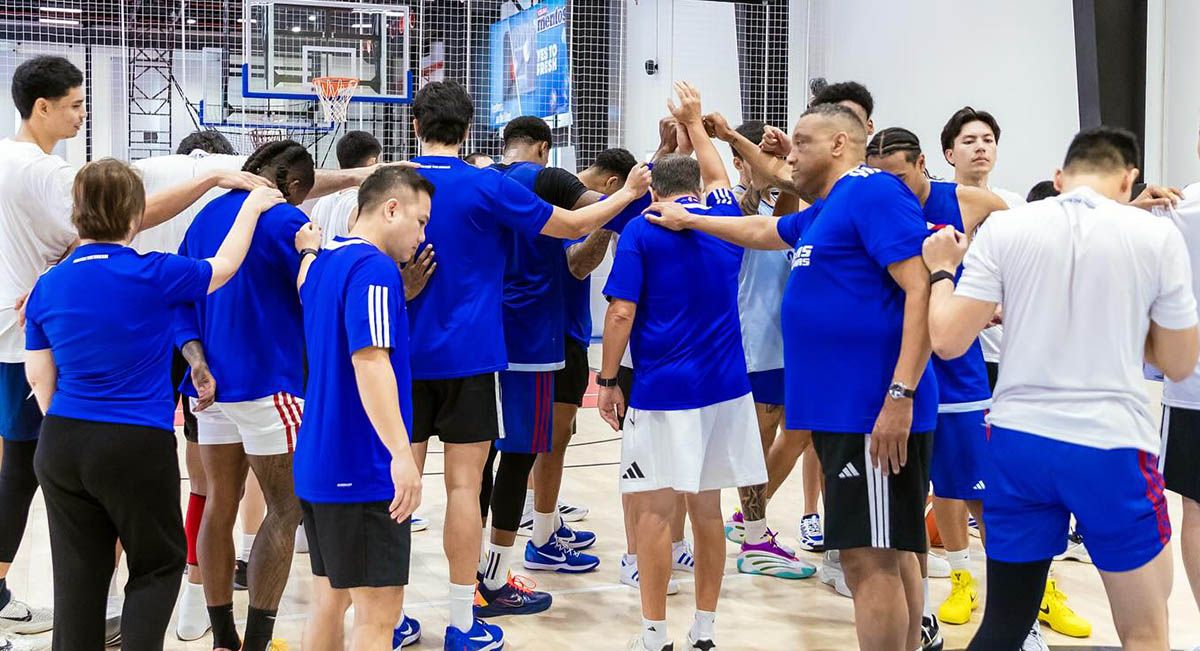
This year, however, there is a different aura surrounding the national team.
Buoyed by the Philippines’ magical ride when it ended a 61-year gold medal drought in the Asian Games two years ago, Tim Cone again took the Gilas stewardship and will be banking on the same Filipino core that reached the Asiad summit in Hangshou, China in 2023.
And Cone was straight forward on what the mission will be in the Saudi Arabian desert.
“I’ll say it again, our goal is a gold medal. That’s our goal. We’re going to go out there to try to win a gold medal,” said the Gilas mentor.
“Will we? I’m not sure. (But) that’s certainly our goal.”
READ Ron Jacobs' lasting legacy: Why Gilas owes this man a debt of gratitude
POSTSCRIPT:
China has the most number of Asia Cup championships won with a total of 16 including two stretches where it ruled the tournament five straight times. The Chinese though, haven’t won it since the Changsha edition in 2015.
The Philippines ranks second with five as the Filipinos won four of the tournament’s first seven editions from 1960 to 1973 when it was still being held every two years.
Iran is at third with three titles, followed by South Korea, Japan, and Australia with two each.
In all, only six countries have won the gold in the 65-year history of the tournament.
The Philippines was runner-up four times and won the bronze once. Aside from the back-to-back silver in 2013 and 2015, the national team also settled for second place in 1965 and 1971, respectively, both losing the gold against Japan. Its lone bronze meanwhile, was in 1969 when South Korea emerged champion.
Seven teams including the Philippines, participated in the inaugural staging of the meet. Among the OG countries are Chinese Taipei, Hong Kong, Indonesia, Japan, Malaysia, and South Korea.
Get more of the latest sports news & updates on SPIN.ph
NOTICE ON UNAUTHORIZED AND UNLAWFUL USE, PUBLICATION, AND/OR DISSEMINATION OF SPIN.PH CONTENT: Please be notified that any unauthorized and unlawful use, publication, and/or dissemination of Spin.ph’s content and/or materials is a direct violation of its legal and exclusive rights to the same, and shall be subject to appropriate legal action/s.
