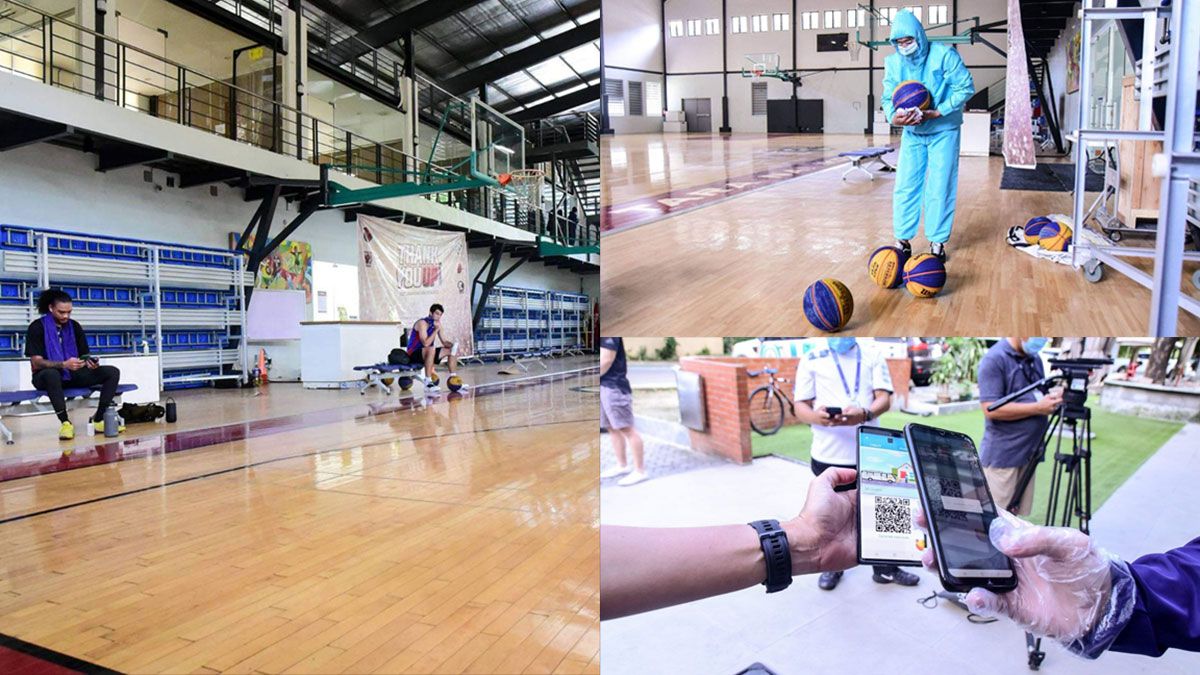
BUBBLE trainings are now being considered for the hopeful resumption of trainings for collegiate sports.
The Commission on Higher Education (CHED) bared the draft of its guidelines for the resumption of varsity sports trainings in an online public consultation on Wednesday, where stay-in trainings inside the school premises are highly encouraged.
The set-up is largely similar to the bubble setup the Joint Administrative Order for the resumption of sports and physical activities approved for professional sports, one that is currently being observed by the PBA and will soon be followed by the Philippines Football League and the Chooks-to-Go Pilipinas 3x3 League.
However, the biggest difference is that unlike its professional counterparts, these bubble setup for collegiate sports are only limited for trainings and practices.
"Contact sports and activities for non-professional sports are not allowed at any time, until an effective vaccine and established standard of care is put in place for COVID-19 cases," said Rodley Carza, head of policy and technology, promotion, and communication for the Department of Health (DOH). "Non-professional sporting events such as tournaments, competitive events, and athletic meets shall not be permitted."
Also, these bubbles will only be approved in areas under general community quarantine (GCQ) and modified general community quarantine (MGCQ).
Under the said guidelines, athletes, coaches, other essential personnel shall be staying under one roof located inside the campus and will be prohibited from going out of the said bubble for the duration of the training session.
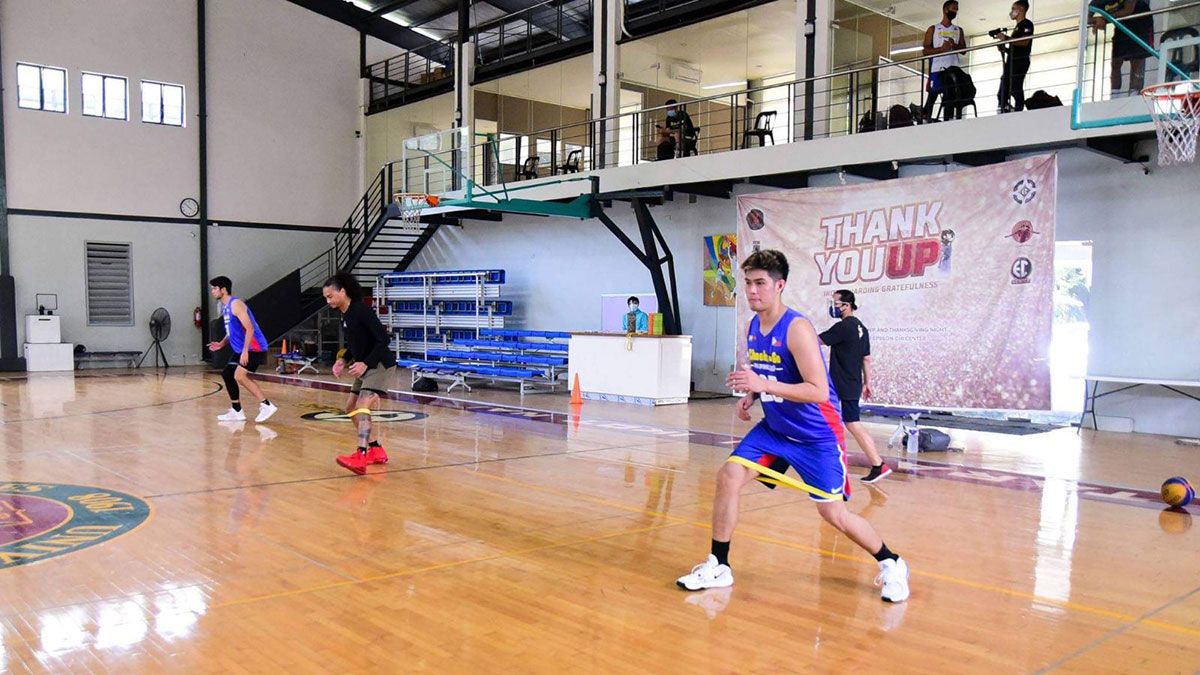
As for dormitories outside the premises of the school, the higher educational institutions (HEIs) must provide a vehicle dedicated to fetching the participants from the said dorms to the training facility.
Those adjacent to but not physically inside the campus can also be considered for the stay-in trainings, provided that "appropriate engineering and administrative controls are employed so that student-athletes are physically separated from the general population."
These dormitories, as the guidelines mandated, "shall provide separate rooms with adequate or reasonable space for each athlete. Both the training and housing facilities should be isolated from the outside world and free from possible sources of viral/ bacterial transmission."
But before these collegiate teams can proceed, CHED mandated them to first submit a Collegiate Training Activities' Certificate of Compliance, which is duly signed by its corresponding athletic director and approved by the University President to be submitted to the CHED Central Office.
Details of that Certificate of Compliance must include the following:
1) That the HEI intends to resume collegiate training and has student-athletes who represent or intends to represent the school in an inter-school athletic program or competition. The HEI should attach the list of the student-athletes who shall undergo collegiate training during the COVID-19 pandemic and the activities that shall be undertaken by the student-athletes.
2) Complete list of roster that must include names of student-athletes, coaches, trainors, and all staff members, including driver, kitchen staff, doctors, who will participate or assist in the collegiate training.
3) That the HEI shall adhere to the institutional, local and national (IATF, DOH, and CHED) rules and regulations for the prevention and mitigation of COVID-19 cases.
4) Student-athletes shall be required to submit health declaration forms for the conduct of collegiate training. Further, any student-athlete between the age of 18 and 21 shall be obliged to ask their parents or guardian for consent.
5) Those below 18 shall be only allowed to participate in virtual training.
6) That the HEI has coordinated with the local government unit for the inter-zonal or intra-zonal movement of the students concerned and the resumption of collegiate training in school premises.
7) That any waiver will not release the institution of any liability in case of violation of the provisions of these guidelines.
Aside from that, HEIs are encouraged to create a Task Force on-site "to help coordinate an independent response, which includes the athletic director, a team doctor for physical and mental purposes, and a student health representative."
Health and safety officers are also mandated, which will be asked to perform the following functions:
- Ensure compliance to the minimum public health standards during the conduct of allowed physical activities and establish mechanisms to monitor compliance with the said standards;
- Monitor the health status and symptoms of athletes and personnel;
- Keep records, through minimal contact means, of individuals who used the facilities for the purpose of contact tracing in the event that the need for such arises;
- Refer symptomatic individuals to appropriate health authority/ health facilities, as necessary.
As for the training facilities themselves, the said HEIs shall "reengineer or redesign of its training ground, if necessary, so that while inside the training grounds or premises, its student-athletes can practice physical distancing throughout the duration of its training," and shall "determine the occupancy capacity of the sports facilities following the physical distancing protocols and should strictly observe the same during conduct of collegiate training," while also establishing a contact tracing and illness protocols.
Participants entering the collegiate training bubbles are required to undertake 14-day self-quarantine after entering campus and before the training starts.
Moreover, HEIs could also have their student-athletes swabbed for the RT-PCR test at their own expense. In the event that a player tests positive, the school must provide all the necessary protocols to ensure the transfer of the said individual to an appropriate facility.
"Once the trainings commence, student-athletes and personnel assisting in the training should be isolated from the general public. HEIs should provide the necessary accomodation, transportation, and provision for mental health services as may be necessary. In case of re-entry for on-campus stay-in training, the 14-day isolation must again be observed before he/she may resume participation. HEIs should ensure that classes of student-athletes should be prioritized in scheduling their training," the guidelines read.
As the case with professional trainings, face masks and face shields, and a PPE if necessary, are required to be worn before entering the said facility, with the participants accomplishing a health symptoms questionnaire and having their temperature checked, with anyone having at least 37.5 degrees being prohibited from entering the said bubble.
Hand-washing and sanitizing stations are also required, with the participants mandated to go straight to their dormitories after the said trainings.
Trainings are only limited to conditioning exercises, with the focus only on individual skills development trainings through non-body contact drills.
Coaches are required to wear face masks and face shields for the duration of the practices.
Disinfection of the training venues shall be done an hour before the start of the training, with the designated safety and health officer overseeing if the health protocols are being observed.
The guidelines also permit sharing of non-personal equipment, granted that these are properly disinfected before and after use. Equipments that is used orally (mouth guards, snorkeling and scuba diving equipments) and have prolonged contact with the face (headgear, helmets) are prohibited to be shared.
Temperature checks for all the participants are still required after trainings, as well as the disinfection of the gym and the changing rooms.
Illness protocols were also placed in the guidelines, with the health and safety officer on the look out for anyone who is exhibiting flu-like symptoms as he will be the one to ensure the proper isolation and coordination with the HEI for the transfer and the corresponding government arms for the subsequent contact tracing.
If an individual tests positive for COVID-19, the trainings shall be suspended.
Despite advances to these proposal, Carza reminded that, "Virtual or online training is highly encouraged and still the most preferred form of modality."
The guidelines were crafted by the CHED Technical Working Group, which is co-chaired by Marc Velasco of the Philippine Sports Commission (PSC) and the concurrent national training director of the Philippine Sports Institute (PSI), alongside Games and Amusements Board chairman Baham Mitra, CHED Office of Student Development Services officer-in-charge Dr. Mary Sylvette Gunigundo, and Carza.
UAAP president Nonong Calanog of La Salle, University of the Philippines College of Human Kinetics dean Kiko Diaz, UAAP executive director Atty. Rebo Saguisag, NCAA Management Committee (Mancom) members Lyceum athletic director Hercules Callanta and Jose Rizal University athletic director Paul Supan were also integral in crafting the said guidelines.
Completing the TWG are Batangas State University president Dr. Tirso Ronquillo representing Philippine Association of State Universities and Colleges (PASUC), Technological University of the Philippines president Dr. Jesus Rodrigo Torres representing SCUAA, University of Makati executive vice president Dr. Raymundo Arcega representing the Association of Local colleges and Universities Commission on Accreditation (ALCUCOA), Private Schools Athletic Association (PRISAA) secretary general Laureano Santos, PRISAA Region IV-A president Dr. Fe Rabanal-Medina of Lyceum-Batangas, and PRISAA deputy secretary general for Luzon and Angeles University Foundation athletic director Jeffrey Jervoso.
It's now up to CHED chairman Prospero de Vera if he will approve the said guidelines. It's only then when collegiate teams can formally return to trainings.
___
Spin fans unite at the Spin Viber Community! Join the growing community now and complete the experience by subscribing to the Spin Chatbot.
Get more of the latest sports news & updates on SPIN.ph
NOTICE ON UNAUTHORIZED AND UNLAWFUL USE, PUBLICATION, AND/OR DISSEMINATION OF SPIN.PH CONTENT: Please be notified that any unauthorized and unlawful use, publication, and/or dissemination of Spin.ph’s content and/or materials is a direct violation of its legal and exclusive rights to the same, and shall be subject to appropriate legal action/s.
